小额现金贷

Search documents
趣店前三季度营收下滑76.98%,净利润暴涨451.44%
Xin Lang Cai Jing· 2025-11-25 13:09
Core Viewpoint - Qudian's revenue continues to decline significantly, while net profit shows substantial growth due to increased interest and investment income [1] Financial Performance - As of September 30, Qudian reported cumulative revenue of 37.802 million, a year-on-year decline of 76.98% [1] - In Q3, Qudian achieved revenue of 8.523 million, down 84.5% year-on-year, primarily due to the gradual cessation of last-mile delivery services [1] - Net profit for Q3 increased by 210.74% to 410 million, driven by growth in interest and investment income [1] - Interest and investment income for Q3 was 421 million, up 84.46% year-on-year, with cumulative income for the first three quarters reaching 1.027 billion, a year-on-year increase of 176.08% [1] - As of September 30, 2025, Qudian's cash and cash equivalents totaled 7.011 billion, with restricted cash and cash equivalents at 1.519 billion [1] Company Background - Qudian was established in April 2014, initially focusing on small loans for college students, achieving rapid growth [2] - After regulatory changes in 2016, Qudian shifted its target demographic to young adults and expanded into cash loans and consumer installment services [1][2] - Qudian went public on the New York Stock Exchange in October 2017, raising nearly 1 billion and reaching a market value exceeding 10 billion [3] - From 2017 to 2019, Qudian experienced rapid revenue growth, with revenues of 4.775 billion, 7.692 billion, and 8.84 billion, and net profits of 2.164 billion, 2.491 billion, and 3.264 billion respectively [3] - Since 2019, Qudian has sought to diversify into various sectors, including online education and e-commerce, but many initiatives have failed [3] - Recently, Qudian announced a name change to "High Templar Tech Limited" and a new stock code "HTT" [3]


消费金融公司“拥抱变化”
3 6 Ke· 2025-06-27 03:46
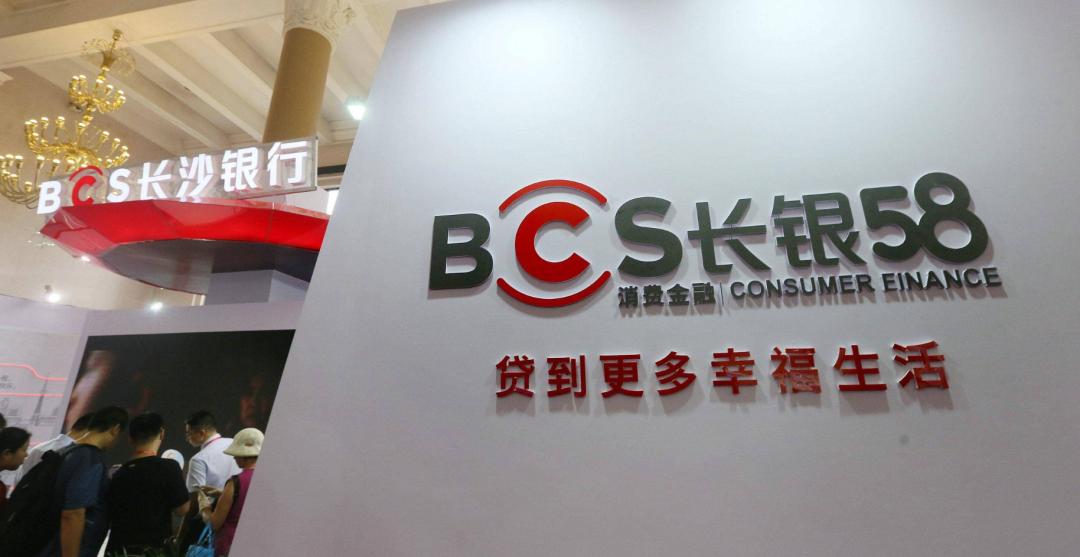
Core Viewpoint - The consumption finance sector plays a crucial role in the modern economy, acting as a significant engine for domestic demand and enabling consumer upgrades through diverse financial products [1][2]. Industry Overview - There are currently 31 licensed consumption finance companies in China, including several bank-affiliated firms such as Xinyi Consumption Finance and Jianxin Consumption Finance [2]. - The industry is experiencing a significant divide, with a stark contrast in profitability among companies, where the profit gap has widened to 1500 times between the top and bottom performers [9]. Company Performance - Changyin 58 Consumption Finance, a subsidiary of Changsha Bank, is attempting to sell a bad debt package worth approximately 1.039 billion yuan at a starting price of 45.09 million yuan, marking its second attempt to offload bad loans in less than seven months [4][6]. - In 2024, Changyin 58 Consumption Finance reported a net profit of only 34 million yuan, a staggering 95.02% decline year-on-year, with total revenue dropping by 7.64% to 2.986 billion yuan [6][12]. - The company has undergone significant changes since its establishment in 2017, initially seen as a retail financial experiment for Changsha Bank, but has faced challenges in recent years, reflecting broader issues in the bank's asset quality [8][9]. Financial Data - The financial performance of major consumption finance companies in 2024 shows a decline in revenue and profit for many, including: - Zhaolian Consumption Finance: Revenue of 17.318 billion yuan, down 11.65% year-on-year, and net profit of 3.016 billion yuan, down 16.22% [12][21]. - Xinyi Consumption Finance: Revenue of 10.067 billion yuan, down 10.36%, and net profit of 430 million yuan, down 79.25% [14][21]. - Zhongyin Consumption Finance: Revenue of 7.915 billion yuan, with a net profit decline of 91.62% [16][21]. Market Trends - The consumption finance market is shifting from a focus on scale expansion to quality competition, indicating that the previous growth model based on scale is no longer sustainable [19][25]. - The regulatory environment has tightened, with new capital requirements and compliance measures being implemented, prompting many companies to increase their registered capital [22][24]. Future Outlook - The consumption finance sector is expected to continue evolving, with a focus on maintaining the quality of existing retail assets and adapting to regulatory changes [25]. - Companies are likely to emphasize "self-operated scenarios, intelligent risk control, and compliance capabilities" as the core of future competition in the industry [25].