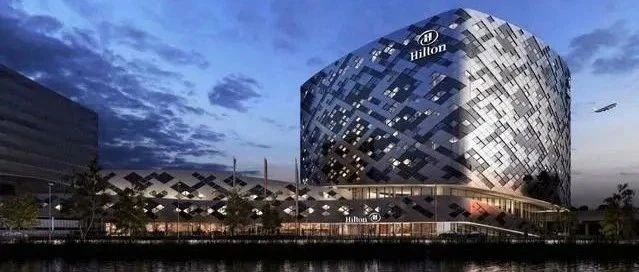
希尔顿酒店

Search documents
上海新天地的五星级酒店,0元卖了
投中网· 2026-01-14 06:35
Core Viewpoint - The acquisition of Shanghai Lishi Hotel by Beijing State-owned Assets Supervision and Administration Commission's Jingtou Development for 0 yuan reflects a dramatic decline in the asset's value, driven by deteriorating financial conditions and a broader trend of discounted hotel asset sales in China [4][11][14]. Group 1: Acquisition Details - Jingtou Development announced plans to acquire a 45% stake in Shanghai Lishi Hotel for 0 yuan, increasing its ownership to 100% [4][5]. - The core asset of Shanghai Lishi is the Andaz Hotel located in Shanghai's Xintiandi, a prime area known for its luxury offerings [5][10]. - The hotel was previously listed for sale at 2.3 billion yuan but saw its value plummet to zero within six months [5][11]. Group 2: Financial Performance - As of December 31, 2024, Shanghai Lishi had total assets of 860 million yuan and total liabilities of 2.512 billion yuan, resulting in a net asset value of -1.651 billion yuan [13]. - By September 30, 2025, the company's total assets decreased to 810 million yuan, while liabilities increased to 2.528 billion yuan, leading to a net asset loss of -1.718 billion yuan [14]. Group 3: Market Context - The sale of Shanghai Lishi is part of a broader trend where hotel assets across China are being sold at significant discounts due to supply-demand imbalances and rising operational costs [22][24]. - The hotel industry is experiencing a shift towards a competitive landscape, with many high-end hotels facing declining revenues despite maintaining high room rates [22][23]. Group 4: Buyer Dynamics - State-owned enterprises are becoming key players in hotel asset acquisitions, with Jingtou Development's purchase exemplifying this trend [24]. - Other buyers include asset management firms and private equity funds looking to capitalize on undervalued hotel assets for restructuring and potential resale [24].


头部酒店集团将文化融入奢华品牌建设,针对细分需求布局休闲度假市场
Cai Jing Wang· 2025-06-25 07:39
Group 1: Market Dynamics and Trends - The high-end hotel sector in China is entering a new development cycle, with RevPAR recovering to 106% of 2019 levels, indicating a reshaping of the competitive landscape [1] - Major hotel groups like Shangri-La, MGM, Marriott, and Hilton are adapting their strategies to capture market changes, focusing on cultural integration and diversified product offerings [1][5] Group 2: Cultural Capital in Luxury Hotels - Cultural capital is becoming a key competitive factor in the luxury hotel market, with a projected 6.8% CAGR for the global luxury hotel market from 2024 to 2030, driven by demand for cultural immersion experiences [2] - Shangri-La's Shangri-La Signatures brand exemplifies the deep operationalization of cultural capital, focusing on unique luxury experiences in culturally rich locations [2][3] - MGM's new luxury brand, MGM RESERVE, is designed to blend international standards with Chinese cultural elements, reflecting the growing demand for unique cultural experiences among luxury consumers [4] Group 3: Demand-Driven Vacation Market Expansion - The global high-end vacation hotel RevPAR increased by 11.5% in 2023, with the Asia-Pacific region seeing a 14.8% rise, driven by surging vacation demand in destinations like China and Thailand [5] - Marriott and Hilton are expanding their vacation offerings to meet diverse consumer needs, with Marriott focusing on product innovation and Hilton on scaling its market presence [5][6] Group 4: Innovative Vacation Products - JW Marriott is responding to urban vacation demands with projects that integrate sensory experiences and cultural elements, such as the upcoming all-inclusive resort in the Caribbean [6][7] - Hilton is enhancing its family vacation product matrix, with hotels strategically located near attractions like theme parks, catering to family travel needs [8] Group 5: Strategic Resource Reallocation - The dual-track strategy of high-end hotels involves injecting cultural capital into luxury experiences while building a vacation product matrix based on consumer demand insights [8]
为什么有钱人都喜欢住希尔顿?原来不只是因为高贵…
凤凰网财经· 2025-05-12 12:32
Group 1 - The article discusses the frequent hotel stays of celebrities, highlighting Hilton Hotels as a preferred choice due to their luxurious offerings and specifically their pillows [2][4] - Hilton Hotels are primarily five-star, with some being ultra-five-star, emphasizing their high-end nature [4] - The unique pillow design at Hilton caters to individual preferences, providing customized support for various sleeping positions [6][8] Group 2 - The article recommends the "SLEEP KEEPER" Hilton co-branded pillow, known as the Cloud Soft Pillow, which is described as soft yet supportive, providing a comfortable sleeping experience [10][12] - The pillow is designed to adapt to different body types and sleeping styles, ensuring comfort for all users [14][22] - The Cloud Soft Pillow features a high rebound rate of 95% after 10,000 compression tests, maintaining its shape and support [28][30] Group 3 - The pillow is made from antibacterial multi-fiber filling, meeting international standards with a perfect 650g filling ratio for deep sleep [24] - It is designed to be machine washable without losing its shape or comfort, addressing hygiene concerns effectively [42][46] - The packaging process for the pillow is rigorous, ensuring quality and cleanliness, contrasting with standard pillow packaging [51][49]