
强流重离子加速器

Search documents
中国科学院院士魏宝文逝世
Xin Lang Cai Jing· 2026-01-19 02:44
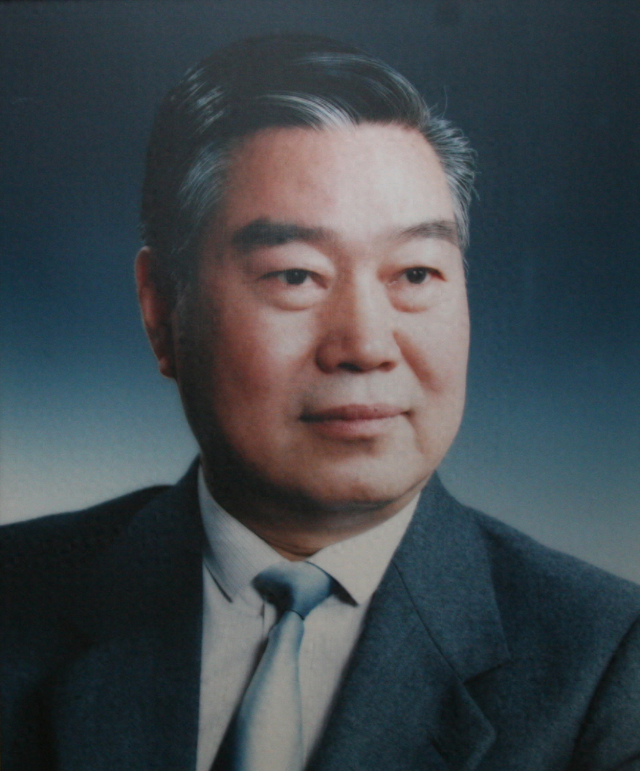
Core Viewpoint - The announcement of the passing of Wei Baowen, a prominent nuclear physicist and accelerator physicist in China, highlights his significant contributions to the field and his role in advancing heavy ion accelerator technology in the country [1][3][4]. Group 1: Personal and Professional Background - Wei Baowen was born in November 1935 in Yuzhou, Henan, and graduated from Peking University in 1957, specializing in nuclear physics [3]. - He began his career at the Institute of Physics, Chinese Academy of Sciences, and later moved to the Lanzhou Physics Laboratory in 1958 [3]. - He served as the director of the Institute of Modern Physics from 1986 to 1994 and was the director of the Lanzhou Heavy Ion Accelerator National Laboratory [3]. Group 2: Contributions to Heavy Ion Accelerator Technology - Wei Baowen was a pioneer in the heavy ion accelerator field, leading the construction of China's first large heavy ion accelerator, which facilitated medium-energy heavy ion physics research [4]. - He proposed the concept of a heavy ion cooling storage ring and oversaw its design and project approval, laying a crucial foundation for achieving international standards in accelerator technology [4]. - He actively promoted research in heavy ion tumor treatment and the establishment of the first heavy ion treatment demonstration facility, as well as major national scientific infrastructure projects [4]. Group 3: Recognition and Legacy - Wei Baowen received numerous awards, including the National Science and Technology Progress First Prize, the Chinese Academy of Sciences Special Prize for Scientific Progress, and the He Liang He Li Foundation Science and Technology Progress Award [4]. - He was known for his rigorous academic approach and dedication to mentoring young researchers, contributing to the establishment of a graduate training system at the research institute [4]. - His farewell ceremony is scheduled for January 21, 2026, at the Huashan Mountain Funeral Home in Lanzhou [4].

推动重离子治疗系统惠及更多患者(迈向“十五五”的创新图景)
Ren Min Ri Bao· 2025-12-22 22:27
Core Viewpoint - The development of a cost-effective heavy ion accelerator treatment device is crucial for enhancing cancer treatment accessibility and efficiency in China, leveraging advancements in technology to reduce costs and improve patient outcomes [3][4][5]. Group 1: Technological Advancements - The strong flow heavy ion accelerator in Huizhou, Guangdong, has achieved full beamline connectivity, providing the highest international pulse flow intensity of heavy ion beams and a high-precision nuclear mass spectrometer [2]. - The team has developed a compact optical design and an innovative gradient extraction scheme, reducing the circumference of the accelerator from 56 meters to 35 meters, thus decreasing the footprint to one-third of the original size [3]. - The medical superconducting strong flow ion source developed by the team achieves a beam intensity of 1 milliampere, over three times the international highest level, enhancing treatment capacity [4]. Group 2: Clinical Application and Impact - The research team aims to make the heavy ion treatment device smaller and more efficient, with the goal of making it accessible to more hospitals and patients [3][4]. - The intelligent beam delivery system allows one rotating beamline to connect to eight treatment rooms simultaneously, improving treatment efficiency and reducing patient wait times [4]. - The development of the cost-effective heavy ion accelerator treatment device is expected to enter clinical trials by the end of next year, marking a significant step towards broader patient access [4]. Group 3: Future Prospects and Collaboration - The initiative emphasizes the importance of open sharing of research resources to involve more enterprises and accelerate the application of cutting-edge technologies [4]. - The strong flow heavy ion accelerator is positioned as a key infrastructure for various fields, including basic science, medical devices, energy, and agriculture, with implications for addressing long-standing scientific questions and improving everyday life [7].