
重离子加速器

Search documents
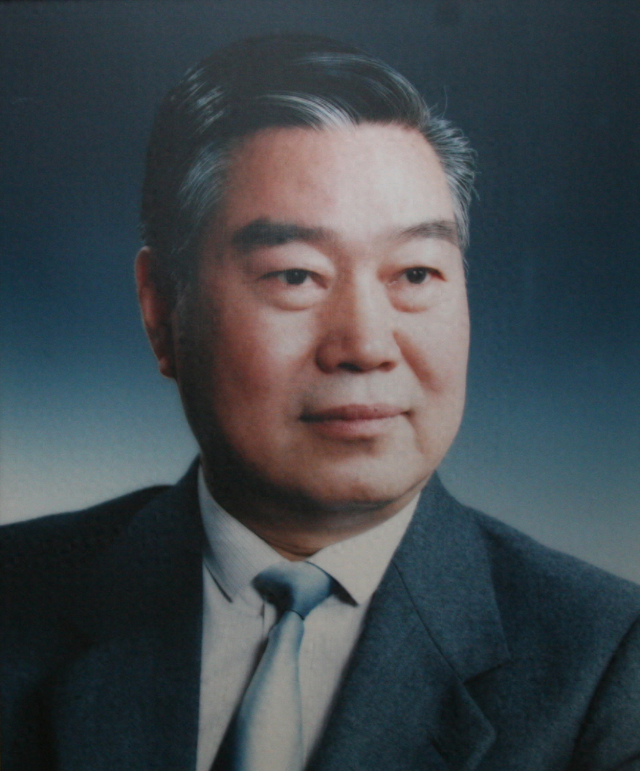
中国科学院院士魏宝文逝世
Xin Lang Cai Jing· 2026-01-19 02:44
Core Viewpoint - The announcement of the passing of Wei Baowen, a prominent nuclear physicist and accelerator physicist in China, highlights his significant contributions to the field and his role in advancing heavy ion accelerator technology in the country [1][3][4]. Group 1: Personal and Professional Background - Wei Baowen was born in November 1935 in Yuzhou, Henan, and graduated from Peking University in 1957, specializing in nuclear physics [3]. - He began his career at the Institute of Physics, Chinese Academy of Sciences, and later moved to the Lanzhou Physics Laboratory in 1958 [3]. - He served as the director of the Institute of Modern Physics from 1986 to 1994 and was the director of the Lanzhou Heavy Ion Accelerator National Laboratory [3]. Group 2: Contributions to Heavy Ion Accelerator Technology - Wei Baowen was a pioneer in the heavy ion accelerator field, leading the construction of China's first large heavy ion accelerator, which facilitated medium-energy heavy ion physics research [4]. - He proposed the concept of a heavy ion cooling storage ring and oversaw its design and project approval, laying a crucial foundation for achieving international standards in accelerator technology [4]. - He actively promoted research in heavy ion tumor treatment and the establishment of the first heavy ion treatment demonstration facility, as well as major national scientific infrastructure projects [4]. Group 3: Recognition and Legacy - Wei Baowen received numerous awards, including the National Science and Technology Progress First Prize, the Chinese Academy of Sciences Special Prize for Scientific Progress, and the He Liang He Li Foundation Science and Technology Progress Award [4]. - He was known for his rigorous academic approach and dedication to mentoring young researchers, contributing to the establishment of a graduate training system at the research institute [4]. - His farewell ceremony is scheduled for January 21, 2026, at the Huashan Mountain Funeral Home in Lanzhou [4].

走近“看不见”的重离子世界
Ren Min Ri Bao· 2025-08-04 00:52
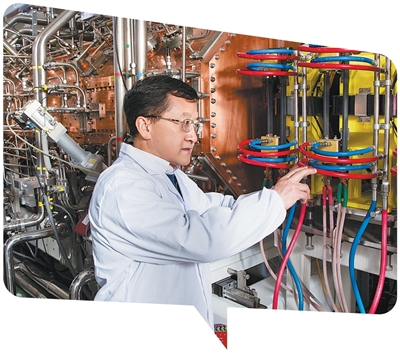
Core Viewpoint - The article emphasizes the importance of scientific research and innovation in building a strong nation, highlighting the contributions of scientists in various fields to national development and technological self-reliance [1]. Group 1: Heavy Ion Accelerator - The heavy ion accelerator serves as a "microscope" for observing the microscopic world, allowing researchers to study particles that are otherwise invisible to the naked eye [5][6]. - The accelerator can significantly increase the energy, quantity, and quality of heavy ions, which enhances the research capabilities in nuclear physics and other fields [7]. - The Lanzhou Heavy Ion Accelerator, established in the 1980s, is the largest of its kind in China and has achieved international recognition for its performance, capable of accelerating trillions of high-quality ions per second [8]. Group 2: Applications and Achievements - The heavy ion accelerator has contributed to agricultural advancements, such as the development of new rice varieties through heavy ion beam irradiation, benefiting regions like Northeast China [9]. - It has also improved the performance of various materials, including metals and polymers, and has been involved in the development of industry standards [9]. - The accelerator is utilized in cancer treatment, with a fully autonomous heavy ion cancer treatment system developed and implemented in multiple cities, benefiting over 2,000 patients [10]. Group 3: Research and Innovation - The article stresses the need for long-term commitment to basic and original research, as well as technological innovation, to address significant scientific and technical challenges [12][13]. - It highlights the importance of stable investment in research and development from various sectors to foster a conducive environment for scientific innovation [13]. - The cultivation of young researchers is crucial, with an emphasis on teamwork and collaboration to achieve common goals in scientific research [14][15].
走近“看不见”的重离子世界(弘扬科学家精神·对话)
Ren Min Ri Bao· 2025-08-03 22:10
Core Viewpoint - The emphasis on the importance of scientific and technological advancement for national strength and the role of scientists in driving innovation and research [2] Group 1: Heavy Ion Accelerator - The heavy ion accelerator serves as a "microscope" for observing the microcosmic world, allowing for the study of particles that are otherwise invisible [4][5] - Heavy ions are defined as ions with a mass number greater than 4, which play a crucial role in nuclear physics research and have contributed to significant national projects [4][5] - The Lanzhou Heavy Ion Accelerator, established in the 1980s, is the largest of its kind in China and one of the most advanced globally, capable of accelerating heavy ions to 80% of the speed of light and operating over 7,500 hours annually [7] Group 2: Applications and Achievements - The heavy ion accelerator has facilitated the development of new rice varieties in Northeast China and Hunan through high-energy heavy ion beam irradiation [8] - It has also improved the performance of various materials, including metals and polymers, contributing to industry standards [8] - The accelerator is utilized in cancer treatment, with a system developed in 2020 that has benefited over 2,000 patients across multiple cities [9] Group 3: Research and Innovation - The importance of original innovation and long-term commitment to scientific research is highlighted, with a focus on solving significant scientific and technological problems [10][12] - The development of a new type of superconducting high-charge electron cyclotron resonance (ECR) ion source has positioned the country as a leader in this field, achieving world records in heavy ion beam intensity [11] - Collaboration and support for young researchers are emphasized as essential for fostering innovation and achieving research goals [13][14]