
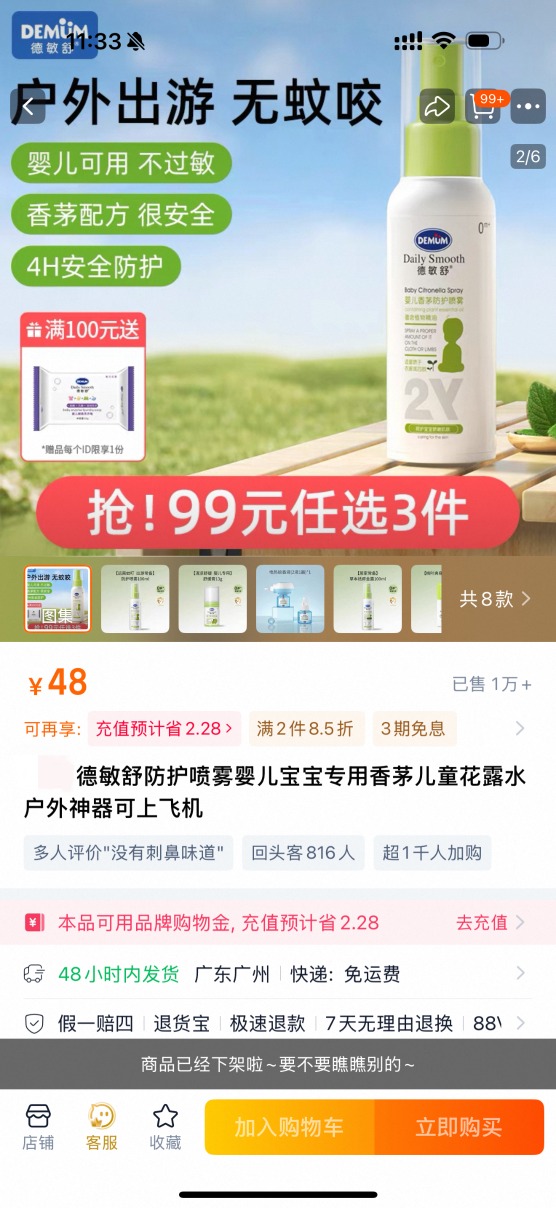
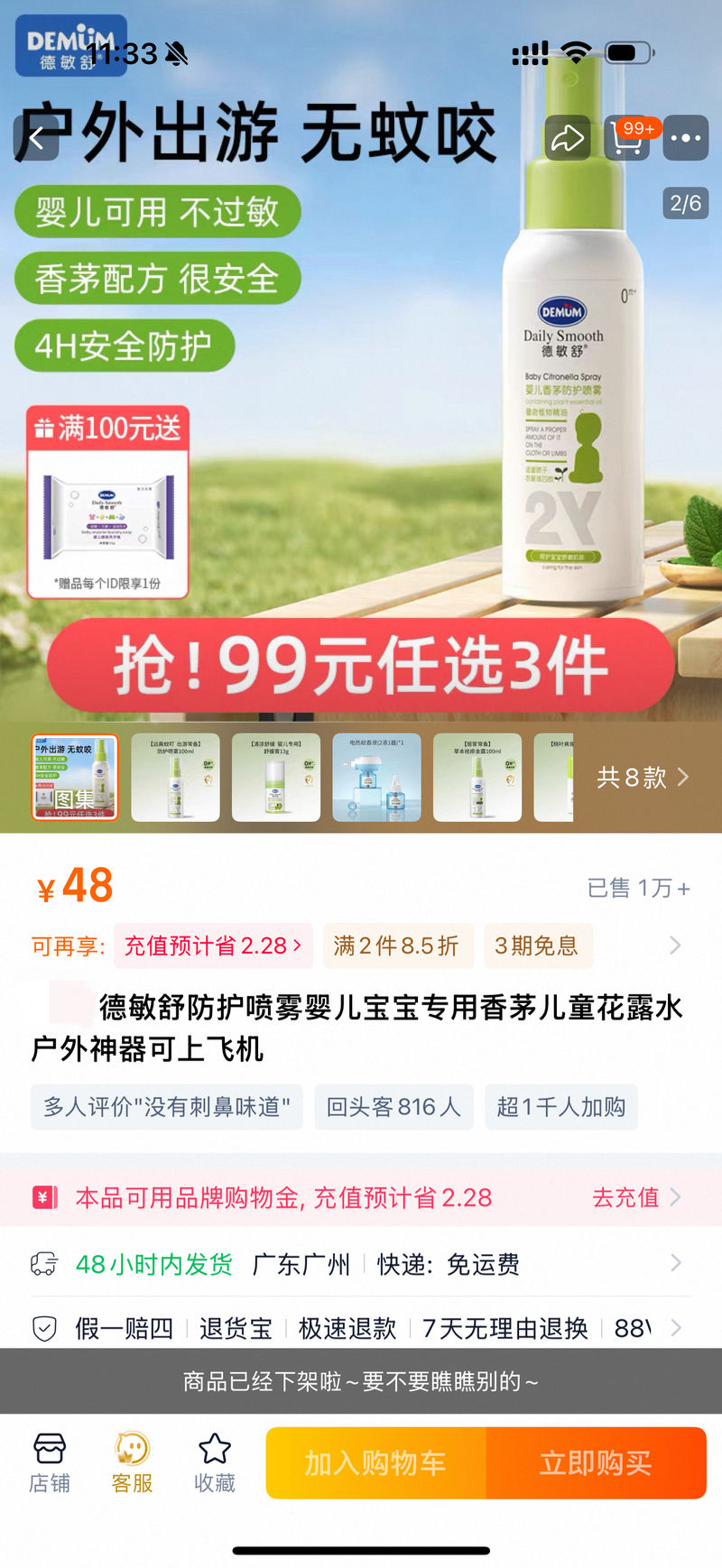
德敏舒婴儿香茅防护喷雾

Search documents
部分无证“驱蚊产品”仍在售,宣称一蚊不剩
Xin Jing Bao· 2025-12-10 13:12
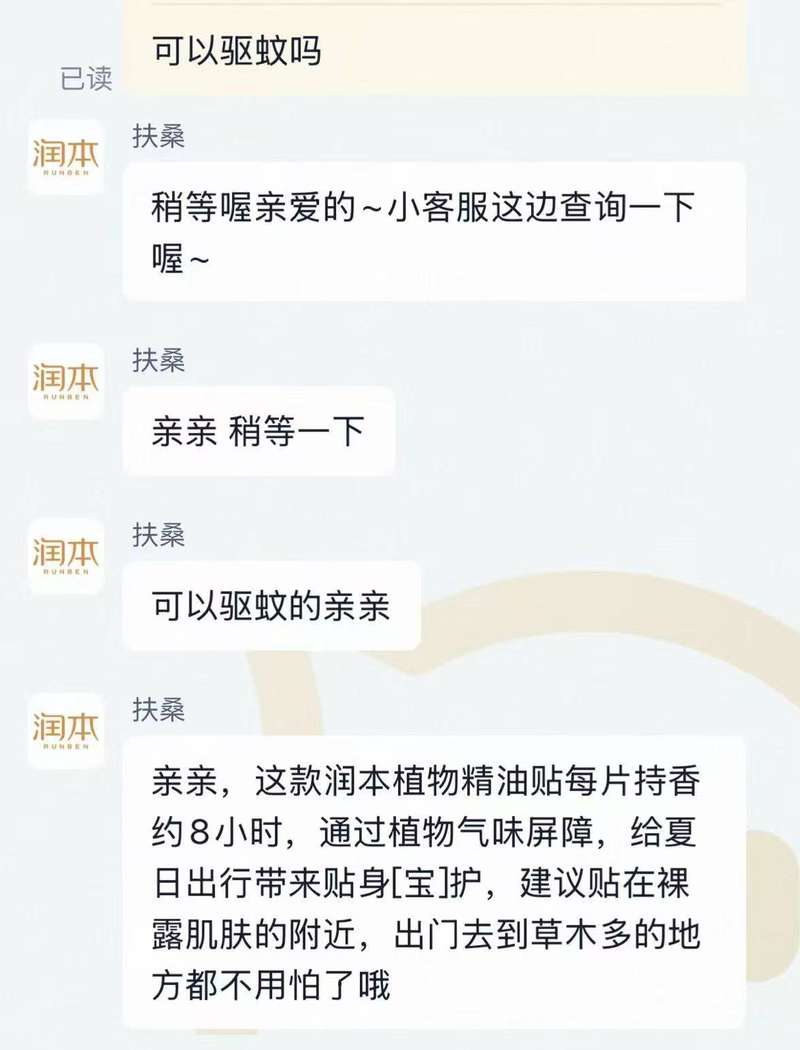
Core Viewpoint - The article highlights the ongoing issue of mosquito repellent products in the market that lack the necessary certifications, known as the "three certificates" (pesticide registration number, product standard number, and pesticide production license number), despite claims of effectiveness against mosquitoes [1][2][3]. Group 1: Product Certification Issues - Many mosquito repellent products are found to be marketed without the required "three certificates," which are essential for products claiming to have pest control functions [2][3]. - Some products have been removed from online sales platforms after being identified as lacking the necessary certifications, while others continue to imply effectiveness against mosquitoes [1][8]. - Specific products, such as the "德敏舒婴儿香茅防护喷雾," were previously advertised with claims of mosquito repellent properties but were later found to be unavailable for search due to the absence of the required certifications [2]. Group 2: Misleading Marketing Practices - Certain brands, like "锐舞," have previously used euphemisms such as "防嗡" (anti-buzz) to suggest mosquito repellent capabilities without directly stating it, but have since revised their marketing language to comply with regulations [3]. - Customer service representatives from brands like "润本" continue to affirm the mosquito repellent effectiveness of their products, despite the lack of proper certification [6][7]. - Some products still use misleading claims, such as "100% mosquito repellent rate," which violate advertising laws and lack scientific backing [12]. Group 3: Regulatory and Consumer Guidance - Regulatory bodies have issued reminders for consumers to verify the presence of the "three certificates" when purchasing mosquito repellent products to ensure safety and efficacy [13]. - The article emphasizes the importance of clear labeling and compliance with regulations to protect consumers from misleading claims in the mosquito repellent market [13].

部分无证“驱蚊产品”仍在售,宣称一蚊不剩|消费质量年终回访③
Bei Ke Cai Jing· 2025-12-10 13:04
Core Viewpoint - The article highlights concerns regarding the sale of mosquito repellent products that lack the necessary certifications, known as the "three certificates" (pesticide registration number, product standard number, and pesticide production license), which are required for products claiming to have mosquito repellent efficacy [1][3][14]. Group 1: Product Compliance and Certification - A survey conducted by a media outlet revealed that several mosquito repellent products on the market do not possess the required "three certificates" despite claiming to repel mosquitoes [1][3]. - Some products have been removed from online sales, while others continue to imply mosquito repellent capabilities without the necessary certifications [2][8]. - The Ministry of Agriculture and Rural Affairs has established guidelines stating that any product claiming to repel mosquitoes must be managed as a pesticide and must display the "three certificates" on its label [3][14]. Group 2: Marketing Practices and Consumer Awareness - Despite the lack of certifications, some brands continue to market their products with terms that suggest mosquito repellent properties, such as using "buzz" to refer to mosquitoes [4][12]. - Customer service representatives for certain brands still affirm the mosquito repellent effectiveness of their products, even when the products do not meet regulatory standards [7][8]. - Regulatory bodies have warned consumers to verify the presence of the "three certificates" when purchasing mosquito repellent products to ensure safety and efficacy [14].

驱蚊产品调查追踪:德敏舒一喷雾已下架 swekp精油贴被立案
Xin Jing Bao· 2025-08-29 06:06
Core Viewpoint - Recent reports highlight issues regarding the unlicensed sale of certain mosquito repellent products, leading to investigations and product removals from online platforms [1][4]. Group 1: Product Issues - The "Deminshu Baby Lemongrass Protection Spray" has been removed from the "Deminshu Flagship Store" on an e-commerce platform [4]. - The product claimed to provide mosquito protection but lacked necessary pesticide registration and labeling, which is required for products making such claims [4][5]. - The "swekp Plant Essential Oil Bead Patch" is under investigation for similar issues, as it also lacks pesticide registration while claiming to repel mosquitoes [6][7]. Group 2: Regulatory Actions - The Jiangsu Province market supervision authority has initiated an investigation into the "swekp Plant Essential Oil Bead Patch" for its unlicensed claims [1][6]. - The Guangzhou Market Supervision Administration clarified that products claiming mosquito repellent functions fall under pesticide regulations, necessitating proper registration and labeling [4][6]. - Reports indicate that both the "Deminshu" and "swekp" products are being scrutinized for potential false advertising and regulatory evasion [5][7]. Group 3: Company Responses - The distributor of the "Deminshu Baby Lemongrass Protection Spray" and the manufacturer have not responded to inquiries regarding product compliance and advertising practices [5]. - The manufacturer of the "swekp Plant Essential Oil Bead Patch" stated it is a brand OEM and is not the seller, indicating a potential shift in responsibility for compliance [7]. - Both companies involved in the "swekp" product have been listed in the business anomaly record for failing to comply with reporting regulations [7].
驱蚊产品调查追踪:德敏舒一喷雾已下架,swekp精油贴被立案
Xin Jing Bao· 2025-08-28 10:49
Core Viewpoint - Recent reports highlight issues regarding the unlicensed sale of certain mosquito repellent products, leading to investigations and product removals from online platforms [1][4][6]. Group 1: Product Issues - The "Deminshu Baby Lemongrass Protection Spray" has been removed from the "Deminshu Flagship Store" due to concerns over its claims and lack of necessary pesticide registration [4][5]. - The product was marketed with phrases suggesting it is safe for children and effective against mosquitoes, yet it lacked proper labeling and registration required for pesticide products [4][5]. - The "swekp Plant Essential Oil Bead Patch" is under investigation for similar reasons, as it claims to repel mosquitoes without having the required pesticide registration [6][7]. Group 2: Regulatory Actions - The Jiangsu Province market supervision authority has initiated an investigation into the "swekp Plant Essential Oil Bead Patch" for its unlicensed claims [6][7]. - The Guangzhou Market Supervision Administration has clarified that products claiming mosquito repellent functions must be regulated as pesticides, regardless of their ingredients [4][7]. - Reports indicate that both products are being scrutinized for potential false advertising and regulatory compliance issues [7][8]. Group 3: Company Responses - The distributors of the "Deminshu Baby Lemongrass Protection Spray" and "swekp Plant Essential Oil Bead Patch" have not responded to inquiries regarding product compliance and regulatory issues [5][8]. - The manufacturer of the "swekp" product indicated that they are a brand factory and are not the sellers, suggesting they will contact the brand for rectification [8].
宣称纯植物无农药、母婴适用,多款“驱蚊”产品涉嫌无证销售
Xin Jing Bao· 2025-08-20 14:00
Core Viewpoint - The article highlights the prevalence of mosquito repellent products in the market that lack the necessary certifications, misleading consumers with claims of effectiveness and safety [1][4][11]. Group 1: Product Certification and Compliance - Many mosquito repellent products sold online do not possess the required "three certificates" (pesticide registration number, product standard number, and pesticide production license), instead using terms like "essential oil" and "plant-based" to attract consumers [1][2][4]. - The Chinese Daily Consumer Goods Industry Association emphasizes the importance of verifying these certifications when purchasing mosquito repellent products to ensure safety and effectiveness [1][4][11]. - Products claiming to have mosquito repellent properties must be classified as pesticides and adhere to relevant regulations, including proper labeling with the required certificates [3][4][7]. Group 2: Misleading Marketing Practices - Some products falsely advertise their effectiveness, such as claiming "100% mosquito repellent rate," which is considered a violation of advertising regulations [11][12]. - The use of terms like "non-toxic" and "plant-based" in marketing does not guarantee safety, as these claims often lack scientific backing and can mislead consumers [9][10]. - Products marketed as suitable for infants and pregnant women often do not have the necessary testing to support such claims, raising concerns about their safety [6][8][9]. Group 3: Consumer Awareness and Recommendations - Consumers are advised to be cautious when selecting mosquito repellent products, ensuring that they check for proper labeling and certifications [1][4][6]. - The article suggests that physical methods of mosquito protection, such as nets and electric mosquito traps, are preferable for vulnerable populations like infants and pregnant women [7][8]. - Regulatory bodies have issued warnings against misleading claims in advertisements, urging consumers to be vigilant and informed [10][11].