怪兽充电宝

Search documents
《怪兽充电私有化疑云:高瓴出价更高为何遭拒? | BUG》
Xin Lang Cai Jing· 2025-10-13 01:12
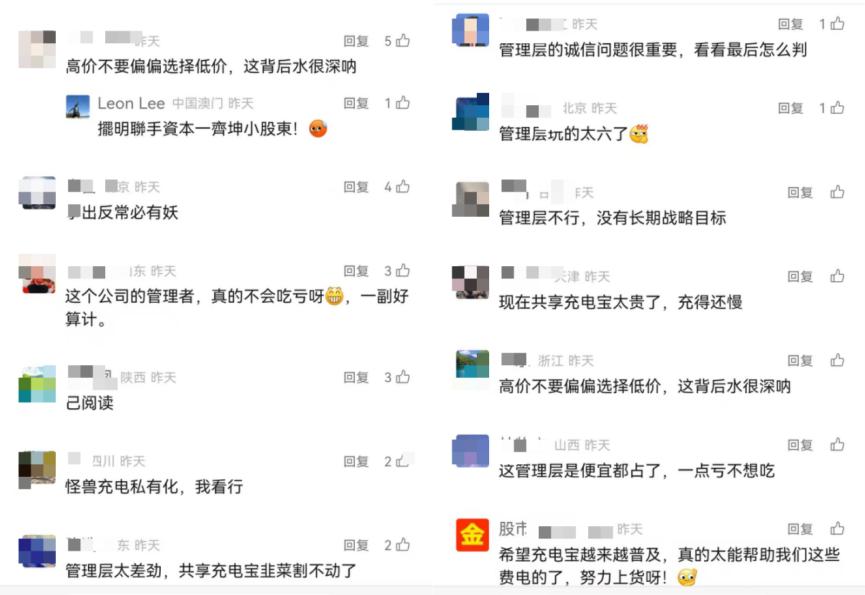
Core Viewpoint - The decision of Monster Charging to accept a lower privatization offer of $1.25 per ADS instead of the higher $1.77 per ADS from Hillhouse Capital has raised concerns about the interests of minority investors and the management's motivations [2][3][5] Group 1: Privatization Controversy - Monster Charging's board rejected Hillhouse Capital's higher privatization offer, opting for a lower price, which has sparked widespread controversy regarding shareholder interests [3][5] - Industry insiders suggest that the management's decision may be more beneficial to them personally, raising questions about their integrity and management capabilities [5] - The company has not publicly addressed the concerns raised by investors regarding the privatization process [5] Group 2: Business Performance Decline - The core mobile charging business of Monster Charging has seen a significant decline, with revenue dropping to 1.385 billion yuan, a decrease of over 51.72% compared to the previous year [6][8] - Overall revenue for the company fell to 1.894 billion yuan, down 35.99% from 2.959 billion yuan in 2023, indicating a substantial downturn in business performance [6] - The management's confidence in the charging business appears to be waning, as reflected in the lengthy risk analysis presented in their annual report [9] Group 3: Market Position and Competition - Monster Charging's market share has been challenged, with reports indicating that it has fallen to second place behind Meituan in the shared charging market [10][12] - The competitive landscape has intensified, with Meituan's recent usage statistics surpassing those of Monster Charging, indicating a shift in consumer preference [12] - The company acknowledges the increasing competition and the potential inability to maintain profitability in the face of aggressive market dynamics [12][13] Group 4: Shareholder Concerns - The management holds 16.9% of the company's shares but controls 64% of the voting power, raising concerns about governance and the protection of minority shareholders' interests [13] - The decision to pursue a low-price privatization has led to fears among minority shareholders about potential losses and a breach of trust from the management [13] - Some shareholders have expressed intentions to take legal action against the management for perceived mismanagement and disregard for their interests [13]


怪兽充电私有化疑云:高瓴出价更高为何遭拒?
3 6 Ke· 2025-10-13 00:31
Core Viewpoint - Monster Charging has chosen to accept a lower privatization offer of $1.25 per ADS instead of a higher offer of $1.77 from Hillhouse Capital, raising concerns about the interests of minority shareholders [1][2][14] Company Decisions - The decision to accept the lower privatization offer is perceived as more beneficial for the management team, leading to speculation about the motivations behind this choice [1][4] - Monster Charging has not publicly addressed the controversy or provided explanations regarding the privatization decision [1][4] Business Performance - The core mobile charging business of Monster Charging has seen a significant decline, with revenue dropping to 1.385 billion RMB in 2024, a decrease of over 51.72% compared to 2.869 billion RMB in 2023 [5][6] - Total revenue for the company in 2024 was 1.894 billion RMB, down 35.99% from 2.959 billion RMB in 2023, indicating a loss of over 1.065 billion RMB [5][6] - The gross profit has also decreased significantly, falling from 2.265 billion RMB in 2022 to 803 million RMB in 2024 [5][6] Market Position - As of the end of 2023, Monster Charging held a market share of 36%, but its position as the market leader has been challenged, with competitors like Meituan now surpassing it in usage metrics [10][11] - The competitive landscape has intensified, with the top five brands in the shared charging market accounting for 96.6% of the market share [10] Strategic Changes - Monster Charging has shifted from a direct operation model to a franchise model, selling off many of its direct operation points, which has led to a loss of confidence among its partners [7][8] - The management has expressed concerns about the company's ability to maintain profitability in the future, indicating a strategic pivot that may not succeed [8][13] Shareholder Concerns - The management's decision to pursue a low-price privatization has raised alarms among minority shareholders, who fear their interests may not be adequately protected [2][14] - The governance structure allows the management to exert significant control, holding 64% of the voting power despite owning only 16.9% of the shares, which has led to calls for accountability [14]