手机直连卫星通话

Search documents
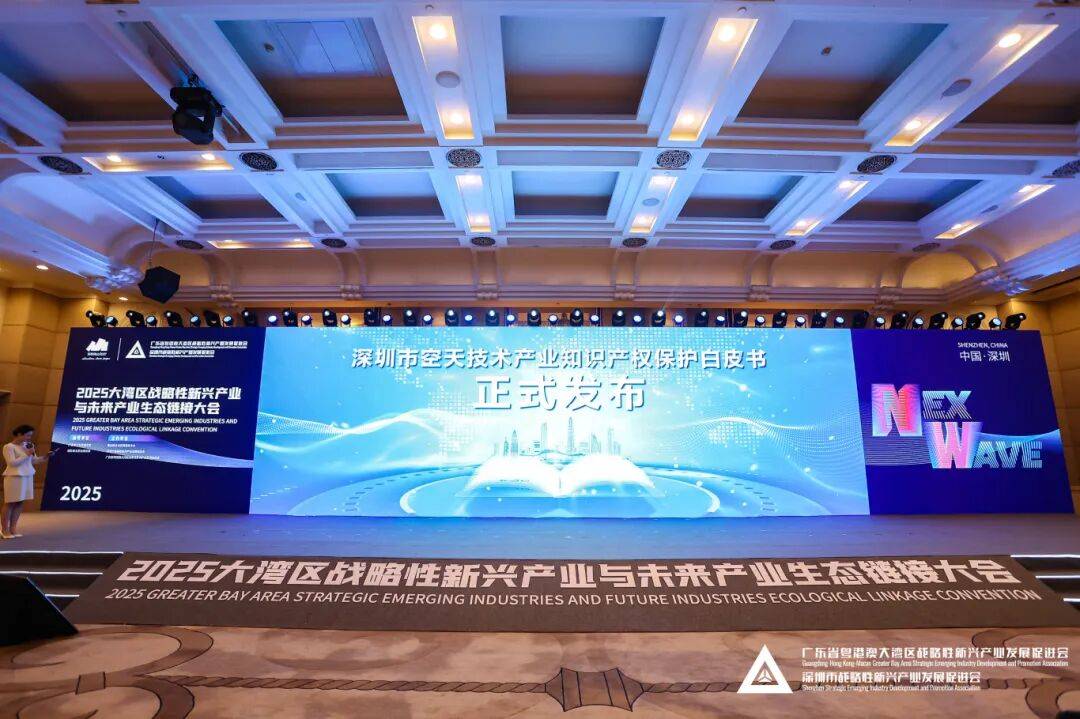
深圳发布全国首部空天技术知识产权保护白皮书
Sou Hu Cai Jing· 2025-10-10 13:27
Core Viewpoint - Shenzhen is leveraging intellectual property (IP) as a shield to support the aerospace technology industry, marking a significant step in IP governance and international protection within this sector [1][12]. Group 1: White Paper Release - The "Shenzhen Aerospace Technology Industry Intellectual Property Protection White Paper" is the first of its kind in China, focusing on IP protection in the aerospace technology sector [1][3]. - As of December 2024, Shenzhen's aerospace technology industry has filed 2,278 patent applications, ranking fifth nationally, with 1,042 effective patents, showcasing strong innovation and technical reserves [3]. Group 2: Innovation and Patent Landscape - Enterprises are the primary drivers of innovation, accounting for 86.74% of patent applications, with leading companies like Huawei and Asia-Pacific Star Communication holding significant patent portfolios in satellite communication and drone technology [3][9]. - Huawei has filed 267 patents in aerospace technology, while ZTE has 75, contributing to Shenzhen's status as a "patent highland" in this field [3]. Group 3: Overseas IP Protection System - Shenzhen has established a "five-in-one" overseas IP protection system, which includes risk prevention, case monitoring, dispute response, capability enhancement, and resource integration, providing comprehensive support for aerospace technology companies venturing abroad [5]. - The city has set up the first overseas IP protection workstation in Germany, offering localized protection services, and has accumulated 226,300 PCT international patent applications, expected to lead the nation for 21 consecutive years [5]. Group 4: Collaborative Protection Mechanism - Shenzhen is innovating in collaborative IP protection mechanisms, having initiated efficient coordination between patent administrative confirmation and judicial infringement processes, significantly improving dispute resolution efficiency [7]. - By 2024, there will be 142 IP protection workstations in Shenzhen, with 62 related to aerospace technology, covering critical areas such as drones, chips, semiconductors, and new materials [7]. Group 5: Standard Essential Patents (SEPs) - The white paper emphasizes the need for strengthening the layout of standard essential patents (SEPs) in aerospace technology and encourages companies to participate in international standard-setting [10]. - Huawei and ZTE have filed 70 and 13 SEPs, respectively, with the European Telecommunications Standards Institute (ETSI), covering key standards like non-terrestrial networks (NTN) [10]. Group 6: Future Implications - Aerospace technology is viewed as a strategic high ground for future industries, with the competition in IP reflecting the competition in innovation ecosystems and institutional guarantees [12]. - The release of the white paper signals a commitment to valuing, protecting, and empowering every intellectual achievement in Shenzhen's innovative landscape, suggesting a promising future for the aerospace industry [12].