扎念琴

Search documents
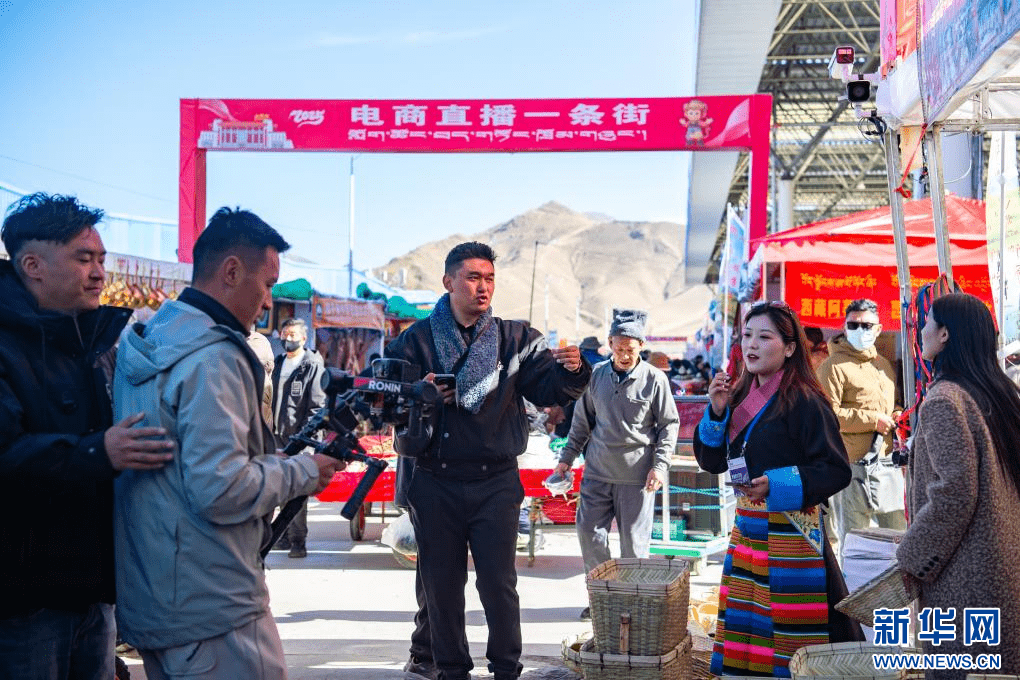
西藏山南:电商直播一条街助力“藏品出藏”
Sou Hu Cai Jing· 2025-12-03 06:14
Group 1 - The 45th Yalong Material Exchange Conference is held in Naitong District, Shannan City, Tibet, lasting for seven days [1] - The conference features over 2,600 exhibition booths and innovatively adopts a "online + offline" integration model [1] - A "live streaming street" is created on-site to promote local agricultural products through invited agricultural live streamers [1] Group 2 - Logistics subsidies and cooperation with express delivery services are implemented to facilitate the "outbound transportation of Tibetan products" [1]

白玛次仁:弹起扎念琴,唱响新时代
Zhong Guo Qing Nian Bao· 2025-09-28 00:11
Core Viewpoint - The article highlights the journey of Bai Ma Ci Ren, a music teacher in Tibet, who is dedicated to preserving and promoting the traditional Tibetan instrument, the Zha Nian Qin, through education and performance [2][6]. Group 1: Background and Personal Journey - Bai Ma Ci Ren's dream of owning a Zha Nian Qin was realized when his father bought him one for over 500 yuan during his second year of middle school, which left a lasting impression on him [2][3]. - He grew up in a small village in Tibet, where the Zha Nian Qin is an integral part of cultural celebrations and daily life, reflecting the happiness of the community [3][4]. - Bai Ma Ci Ren's early experiences with the instrument were influenced by his family, particularly his grandfather and uncle, who taught him the art of playing [4][5]. Group 2: Education and Career - After studying at Tibet University, Bai Ma Ci Ren conducted field research on Zha Nian Qin, interviewing over 160 folk artists to gather historical and cultural insights, which contributed to his master's thesis [5][6]. - In 2020, he became a music teacher at Lhasa First Vocational School, where he introduced a Zha Nian Qin course, marking the first time such a program was offered at the school [6][7]. - Bai Ma Ci Ren developed a unique curriculum that emphasizes creativity and enjoyment in learning, rather than strict adherence to traditional methods [6][7]. Group 3: Challenges and Innovations - Bai Ma Ci Ren faces challenges in engaging younger generations with the Zha Nian Qin due to the prevalence of modern entertainment options [7][8]. - He believes in the need for innovation within the traditional framework, creating new compositions and enhancing the theoretical study of the instrument to attract youth [7][8]. - His efforts include composing new works that have received positive feedback, showcasing the evolving nature of Zha Nian Qin music [7][8].
西藏的孩子:古老扎念琴声悠扬
Xin Hua She· 2025-09-18 01:31
Core Viewpoint - The "Zhanian" or "six-stringed instrument" is an integral part of Tibetan culture, recognized as a national intangible cultural heritage since 2014, and is now being introduced to school children in Lhasa to promote cultural education and appreciation [1]. Group 1 - The Zhanian instrument has a long history and is documented in ancient Tibetan murals and literature, serving as a companion during festivals, celebrations, and daily labor [1]. - The introduction of Zhanian into Lhasa's primary and secondary schools allows children to engage with this cultural artifact from a young age, enriching their childhood experiences [1]. - The teaching of Zhanian is actively taking place in various educational institutions, with instructors guiding students in playing techniques and fostering a connection to their cultural heritage [4][8][9].