
托鲁地文拉法辛

Search documents
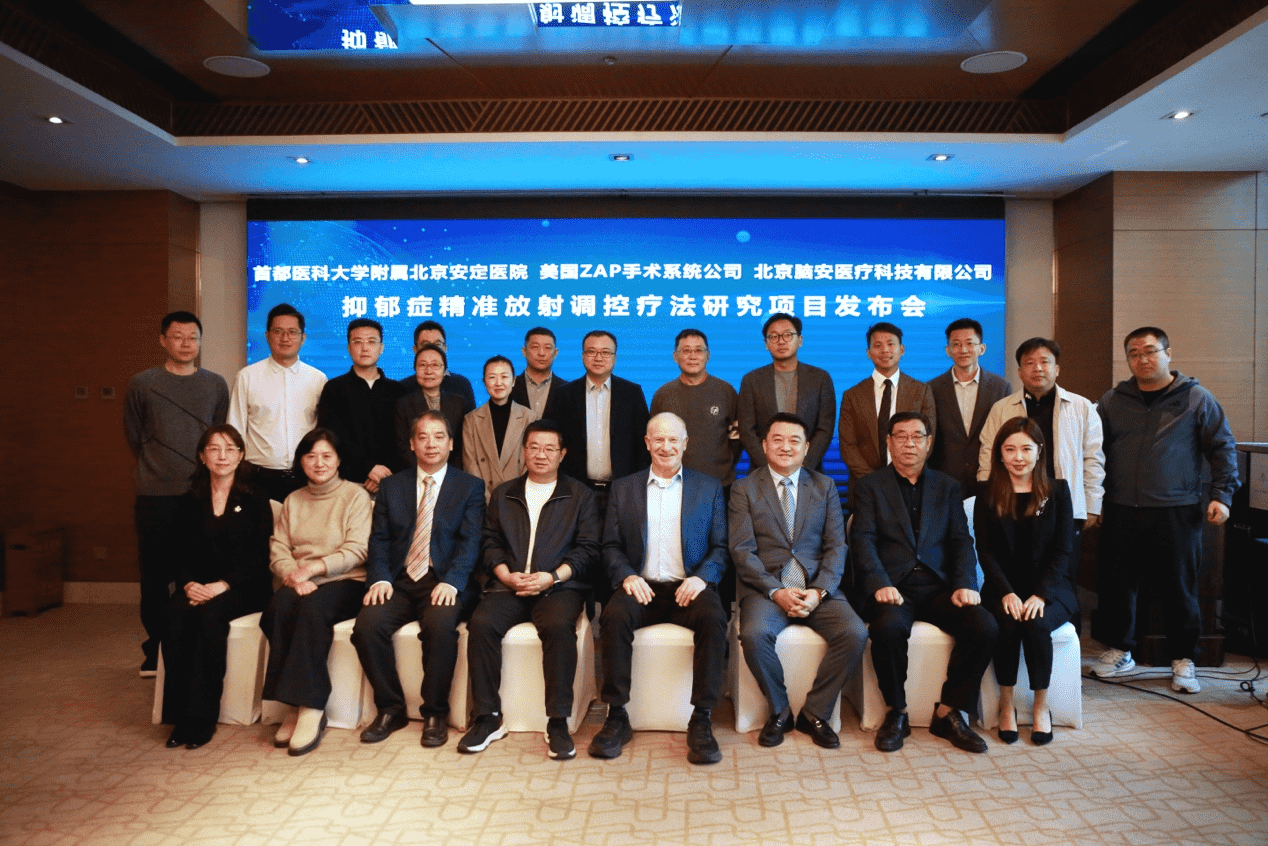
抑郁症精准放射调控疗法在京启动 无创神经调控赛道有望开辟新蓝海
Zhong Guo Jin Rong Xin Xi Wang· 2025-12-16 14:31
Core Viewpoint - The "Precision Radiotherapy for Depression" project aims to advance clinical research and application breakthroughs in treating depression using new generation precision radiotherapy technology, specifically the ZAP-X system, which is currently in the clinical research phase focusing on safety and efficacy [1] Group 1: Market Overview - Depression is one of the most common mental disorders globally, with approximately 332 million people affected, including over 90 million in China, of which 10 to 12 million require treatment during depressive episodes [1] - The antidepressant market in China is highly competitive, with SSRIs and SNRIs accounting for about 60% of the market share. The sales revenue for antidepressants in sample hospitals is expected to exceed 8 billion yuan in 2024, with SSRIs contributing 3.58 billion yuan (43.44%) and SNRIs 1.42 billion yuan (17.18%) [3][4] - The global antidepressant market was valued at approximately $14.5 billion in 2022 and is projected to reach $17.6 billion by 2030, with China's market expected to grow to 23.8 billion yuan by 2030, reflecting a compound annual growth rate (CAGR) of 4.2% from 2022 to 2030 [3][4] Group 2: Innovation and Development - There is a significant unmet clinical need as about 30% of patients do not respond to existing antidepressants, highlighting the potential of neuromodulation technologies as a complementary treatment, especially for treatment-resistant depression (TRD) [6] - Non-invasive neuromodulation techniques, such as transcranial magnetic stimulation (TMS), are gaining traction in clinical settings. TMS has been FDA-approved for depression treatment since 2008, and several certified TMS systems are available globally [7] - The "Precision Radiotherapy for Depression" project focuses on exploring the clinical efficacy and safety of low-dose radiotherapy for treatment-resistant depression, aiming to establish a new neuromodulation method with high precision targeting [9][10] Group 3: Research and Clinical Trials - The project is part of a broader trend in the development of innovative antidepressant therapies, with numerous new drugs in clinical trials targeting various mechanisms [4][5] - The project aims to investigate the potential of radiotherapy as a neuromodulation method, traditionally used for brain tumors, to treat depression, with initial studies showing promising results [10] - Collaboration among various professionals and addressing regulatory, funding, and resource challenges are crucial for the project's success and eventual commercialization [11]

单胺深化与新机制探索并行,抗抑郁药市场与新药研发进展几何?
Southwest Securities· 2025-11-14 05:54
Investment Rating - The report does not explicitly state an investment rating for the antidepressant drug industry Core Insights - Depression disorders are the most common mental disorders, characterized by persistent low mood, loss of pleasure, and decreased energy. The etiology remains unclear, with various hypotheses including the monoamine hypothesis and glutamatergic system abnormalities [5][23] - There are unmet clinical needs in depression treatment, including limited efficacy of current first-line antidepressants, slow onset of action, and the need for precision treatment for different subtypes and special populations [5][27] - The current market for antidepressants in China is substantial, with over 8 billion yuan in hospital sales, where SSRIs and SNRIs account for approximately 60% of the market share [5][6] - New drug development is focusing on deepening monoamine research, exploring amino acid classes, and other mechanisms, with a gradual entry into a harvest period for innovative drugs [5][6] Summary by Sections Unmet Clinical Needs - Current first-line antidepressants like SSRIs have limited efficacy, with about one-third of patients not achieving remission after multiple treatment steps [27] - The onset of current antidepressants is slow, typically requiring 1-4 weeks for initial improvement and 4-8 weeks to reach treatment goals, posing risks for patients during acute phases [27][28] - There is a need for precision treatment for different subtypes of depression and special populations such as children and the elderly [27] Market Overview - The antidepressant market in China saw over 8 billion yuan in sales, with SSRIs leading at 3.58 billion yuan (43.44% market share) and SNRIs at 1.42 billion yuan (17.18% market share) [5][6] - The top-selling antidepressants include escitalopram oxalate, agomelatine, and sertraline [5] Drug Development Trends - The report highlights ongoing research into monoamine neurotransmitter drugs, with 128 clinical-stage products targeting various mechanisms [5][6] - Innovative drugs are gradually entering the market, with one local innovative drug already launched and over twenty in clinical trials [5][6]
临床专家解读抑郁症用药及研发情况
2025-07-21 14:26
Summary of Key Points from Conference Call on Antidepressant Drugs Industry Overview - The conference discusses the antidepressant drug industry, focusing on the clinical challenges and drug development landscape for treating depression, a prevalent mental health disorder with unclear pathophysiology [1][2]. Core Insights and Arguments - **Clinical Pain Points**: Current mainstream antidepressants face significant clinical challenges, including: - **Ineffective Treatment**: Approximately 60% efficacy rate, meaning not all patients can effectively control symptoms [7]. - **Slow Onset of Action**: Most existing antidepressants take 1-2 weeks or longer to show effects, which is particularly distressing for severe patients [7]. - **Safety Concerns**: Long-term use can lead to side effects such as sexual dysfunction, weight gain, and negative impacts on sleep quality [7][4]. - **Drug Development Challenges**: The slow iteration of psychiatric drugs is attributed to: - Lack of significant breakthroughs in understanding the mechanisms of mental illnesses [5]. - High failure rates in new drug development, leading to reduced investment from pharmaceutical companies in the CNS (central nervous system) sector [5] [6]. - **Current Drug Landscape**: - New drugs like **Trazodone** and **S-ketamine nasal spray** have been introduced, with Trazodone being a novel antidepressant developed by Shandong Green Leaf, which acts on serotonin, norepinephrine, and dopamine [2]. - S-ketamine has been successful in overseas markets due to its rapid onset but faces strict regulations in China due to its classification as a controlled substance [10][14]. - **Market Potential**: - Treatment for moderate to severe depression has greater market potential, as approximately 40%-50% of patients fall into this category, while treatment-resistant depression accounts for about 20%-30% of cases [15]. Important but Overlooked Content - **Clinical Trial Design**: Antidepressant clinical trials primarily rely on subjective scale results for efficacy evaluation, which can lead to high placebo effects, especially in mild to moderate depression cases [12][13]. - **Patient Considerations**: Clinicians must consider various factors when selecting treatment, including the severity of the patient's condition, suicidal ideation, age, and potential drug interactions [8][9]. - **Future Opportunities**: The potential for a new oral antidepressant with similar efficacy to S-ketamine but with fewer side effects could present significant market opportunities, contingent on successful development [11]. Conclusion - The antidepressant drug industry is at a critical juncture, facing significant clinical challenges and development hurdles. However, there is a notable market opportunity for innovative treatments targeting moderate to severe depression, particularly if they can address the current limitations of existing therapies.
