折叠浴室椅

Search documents
“老”问题遇到新问题 适老化改造待破局
Qi Lu Wan Bao· 2025-10-30 11:55
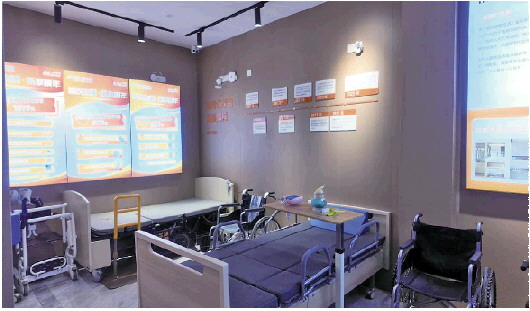
Core Insights - The aging population in China is rapidly increasing, with projections indicating that by the end of 2024, there will be 310 million people aged 60 and above, accounting for 22% of the total population. This number is expected to exceed 400 million by 2035, leading to a significant market opportunity for elderly-friendly home modifications [3][4]. Market Potential - The home modification market for the elderly in China is estimated to be around 3 trillion yuan. Over 90% of elderly individuals prefer to age in place, and approximately 58.7% of them believe their homes are not suitable for their needs, representing a potential user base of about 180 million people [4][5]. - Companies like Shandong Sangle Home Furnishing Co., Ltd. have begun to enter this market, establishing over 300 stores nationwide with dedicated elderly-friendly sections [4]. Challenges in Development - Despite the large market potential, actual demand has not fully materialized. Sangle's elderly-friendly business accounts for only 20%-30% of its overall renovation business, primarily driven by urgent needs rather than proactive modifications [5][6]. - A significant barrier to market expansion is the reluctance of many elderly individuals to invest in modifications until a critical need arises, often after an incident such as a fall [6][7]. Consumer Behavior - The decision-making process for home modifications is often led by the children of elderly individuals, with over 90% of purchases made by them rather than the elderly themselves. This creates a disconnect between actual needs and perceived needs [6][7]. - Many elderly consumers are conservative in their spending habits, often prioritizing financial support for their children over home modifications [7][8]. Industry Characteristics - The market currently exhibits a "product-heavy, service-light" structure, where many companies focus on selling individual products without providing comprehensive installation services, leading to underutilization of purchased items [8][9]. - There is a lack of professional talent and standardized practices in the industry, which hampers the ability to provide tailored solutions for elderly consumers [7][8]. Future Directions - The industry is evolving towards more comprehensive solutions that include not just bathroom products but also full home customization and smart home technologies. There is a growing demand for lightweight, easy-to-install products that can be quickly adopted by elderly consumers [9][10]. - Companies are also focusing on enhancing consumer trust and reducing decision-making barriers by creating experiential spaces in communities where elderly individuals can interact with products before making a purchase [9][10]. Policy Support - Government policies are increasingly supporting elderly-friendly home modifications, with initiatives aimed at improving living conditions for the elderly and promoting the installation of necessary facilities in older communities [10].