
挂钩黄金的结构性理财产品

Search documents
部份银行黄金存款被抢光
2 1 Shi Ji Jing Ji Bao Dao· 2026-01-22 11:58
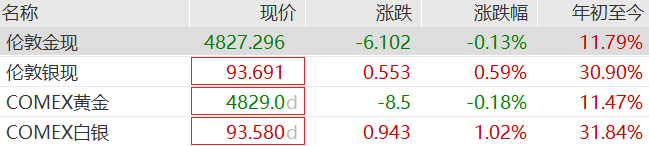
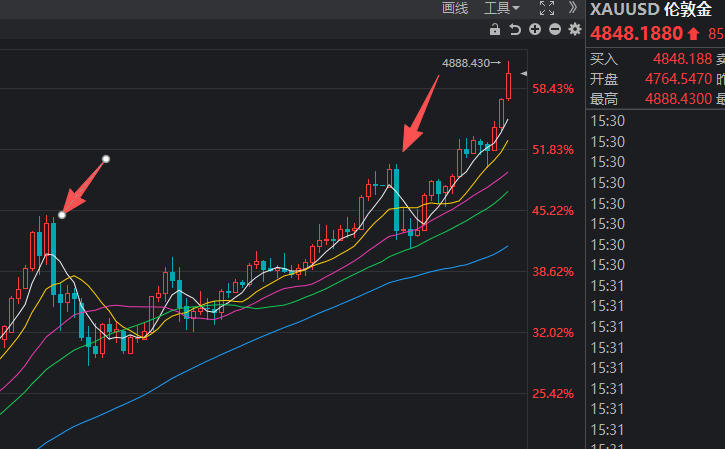
Group 1 - The core focus of the article is the recent surge in gold prices, with COMEX gold reaching a new high of $4827 per ounce, reflecting an increase of over 11% in just 22 days of the year [1][2] - Structural deposit products linked to gold have gained popularity among both listed companies and individual investors, with several banks reporting a surge in demand and some products even selling out [4][2] - Despite the strong performance of gold, the overall yield of the gold-linked structured deposits offered by banks is not particularly high, with most products yielding annualized rates not exceeding 2% [6][7] Group 2 - The structured deposits are innovative financial products that combine traditional deposits with financial derivatives, aiming for higher returns while maintaining a low-risk profile [4] - Specific examples of structured deposits show varying conditions for achieving higher yields, such as a product from Bank of Communications offering a yield between 0.5% and 3.2% based on gold price movements [6][7] - Short-term structured deposit products, which have observation periods of only a few days, are subject to significant market volatility, making it easier to trigger minimum yield conditions [10] Group 3 - Investors are advised to consider several factors when selecting structured deposits, including the structure of returns, observation methods, and the importance of minimum yield guarantees [12] - Compared to non-principal protected structured financial products, structured deposits offer the key advantage of principal safety, making them appealing for conservative investors [14] - Despite recent fluctuations, many institutions remain optimistic about the long-term outlook for gold prices, with forecasts suggesting potential increases in the coming years [16]

部份银行黄金存款被抢光
21世纪经济报道· 2026-01-22 11:40
Core Viewpoint - The article highlights the recent surge in gold prices, with COMEX gold reaching a new high of $4827 per ounce, reflecting an increase of over 11% in just 22 days of the year 2026. This trend has led to a growing interest in structured deposits linked to gold among both companies and individual investors [1][2][17]. Group 1: Gold Price Performance - As of January 22, 2026, COMEX gold was priced at $4827 per ounce, showing a year-to-date increase of 11.47% [2]. - London gold and silver also experienced significant price movements, with London gold at $4827.296 and London silver at $93.691, reflecting increases of 11.79% and 30.90% respectively since the beginning of the year [2]. Group 2: Structured Deposits - Several listed companies, including Guozi Software and Fudan Zhangjiang, have announced their subscription to gold-linked structured deposits, indicating a rising enthusiasm among individual investors for such products [4]. - Major banks, including Bank of Communications and China Merchants Bank, have launched structured deposits linked to gold, with some products experiencing high demand and limited availability [4]. Group 3: Yield and Conditions of Structured Deposits - Despite the strong performance of gold, the overall yield of gold-linked structured deposits is not particularly high, with most products offering annualized returns not exceeding 2% [6]. - For example, a product from Bank of Communications offers a yield range of 0.5% to 3.2%, contingent on gold price movements, with a minimum yield of 0.5% if the price declines [6][7]. - Another product from Industrial Bank has a yield of 2.02% if gold prices increase by 16.9% or more, with a minimum yield of 1% if prices fall below a certain threshold [8]. Group 4: Market Volatility and Short-term Products - Short-term structured deposit products, with durations of about one week, are being offered with annualized yields between 1.5% and 1.7%, but they are subject to market volatility risks [10]. - The article notes that significant price fluctuations in gold can easily trigger minimum yield conditions for these short-term products [10]. Group 5: Investment Considerations - Investors are advised to carefully review the terms of structured deposits, including the structure of returns, observation methods, and the feasibility of achieving the highest yields [12]. - Emphasis is placed on the importance of selecting products with higher minimum yields to mitigate risks associated with incorrect market predictions [13]. - The article contrasts structured deposits with non-principal protected structured financial products, highlighting the safety of principal as a key advantage of structured deposits [15]. Group 6: Long-term Outlook on Gold - Despite recent fluctuations in gold prices, several institutions remain optimistic about the long-term outlook for gold, with predictions of price increases driven by factors such as Federal Reserve interest rate cuts and geopolitical uncertainties [17]. - Historical trends suggest that gold prices could rise between 10% and 35% by 2026, with forecasts from major banks indicating potential prices reaching $5000 per ounce or even challenging $6000 in the long term [17].

金价暴涨黄金存款收益率可达3.2%,有银行一度售罄
2 1 Shi Ji Jing Ji Bao Dao· 2026-01-22 09:48
Core Viewpoint - Gold has regained market attention, with prices reaching new highs and structural deposit products linked to gold becoming popular investment choices [1][7]. Group 1: Gold Price Performance - As of January 22, 2026, COMEX gold prices reached $4,827 per ounce, marking an increase of over 11% within the first 22 days of the year [1]. - Institutions remain optimistic about gold's long-term prospects, with predictions of price increases between 10% to 35% by 2026, and forecasts from Morgan Stanley and UBS suggesting potential prices of $5,000 to $6,000 per ounce [7][8]. Group 2: Structural Deposit Products - Structural deposit products linked to gold have seen increased demand, with several listed companies and banks reporting high subscription rates [1]. - These products typically offer a combination of low-risk assets and financial derivatives, aiming for higher returns, although current yields are generally low, with most products offering annualized rates below 2% [1][6]. Group 3: Product Examples and Conditions - For example, a product from Bank of Communications offers a yield range of 0.5% to 3.2%, contingent on gold price movements, with specific conditions for achieving higher returns [2]. - Another product from Industrial Bank has a minimum yield of 1%, providing a safety net for investors despite market fluctuations [3]. Group 4: Investment Considerations - Investors are advised to consider the conditions for achieving maximum yields and the implications of minimum yields when selecting structural deposits [6]. - The safety of principal is a key advantage of structural deposits compared to non-principal protected products, with a significant percentage of linked products experiencing early termination [6].
世界黄金协会中国区CEO:黄金投资永远不嫌晚
21世纪经济报道· 2025-12-07 01:25
Core Viewpoint - The World Gold Council advocates the "Gold+" asset allocation concept to help investors overcome challenges in gold investment, promoting gold as a long-term strategic asset to enhance risk resilience and optimize overall returns [1][3][5]. Group 1: Challenges Faced by Investors - Investors face three main difficulties in gold investment: understanding, entry, and holding [3][4]. - "Understanding difficulty" arises from the complex factors influencing gold prices, leading many to treat gold as a speculative tool rather than a strategic asset [4][5]. - "Entry difficulty" is characterized by hesitation over whether the current price is too high, causing investors to miss opportunities [4][5]. - "Holding difficulty" refers to the challenge of maintaining long-term positions in gold, with many selling during price fluctuations instead of holding for potential long-term gains [4][5]. Group 2: Long-term Value of Gold - Over the past 50 years, gold has provided an average annual return of approximately 10%, with a cumulative increase of nearly 60% since early 2025 [5]. - The "Gold+" concept encourages a shift from short-term speculation to long-term allocation, establishing gold as a strategic core asset [5][6]. Group 3: Recommended Allocation Strategies - The World Gold Council suggests two main strategies for gold allocation: indirect allocation through institutional investors and direct allocation by individuals [5][6]. - For individual investors, it is recommended to allocate 5% to 15% of household assets to gold, depending on personal risk tolerance [6][10]. - Institutional investors, such as public FOFs, actively incorporate gold into their long-term investment strategies, emphasizing discipline and strategic positioning [10][11]. Group 4: Successful International Examples - The Texas Teacher Retirement Fund exemplifies a conservative approach to gold allocation as part of a long-term investment strategy [7]. - Bridgewater Associates, led by Ray Dalio, views gold as a safeguard against credit risk, advocating for its inclusion in strategic asset allocation rather than tactical price betting [8]. Group 5: Domestic Market Trends - Public FOFs, particularly those targeting retirement, are actively incorporating gold into their investment strategies due to regulatory frameworks and product characteristics that favor long-term, disciplined investment [10][11]. - The discipline in managing gold allocations distinguishes institutional investors from individual investors, who may be more prone to short-term trading [13]. Group 6: Practical Investment Guidance - Investors should avoid speculative mindsets and consider gold as a long-term investment, with a recommended allocation not exceeding 20% of total assets [14][15]. - A gradual approach to investing in gold, such as starting with 2% to 3% of flexible funds and increasing to 5%, is advised to mitigate risks associated with market timing [14][15]. - Regularly reviewing gold investments and taking profits without fully liquidating positions can help maintain a balanced approach [15][16]. Group 7: Future Development of "Gold+" Products - The World Gold Council plans to promote the "Gold+" concept through industry meetings and public outreach, emphasizing gold's role as a strategic asset in long-term wealth preservation [16][17].

专访王立新:黄金投资永远不嫌晚 “黄金+”帮你告别追涨杀跌
2 1 Shi Ji Jing Ji Bao Dao· 2025-12-05 04:08
Core Viewpoint - The World Gold Council advocates the "Gold+" asset allocation concept to help investors overcome challenges in gold investment, emphasizing the importance of long-term strategic asset allocation rather than short-term speculation [1][5]. Group 1: Investment Challenges - Investors face three main difficulties in gold investment: understanding, entry, and holding [3][4]. - The "understanding difficulty" arises from the complex factors influencing gold prices, leading many to treat gold as a speculative asset rather than a strategic one [3]. - The "entry difficulty" is characterized by hesitation over whether the current price is too high, causing investors to miss opportunities [4]. - The "holding difficulty" involves the challenge of maintaining long-term positions in gold amidst price fluctuations, with many investors selling during short-term volatility [4]. Group 2: "Gold+" Concept - The "Gold+" concept aims to shift investors from short-term speculation to long-term allocation, establishing gold as a strategic core asset [5][11]. - Two recommended allocation methods include indirect allocation through institutional investors and direct allocation by individuals at a reasonable proportion [5][6]. - Institutional investors, such as large asset management firms, have successfully integrated gold into their long-term strategic asset allocations, demonstrating its core value in stable investment portfolios [7][8]. Group 3: Practical Allocation Strategies - For individual investors, it is suggested to allocate 5%-15% of their total assets to gold, adjusting based on personal risk tolerance [6][12]. - Investors are encouraged to avoid high-frequency trading and instead consider gradual investments, such as dollar-cost averaging, to mitigate the impact of price volatility [12][13]. - The importance of maintaining a disciplined approach to gold investment is highlighted, with successful investors often being those who do not react impulsively to short-term price changes [11][13]. Group 4: Future Development of "Gold+" Products - The World Gold Council plans to promote the "Gold+" concept in China by enhancing supply and demand through industry communication and public education [14]. - The focus will be on demonstrating the strategic value of gold as a core asset in investment portfolios, aiming to shift perceptions away from short-term trading [14].

投资挂钩黄金理财产品要保持理性
Zheng Quan Shi Bao· 2025-09-26 00:39
Core Viewpoint - The international gold price has reached new historical highs, with COMEX gold futures surpassing $3,800 and London gold exceeding $3,790, reflecting a year-to-date increase of over 40% [1][2]. Group 1: Market Trends - The surge in gold prices has led to a renewed interest in gold-related financial products, with nearly 50 new products launched this year, and about 20% of these being issued in the second half of the year [1]. - Structured financial products linked to gold have become mainstream, utilizing a "fixed income + derivatives" model to enhance returns while keeping costs low [1][2]. Group 2: Institutional Insights - The launch of benchmark products, such as the "Private Banking Selected Fortune Gold Shark Fin Fixed Income Product," indicates a growing market for structured financial products linked to gold [2]. - Major financial institutions, including Morgan Stanley and Goldman Sachs, have optimistic forecasts for gold prices, predicting $3,800 per ounce by Q4 2025 and potentially nearing $5,000 under extreme scenarios [2]. Group 3: Risk Awareness - Despite the bullish sentiment, there are risks associated with gold investments, including historical price corrections and fraudulent schemes exploiting the gold concept [3]. - Investors are advised to maintain a balanced approach, with recommended gold allocation in portfolios ranging from 5% to 15%, and to understand the terms of structured products to avoid pitfalls [3][4].
多家银行理财子公司发行挂钩黄金结构性产品
Zheng Quan Ri Bao· 2025-09-24 16:48
Core Viewpoint - The demand for gold investment is increasing as gold prices continue to rise, leading to the issuance of structured financial products linked to gold by various bank wealth management subsidiaries [1][2]. Group 1: Structured Financial Products - Several bank wealth management subsidiaries, including Jianxin Wealth Management, have launched structured financial products linked to gold, such as the "Private Banking Selected Fortune Gold Shark Fin Fixed Income Closed-End Product" [1]. - These structured products are designed to provide returns based on the relationship between the underlying asset price and set barrier prices, allowing for different return trends depending on the asset price range [1]. - The products are categorized as "fixed income+" investments, combining low-risk fixed income assets with a small portion invested in gold-linked options to achieve stable returns while allowing for higher investment gains [1][2]. Group 2: Advantages of Gold-Linked Products - Gold-linked structured financial products offer multiple advantages, including risk hedging and enhanced returns, particularly in a fluctuating gold market [2]. - They help investors achieve stable investments while benefiting from the low correlation between gold and the stock market, thus meeting the demand for diversified investment [2]. - The products are characterized by a "fixed income + options" composite structure, which allows for customized risk-return profiles and the ability to capture diverse asset opportunities through derivatives [2][3]. Group 3: Future Outlook and Considerations - The investment scope of "fixed income+" products is broad, enabling flexible asset switching to capture market trends while maintaining low risk [3]. - Future expansions of "fixed income+" products are expected to include more anti-inflation assets like gold and introduce equity assets and cross-market arbitrage strategies [3]. - Investors are advised to clarify long-term allocation goals, control reasonable proportions, and prioritize transparent products to mitigate risks through diversification [3].