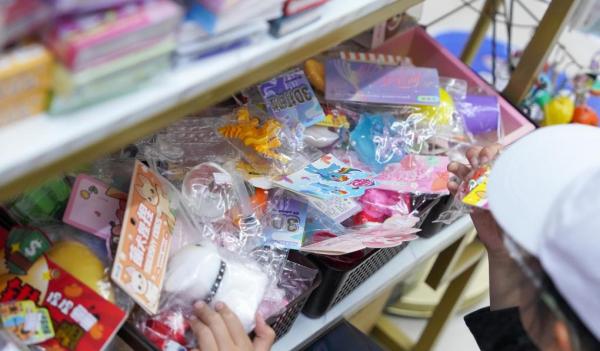
挤痘痘捏捏乐

Search documents
新华视点|网红玩具“捏捏乐”为何屡陷安全争议?
Xin Lang Cai Jing· 2025-12-03 13:03
Core Viewpoint - The recent safety controversies surrounding "squishy" toys, popular among both adults and children, have led to the release of new mandatory national safety standards aimed at enhancing the safety of children's toys [1][10][22] Group 1: Safety Concerns - "Squishy" toys, made from materials like TPR (thermoplastic rubber) or silicone, are widely sold near schools, but many are unregulated products lacking safety certifications [1][10] - Reports indicate that some "squishy" toys emit strong odors, raising health concerns among parents who often allow their children to play with them only through the packaging [3][15] - Testing revealed that unregulated "squishy" toys can release harmful substances, with xylene levels reaching 42.65 mg/m³, significantly exceeding the new standard limit of 0.20 mg/m³ [6][10][18] Group 2: Regulatory Developments - The newly revised national standard GB 6675.1-2025 includes stricter limits on harmful substances in toys, expanding the types of regulated phthalates from six to ten [10][22] - The new regulations also encompass packaging materials, ensuring that even the packaging of toys is subject to chemical safety assessments [10][22] - Authorities plan to enhance quality control and monitoring of toy safety, aiming for significant improvements in safety standards by 2027 [10][22] Group 3: Market Response and Consumer Awareness - There is a growing demand for safety certifications from consumers, with some buyers requesting testing reports for both toys and their packaging [21][22] - Experts emphasize the need for parents and schools to educate children about potential risks associated with trendy toys, as children may lack the ability to discern product quality [11][23] - Consumers are advised to purchase toys from reputable sources and to be cautious of products with incomplete labeling or strong odors [12][23]

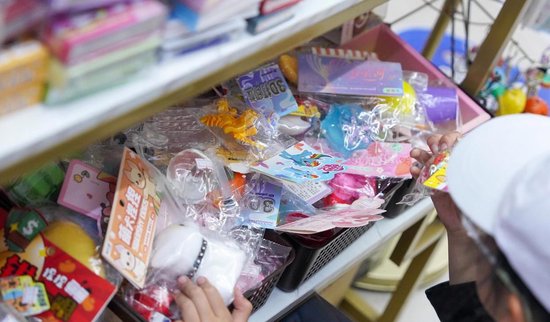
网红玩具“捏捏乐”为何屡陷安全争议?
Xin Hua She· 2025-12-03 12:53
Core Viewpoint - The recent safety controversies surrounding "squishy" toys, popular among both adults and children, have led to the release of new mandatory national safety standards aimed at enhancing the safety of children's toys [1] Group 1: Safety Concerns - "Squishy" toys, made from materials like TPR (thermoplastic rubber) or silicone, have been found to often be "three-no" products (no production license, no quality inspection, no manufacturer information) [2] - Some "squishy" toys emit strong odors, raising health concerns among parents who often allow their children to play with them only through the packaging [2] - Testing revealed that "three-no" squishy toys released xylene at levels of 42.65 mg/m³, while TPR and silicone variants released 23.71 mg/m³ and 2.56 mg/m³ respectively, exceeding the new safety standard limit of 0.20 mg/m³ [5][6] Group 2: Regulatory Developments - The newly revised mandatory national standard GB 6675.1-2025 includes stricter limits on harmful substances in toys, expanding the types of phthalates regulated from six to ten [8] - The new standards also incorporate packaging materials into the chemical performance regulations of toys, enhancing consumer safety [8] - The National Market Supervision Administration plans to strengthen quality safety supervision of toy products and aims to significantly improve safety levels by 2027 [8] Group 3: Market Dynamics - The rapid popularity of "squishy" toys has led to a surge in sales, with many stores reporting high demand despite safety concerns [2] - Parents are increasingly seeking safety certifications and testing reports for these toys, indicating a shift towards more informed purchasing decisions [7] - Industry insiders suggest that compliance with safety standards may increase production costs, potentially leading to higher retail prices for compliant products [7]