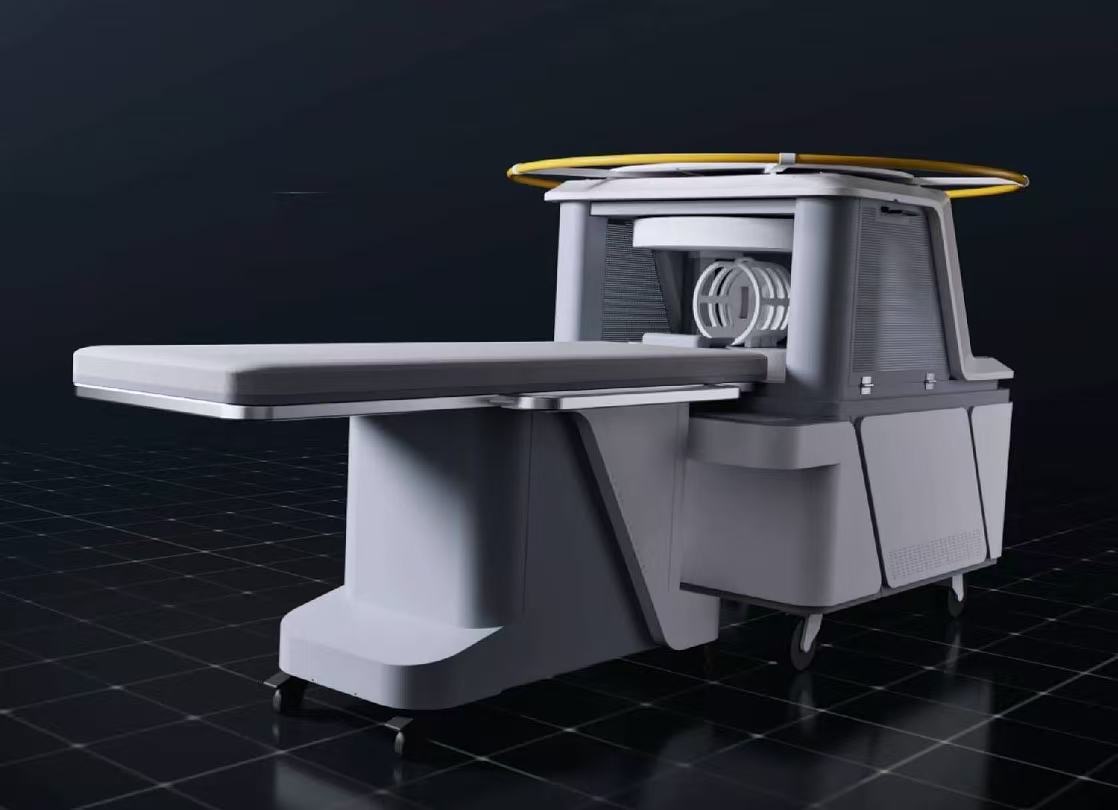
搭载AI功能的超高端

Search documents
国产医疗设备聚焦移动化和智能化,但AI临床落地仍有挑战
Di Yi Cai Jing· 2025-09-15 11:04
Core Insights - The application and promotion of AI medical imaging devices in domestic clinical settings face challenges, despite recent approvals of several domestically developed medical devices by the National Medical Products Administration [1][4] - The latest approved devices exhibit significant features of mobility and intelligence, with AI functionality becoming a key focus for companies in their R&D efforts [1][3] Industry Developments - Recently, two AI-enabled medical imaging devices were approved, including a mobile MRI system and a large-aperture standing CT, which break traditional usage barriers and provide imaging support for various medical scenarios [1][3] - Major international and domestic companies, including GE Healthcare, Siemens Healthineers, and Philips, are increasing their R&D investments in AI medical imaging devices, showcasing advanced AI-integrated diagnostic equipment at recent trade shows [3][4] Technological Advancements - AI is identified as a crucial direction for the development of MRI devices, with companies planning to enhance imaging capabilities through AI optimization and intelligent segmentation of lesions [3][5] - Siemens Healthineers has developed an AI cardiovascular ultrasound system that utilizes a vast database of heart images to improve diagnostic accuracy and consistency [4][5] Market Challenges - Despite the technological advancements, the clinical application of AI medical imaging devices is primarily research-focused, with unclear pricing structures for AI-enabled devices hindering their adoption in hospitals [4][6] - The integration of AI in medical imaging is limited by existing medical models and reimbursement systems, indicating a gap between China and the United States in the deployment of AI medical devices [6]