
无人机自动机库

Search documents
武汉低空航线 持续上新
Shang Hai Zheng Quan Bao· 2025-10-15 14:56
Core Insights - Wuhan has established itself as a leading hub for low-altitude economy with over 170 representative enterprises and 33 approved low-altitude commercial trial routes as of September this year [1][2] - The city plans to build 1,000 drone automatic hangars within five years, with 400 expected to be completed by the end of this year, providing comprehensive coverage for key business districts and transportation hubs [1][4] Group 1: Low-altitude Economy Development - Wuhan East Lake High-tech Zone is the first national low-altitude shared drone application demonstration area, featuring a comprehensive drone network supported by AI scheduling systems and automated hangars [2] - The drone network has improved urban management efficiency, achieving a 30% increase in event handling efficiency and a reduction in traffic congestion by 11.5% year-on-year [2] - The area has planned over 1,600 flight routes, with a total of 53,000 flights covering 265,000 kilometers [2] Group 2: Infrastructure and Services - The planned drone hangars will have a rapid battery swap capability of two minutes and will support dual payloads to adapt to complex urban environments [4] - The city has completed 121 hangars, covering all 15 districts, with the first phase of 400 hangars set to provide full coverage within the third ring road and over 60% coverage outside it [4] Group 3: Future Applications and Planning - By 2030, Wuhan anticipates a new low-altitude economic ecosystem with applications in logistics, air taxis, tourism, emergency services, and more [3] - The city is developing a low-altitude airspace route network covering approximately 4,260 square kilometers, which is 49.71% of the city area, with a structured "trunk, branch, and access" flight route system [6] Group 4: Safety and Regulation - To ensure safe low-altitude flights, Wuhan's Development and Reform Commission plans to create a low-altitude flight service platform and regulatory platform, facilitating communication and information sharing among military and civil aviation sectors [7]

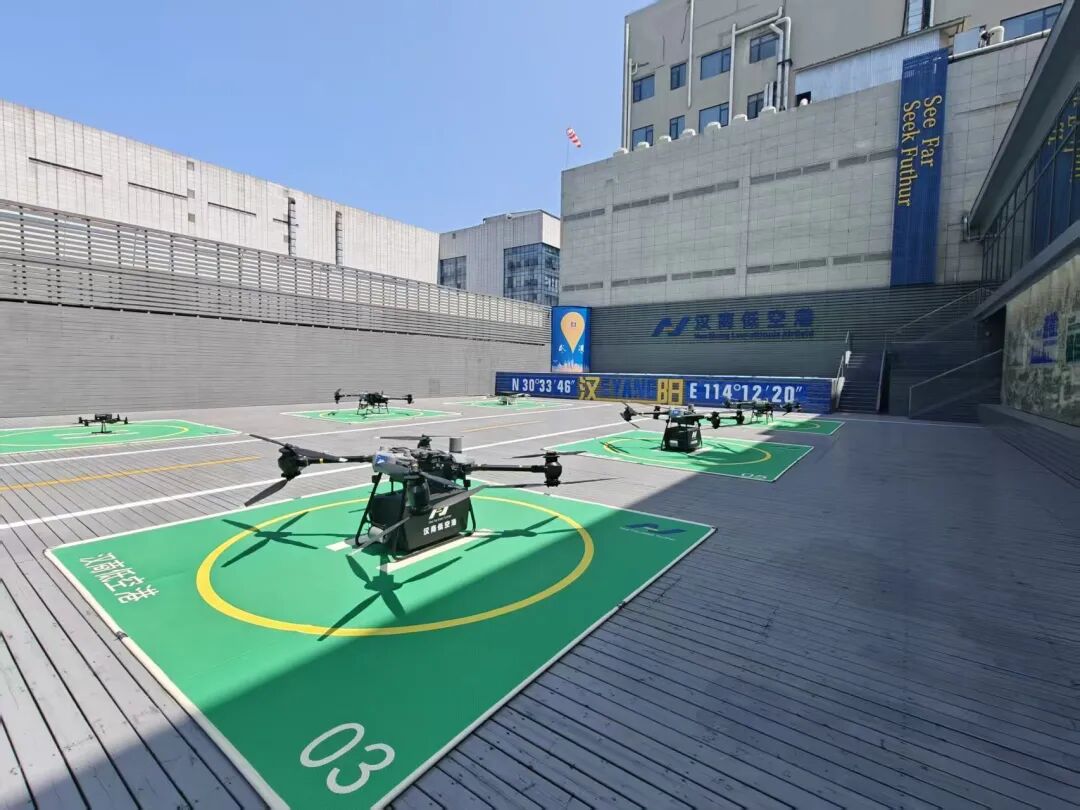
武汉低空航线,持续上新
Shang Hai Zheng Quan Bao· 2025-10-15 12:18
Core Insights - Wuhan has gathered over 170 representative enterprises in the low-altitude economy and approved 33 low-altitude commercial trial routes as of September this year [1][3] - The city plans to establish 1,000 drone automatic hangars and equip over 3,000 sets of mounting devices to support drone operations, with an expectation to complete 400 hangars by the end of this year [1][4] Low-altitude Economy Development - Wuhan East Lake High-tech Zone has become the first low-altitude shared drone application demonstration area in the country, featuring a comprehensive drone network supported by AI scheduling systems and automated hangars [3] - The drone network has achieved a "3-minute response, 5-minute arrival" capability for urban management, providing over 30 services including security patrols and forest fire prevention [3] Operational Efficiency and Impact - Drones have identified and addressed 48 hazards and prioritized over 120 incidents this year, leading to an 11.5% reduction in congestion on major roads and an average efficiency improvement of 7% [3] - A 24-hour emergency delivery service for medical supplies has been implemented, with drones capable of delivering within 8 minutes, improving delivery speed by 50% compared to traditional ground transport [3] Future Plans and Infrastructure - By 2030, Wuhan aims to develop a new low-altitude economic ecosystem with applications in logistics, air taxis, tourism, emergency services, and more [4] - The city has completed 121 hangars and plans to build 1,000 within five years, with the first phase of 400 hangars expected to cover the entire urban area [4] Regulatory Framework and Safety Measures - Wuhan's low-altitude airspace planning includes a "three-level route network" covering approximately 4,260 square kilometers, facilitating various air transport services [5] - The city is establishing a low-altitude flight service platform and regulatory platform to ensure safe and orderly low-altitude operations, with a focus on information sharing and emergency coordination [5][6]
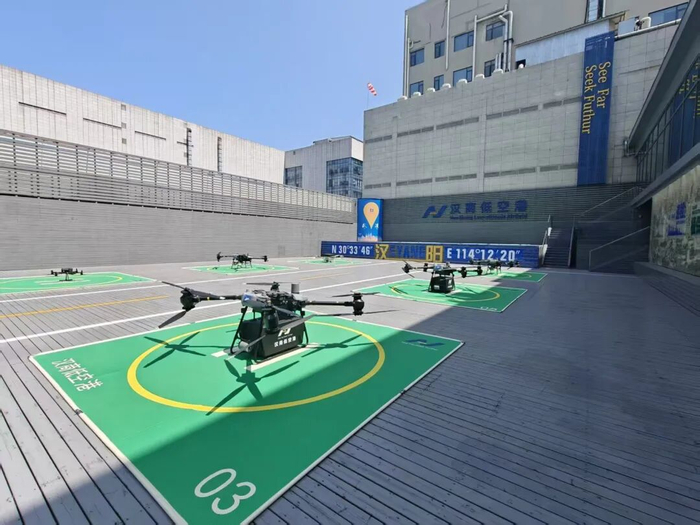
武汉年内建成400套无人机机库
Chang Jiang Ri Bao· 2025-10-15 00:38
Core Insights - Wuhan plans to establish 1,000 drone automatic hangars, with the first phase of 400 hangars expected to be completed this year, achieving full coverage within the Third Ring Road and over 60% coverage in key areas outside it [1][2] Group 1: Project Overview - The project aims to create a three-dimensional perception network by integrating "air, sky, and ground" layers, where "air" refers to low-altitude airspace and satellite positioning, "sky" to flying vehicles, and "ground" to ground facilities [1] - A joint venture, Wuhan Hangfei Technology Co., has been established between Wuhan Urban Development Group's Aviation Development Group and Puzhou Technology Company to manage the project [1] - The project plans to build 1,000 hangars and equip over 3,000 mounted devices within five years, with a rapid battery swap capability of two minutes for the hangars [1] Group 2: Operational Achievements - As of September this year, the project has already completed 121 hangars, covering 15 districts in Wuhan [1] - The project has achieved significant results in public safety and urban management, including assisting in the discovery of 8 abnormal events during security patrols and managing 63 traffic congestions and 5 accidents [2] - The project has also identified 80 pollution points in ecological monitoring and supported over 10 major events, including the Wuhan Marathon [2] Group 3: Economic Impact - Wuhan has gathered over 170 representative enterprises in the low-altitude economy and has been approved for 33 low-altitude commercial trial routes, with an expected industry scale growth of over 20% year-on-year [2] - The project aims to enhance governance efficiency by 25% and reduce costs by 20% through the construction of a "three-network" system, enabling a 5-minute on-site arrival and a 15-minute rapid response [2] - The advancement of the air-ground integration project is expected to inject new momentum into urban governance and industrial development, positioning Wuhan as "China's Low Altitude Economy Capital" [2]