
显示屏驱动芯片(AMOLED)

Search documents
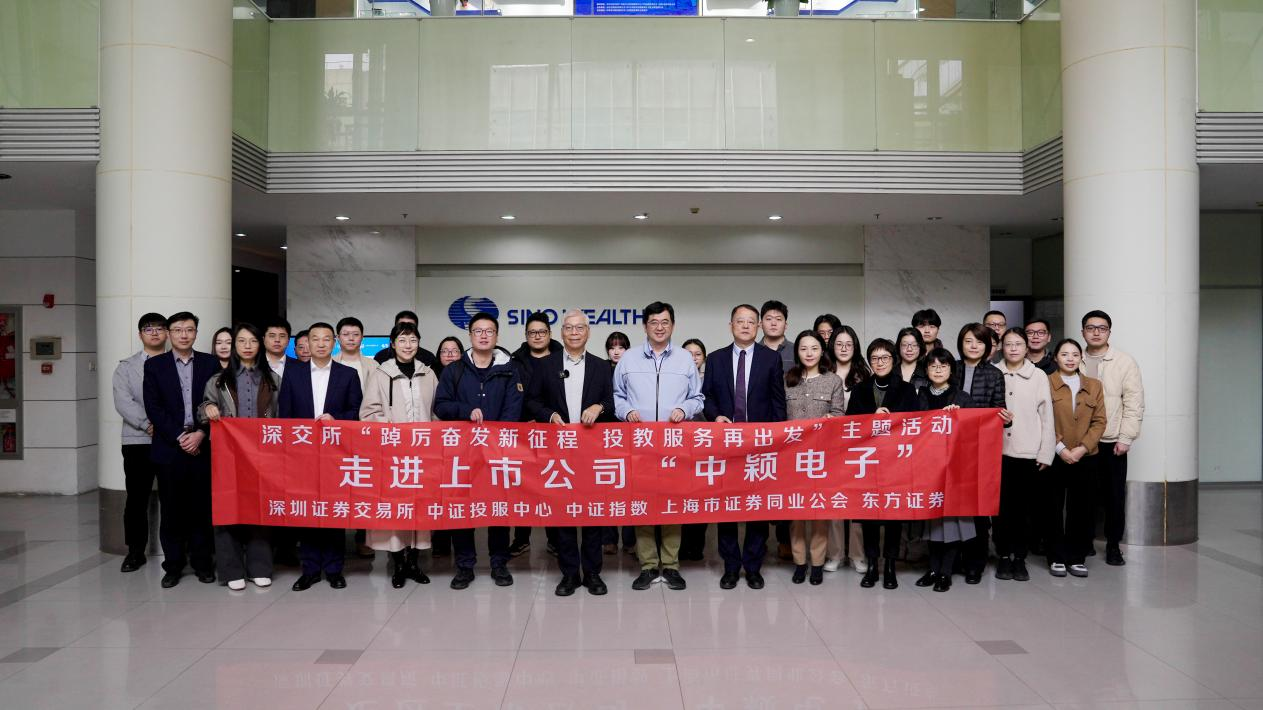
东方证券联合深交所、中证投服中心走进上市公司中颖电子开展“踔厉奋发新征程 投教服务再出发”主题活动
Jin Rong Jie· 2025-12-30 10:11
Core Viewpoint - The event "Striving for a New Journey, Investor Education Services Restart" held by Dongfang Securities at Zhongying Electronics provided a platform for investors to understand the company's strategies and future directions amidst a complex market environment [1][10]. Company Overview - Zhongying Electronics, established in 1994 and listed on the Shenzhen Stock Exchange in 2012, operates under a Fabless business model and specializes in industrial control microcontroller chips (MCU), lithium battery management chips (BMIC), and AMOLED display driver chips [3]. - The company ranks among the top manufacturers in the Greater China region for smart home appliance MCUs and is the first domestic company to achieve mass production of AMOLED display driver chips [3]. Financial Performance - The company anticipates a decline in net profit for 2023-2024 due to falling product prices and high wafer costs, with the integrated circuit industry entering a cyclical reversal since the second half of 2022 [4]. - Despite revenue decline, the company has seen a continuous increase in sales volume, projected to grow from 713 million units in 2022 to 885 million units in 2024, reflecting a compound annual growth rate of over 10% [4]. Research and Development - In 2024, the company plans to invest 300 million yuan in R&D, accounting for 22.35% of its revenue, which is considered high within the IC industry [5]. - The company is focusing on optimizing its product structure and plans to deepen collaboration with mainland wafer manufacturers to reduce costs [5]. Product Innovation - Zhongying Electronics is developing new products, including a robot joint MCU, Wi-Fi MCU, and lithium battery management chips for laptops, as well as automotive-grade AFE chips and higher resolution AMOLED display driver chips [7]. - The company has begun supplying its white goods MCU to international brands, with expected shipments nearing 10 million units this year [5]. ESG Initiatives - The company has integrated ESG principles into its operations and product design, aiming to reduce power consumption in home appliances and mobile devices, contributing to significant indirect carbon reductions [7]. - Zhongying Electronics has completed a digital upgrade and plans to achieve smart upgrades by 2026, incorporating AI technology to enhance operational efficiency [7]. - The company emphasizes social responsibility by fostering employee engagement in community projects rather than focusing solely on monetary donations [7]. Investor Engagement - The event facilitated direct communication between the company's leadership and investors, addressing concerns about performance fluctuations and sharing insights on strategic planning and future growth [4][10]. - Investors were able to experience the company's technological capabilities and innovative achievements through product demonstrations and exhibitions [8].



中颖电子(300327) - 300327中颖电子投资者关系管理信息20251212
2025-12-12 09:30
Company Overview - Zhongying Electronics was established in 1994 and has been listed on the Shenzhen Stock Exchange since 2012, focusing on integrated circuit design and sales [2] - The company operates under a Fabless business model, specializing in three main product lines: microcontroller units (MCUs), battery management integrated circuits (BMICs), and AMOLED display driver chips [2] - It holds a leading market share in the smartphone battery management chip sector and is the first domestic manufacturer to achieve mass production of AMOLED display driver chips [2] Product Development and Market Strategy - The company plans to focus on new product development in white goods, smart home, smart automotive, and robotics applications, including advanced MCUs and WiFi/BLE-MCUs [2][3] - Current product lines include WiFi-MCUs and battery management chips, with a recent expansion of domestic brand clients from 5 to 6 [5] - The company aims to introduce a new AMOLED display driver chip with a 1.5K resolution, which has already begun sampling and is expected to enter the market next year [7] Business Strategy and Growth - Zhongying Electronics positions itself as a leader in the IC industry, focusing on high-quality, differentiated products to strengthen its presence in the home appliance market [3] - The company plans to adopt a dual-engine growth model combining organic growth and mergers and acquisitions to enhance its market competitiveness [3][6] - It emphasizes the importance of talent as a core asset and aims to improve supply chain management and customer satisfaction [3] Financial Projections and Incentives - The company anticipates gradual net profit growth starting in 2026, driven by enhanced profitability through optimized supply chain management and new product development [4] - It aims to meet its stock incentive targets, reflecting a commitment to achieving financial performance goals [4]
中颖电子(300327) - 300327中颖电子投资者关系管理信息20251203
2025-12-03 09:36
Group 1: Company Overview - Zhongying Electronics was established in 1994, focusing on integrated circuit design and sales, listed on the Shenzhen Stock Exchange in 2012, with headquarters in Shanghai and subsidiaries in Xi'an, Hefei, Shenzhen, and Hong Kong [2] - The company operates under a Fabless business model, primarily offering three product lines: industrial control microcontroller chips (MCU), lithium battery management chips (BMIC), and AMOLED display driver chips [2][3] - In the first three quarters of 2025, the company reported revenue of CNY 967 million and a net profit of CNY 57 million [3] Group 2: Financial Performance - The company's net profit decreased from CNY 323 million in 2022 to CNY 186 million in 2023, and is projected to further decline to CNY 134 million in 2024, marking two consecutive years of profit decline [4] - The decline in profit is attributed to falling prices and high wafer foundry costs, leading to a decrease in gross margin [4] - Despite the profit decline, product sales volume has shown steady growth, increasing from 713 million units in 2022 to an expected 885 million units in 2024, with a compound annual growth rate exceeding 10% [4] Group 3: Strategic Goals and Market Position - The strategic goal is to become a world-class MCU manufacturer, focusing on becoming a leader in the MCU and BMIC sectors while positioning itself as a pioneer in domestic chip production [3] - The company plans to implement an overseas expansion strategy, aiming for international branding and localization [3] - In product development, the company is focusing on new applications in white goods, smart homes, smart cars, and robotics, with plans for new products like variable frequency motor MCUs and WiFi/BLE-MCUs [3] Group 4: Cash Flow and Investment - The operating cash flow for 2023 was negative CNY 29.7 million, but is expected to recover to CNY 183 million in 2024 and CNY 171 million in the first three quarters of 2025 [5] - The negative cash flow in 2023 was primarily due to excess wafer purchases to fulfill long-term capacity agreements [5] - Investment cash flow has been negative, with CNY -163 million in 2024 and CNY -99.78 million in 2023, mainly due to higher investment amounts compared to maturity amounts [6] Group 5: Product Revenue Contribution - Revenue contribution from different chip categories has remained relatively stable, with MCUs accounting for 55-60%, BMICs for 25-30%, and AMOLED driver chips for 10-15% from 2022 to 2024 [4] - The company has expanded its customer base for lithium battery management chips from 5 to 6 major domestic brands and is developing new products for various applications [4] Group 6: ESG and Corporate Responsibility - ESG principles are deeply integrated into the company's operations and product design, focusing on reducing power consumption in home appliances and mobile products [7] - The company has completed a digital upgrade and plans to achieve smart operations by 2026, incorporating AI technology to enhance operational efficiency [7] - Corporate social responsibility initiatives include community engagement and educational support projects, such as improving local school facilities in Yunnan [7]