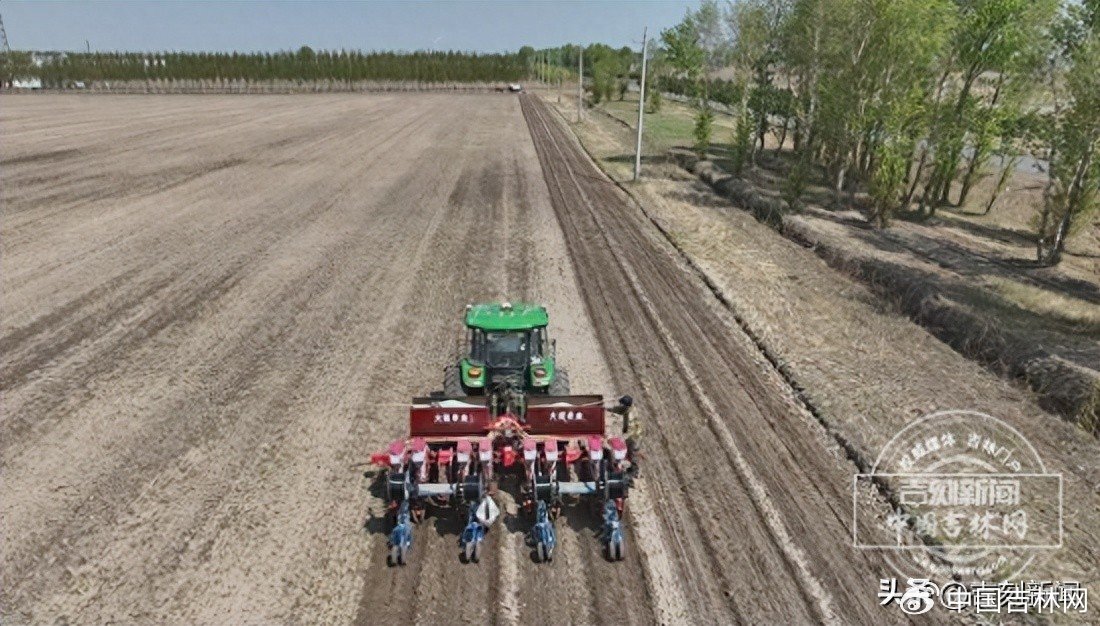
智能免耕播种机

Search documents
94.6%!吉林农业机械化跑出“加速度”
Xin Lang Cai Jing· 2025-12-24 04:08
Core Viewpoint - Jilin Province is focusing on high-quality agricultural mechanization to ensure food production safety, achieving a comprehensive mechanization rate of 94.6%, which is among the highest in the country, thereby strengthening the foundation for stable and increased grain production [1][10]. Group 1: Agricultural Mechanization Policies - Jilin Province has implemented a series of policies to promote full mechanization in grain production, including precise subsidies for agricultural machinery purchases and a clear "优机优补" (优质机械优先补贴) policy, which has led to the optimization of agricultural equipment structure [3][10]. - The province has seen a shift from traditional farming tools to high-end intelligent machinery and large horsepower tractors, with features like unmanned driving and precision operations becoming the norm [3][10]. Group 2: Protective Tillage Techniques - Jilin is promoting five main models of protective tillage, including full coverage no-till sowing and strip tillage with straw cover, aiming to implement protective tillage on 41.79 million acres by 2025, which is more than double the area at the beginning of the "14th Five-Year Plan" [5][12]. - The comprehensive mechanization rate for crop farming has increased by 3.6 percentage points compared to the beginning of the "14th Five-Year Plan," exceeding the national average by nearly 20 percentage points [5][12]. Group 3: Agricultural Machinery Subsidy Policies - The province has expanded its agricultural machinery scrap and update subsidy policy, increasing the types of subsidized machinery from 12 categories and 40 types to 28 categories and 130 types, with some subsidies raised by 50% [8][15]. - Over the past two years, Jilin has secured 234 million yuan in subsidy funds to accelerate the elimination of old agricultural machinery and promote structural upgrades [8][15]. Group 4: Technological Advancements - Jilin Province is collaborating with universities, research institutions, and key enterprises to tackle technological challenges, achieving breakthroughs in the development of key equipment like intelligent no-till sowing machines [7][14]. - The province is also investing an additional 45 million yuan in pilot projects to develop new agricultural machinery tailored for specific crops and complex terrains [15].

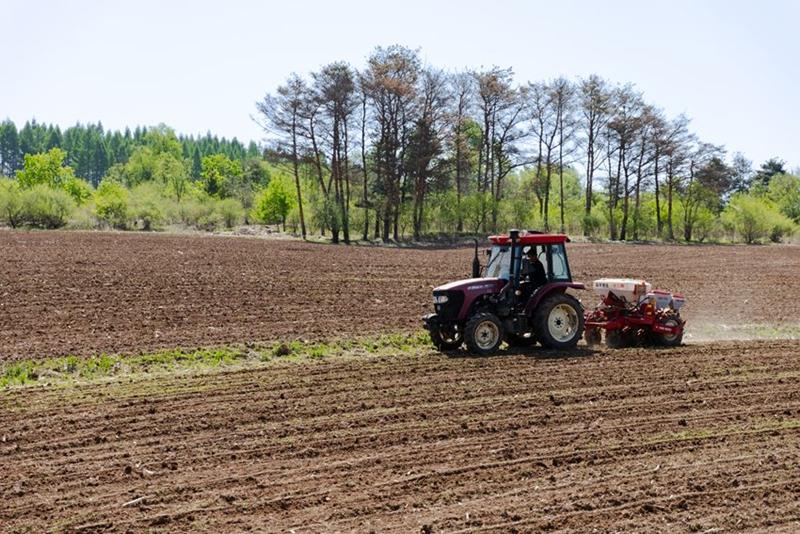
高质量发展新答卷|94.6%!吉林省农业机械化领跑全国
Xin Lang Cai Jing· 2025-12-21 11:27
Core Viewpoint - Jilin Province has achieved a comprehensive mechanization rate of 94.6% in agriculture, positioning it among the top in the country, supported by effective policy measures and technological advancements [1][3]. Policy Initiatives - A combination of policies, including subsidies for agricultural machinery purchases and updates, has been implemented to optimize the structure of agricultural equipment and promote high-end, intelligent machinery [3]. - The subsidy program has expanded from 12 categories of 40 types of machinery to 28 categories of 130 types, covering the entire agricultural production chain [3]. - The funding for machinery updates is projected to reach 234 million yuan for 2024-2025, more than three times the total from 2020 to 2023, significantly encouraging farmers to upgrade their equipment [3]. Technological Support - Jilin Province has initiated demand-driven technological research to address challenges in hilly and mountainous areas, leading to the development and promotion of 223 sets of suitable machinery since November 2023 [5]. - An additional 45 million yuan has been allocated for new research projects, including efficient harvesting machines tailored for local crops [5]. Innovative Models - The province has integrated mechanization with black soil protection and sustainable agricultural development, achieving a protective tillage implementation area of 41.79 million acres by 2025, more than doubling the area from the beginning of the 14th Five-Year Plan [5]. - The protective tillage model has been expanded to include five main techniques, contributing to the preservation of black soil and promoting sustainable agricultural practices [5].