
保护性耕作技术

Search documents
94.6%!吉林农业机械化跑出“加速度”
Xin Lang Cai Jing· 2025-12-24 04:08
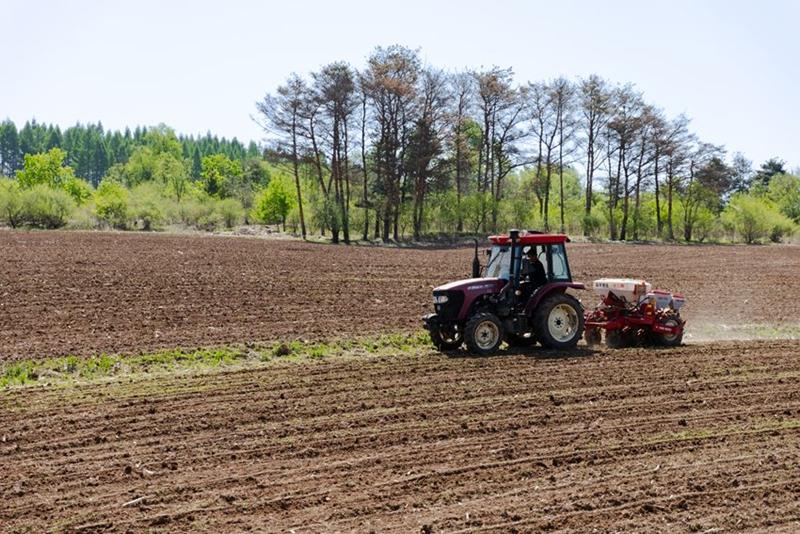
Core Viewpoint - Jilin Province is focusing on high-quality agricultural mechanization to ensure food production safety, achieving a comprehensive mechanization rate of 94.6%, which is among the highest in the country, thereby strengthening the foundation for stable and increased grain production [1][10]. Group 1: Agricultural Mechanization Policies - Jilin Province has implemented a series of policies to promote full mechanization in grain production, including precise subsidies for agricultural machinery purchases and a clear "优机优补" (优质机械优先补贴) policy, which has led to the optimization of agricultural equipment structure [3][10]. - The province has seen a shift from traditional farming tools to high-end intelligent machinery and large horsepower tractors, with features like unmanned driving and precision operations becoming the norm [3][10]. Group 2: Protective Tillage Techniques - Jilin is promoting five main models of protective tillage, including full coverage no-till sowing and strip tillage with straw cover, aiming to implement protective tillage on 41.79 million acres by 2025, which is more than double the area at the beginning of the "14th Five-Year Plan" [5][12]. - The comprehensive mechanization rate for crop farming has increased by 3.6 percentage points compared to the beginning of the "14th Five-Year Plan," exceeding the national average by nearly 20 percentage points [5][12]. Group 3: Agricultural Machinery Subsidy Policies - The province has expanded its agricultural machinery scrap and update subsidy policy, increasing the types of subsidized machinery from 12 categories and 40 types to 28 categories and 130 types, with some subsidies raised by 50% [8][15]. - Over the past two years, Jilin has secured 234 million yuan in subsidy funds to accelerate the elimination of old agricultural machinery and promote structural upgrades [8][15]. Group 4: Technological Advancements - Jilin Province is collaborating with universities, research institutions, and key enterprises to tackle technological challenges, achieving breakthroughs in the development of key equipment like intelligent no-till sowing machines [7][14]. - The province is also investing an additional 45 million yuan in pilot projects to develop new agricultural machinery tailored for specific crops and complex terrains [15].

主产区冬小麦播期推迟 晚播麦苗如何“逆袭”?
2 1 Shi Ji Jing Ji Bao Dao· 2025-11-27 14:30
Core Insights - The overall winter wheat sowing in China is delayed this year due to continuous rainy weather in key production areas, particularly in the Huang-Huai-Hai region, affecting soil conditions and sowing progress [2][3] - Despite the delay, the sowing area for winter wheat in core regions remains stable, supported by good seed subsidies and technical promotion [2][3] - The current growth conditions for winter wheat are generally favorable, with many seedlings showing good height and health, although late-sown crops face challenges [3][4] Sowing Progress - As of November 18, winter wheat sowing has reached 95.5% in Henan, over 90% in Shandong, and is nearly complete in Jiangsu and Shaanxi [2][3] - The sowing pace has been notably slower compared to previous years, with some areas experiencing a delay of about half a month [3][4] Growth Conditions - The growth of winter wheat is showing signs of differentiation, with suitable moisture areas having strong seedlings, while late-sown fields are struggling with fewer tillers and root development issues [4][5] - The late sowing has led to an increase in the proportion of late-sown wheat, with some fields experiencing significant differences in seedling emergence times [3][5] Management Strategies - The Ministry of Agriculture has issued guidelines emphasizing the importance of winter management practices to ensure the safe overwintering of wheat, focusing on timely interventions such as soil moisture management and pest control [6][7] - Local agricultural departments are actively providing technical guidance to farmers, promoting practices like no-till sowing and integrated pest management to enhance crop resilience [7][8]
主产区冬小麦播期推迟,晚播麦苗如何“逆袭”?
2 1 Shi Ji Jing Ji Bao Dao· 2025-11-27 12:57
Core Viewpoint - The winter wheat sowing in China is significantly delayed this year due to continuous rainy weather in key production areas, but the overall sowing area remains stable and the growth conditions are favorable for many regions [1][2][3]. Group 1: Sowing Progress - As of November 21, over 90% of the national winter wheat sowing has been completed, with key provinces like Henan and Shandong showing significant progress [1][2]. - The sowing pace in major production areas has been notably slower compared to previous years, primarily due to wet soil conditions that hindered agricultural machinery [2][3]. - By November 18, Henan had sown 81.16 million acres of winter wheat, accounting for 95.5% of the expected area, while Shandong and Jiangsu also reported over 90% completion [2][3]. Group 2: Growth Conditions - Despite the late sowing, many farmers report that the wheat seedlings are growing well, with some areas seeing heights close to 10 centimeters and multiple tillers [3][4]. - The use of protective tillage techniques has helped reduce soil compaction and improve growth conditions, contributing to a positive outlook for spring growth [3][4]. Group 3: Management Strategies - The Ministry of Agriculture has issued guidelines emphasizing the importance of winter management practices to ensure the wheat's safe overwintering, focusing on soil moisture control, pest management, and fertilization [6][7]. - Local agricultural departments are actively providing technical guidance to farmers, promoting practices such as no-till planting and integrated pest management to enhance wheat resilience [6][7]. - Specific recommendations include applying fertilizers to weak seedlings and managing water levels to prevent frost damage, ensuring a strong foundation for the upcoming summer harvest [6][7].