
农业机械化

Search documents
水稻种植大户有了新帮手
Xin Lang Cai Jing· 2026-02-27 22:33
Core Viewpoint - The agricultural sector in Luzhou County is experiencing a significant transformation with the adoption of automation and advanced machinery in rice seedling cultivation, aiming to enhance efficiency and reduce labor costs [1][2][3] Group 1: Agricultural Automation - The introduction of electric push-pull greenhouses and automated seedling production lines has improved efficiency by over 40% compared to manual labor, reducing labor costs by 200 yuan per acre [1][3] - The automated seedling production line can assemble 800 to 1000 trays of seedlings per hour, with seedlings being transferred to a temperature-controlled dark room for germination [2] Group 2: Production Goals and Techniques - The first batch of seedlings is expected to be transplanted by the end of March, with plans to cultivate over 2,000 acres using various planting methods including direct seeding, broadcasting, and machine transplanting [2] - The overall mechanization level for rice planting in the county is projected to reach over 80% this year, indicating a significant shift towards more efficient agricultural practices [3] Group 3: Labor and Resource Management - The involvement of younger generations in agriculture, such as the return of Liu Daoguo's son to assist in operations, highlights a trend of integrating family resources to enhance agricultural productivity [3] - The Luzhou County Agricultural and Rural Bureau emphasizes the importance of machinery in improving the efficiency and quality of spring farming preparations, aiming to optimize agricultural structure and increase grain yield and quality [3]
一串葡萄的甜蜜之旅
Xin Lang Cai Jing· 2026-02-11 20:51
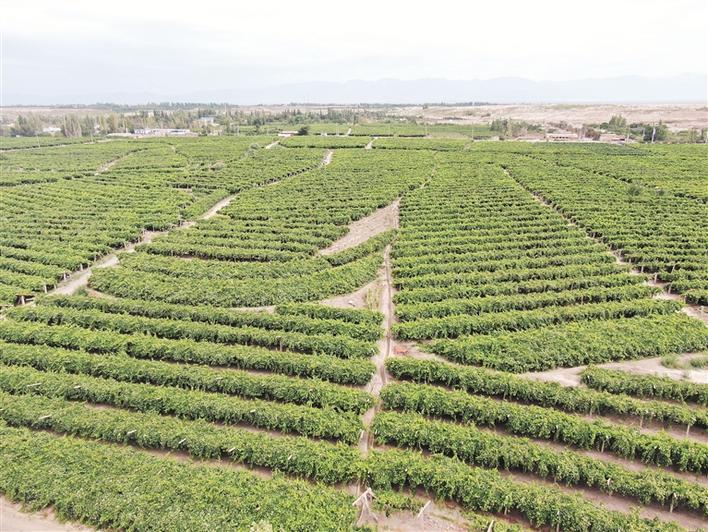
Core Viewpoint - The article highlights the advancements and developments in the grape industry at the Liushuquan Farm, emphasizing the integration of technology, improved agricultural practices, and market expansion to enhance productivity and profitability for local farmers [5][10][14]. Technological Empowerment - The farm has adopted semi-mechanized operations for grape cultivation, significantly increasing efficiency and reducing labor intensity [6][8]. - The introduction of a standardized "high-width vertical" trellis system has improved air circulation and light penetration, leading to a 50% reduction in labor costs and a 30% increase in fruit quality [7]. - Over 70% of the farmland now utilizes water-saving drip irrigation technology, which has reduced irrigation costs by nearly 300 yuan per acre and improved water resource utilization [8][11]. Industry Chain Extension - The establishment of a cold chain storage system has allowed for better preservation of grapes, reducing transportation losses and enabling off-peak sales [10]. - Investments in processing facilities have led to the production of over 1,000 tons of dried grapes, generating significant revenue and creating job opportunities for local residents [11][12]. - The farm has developed partnerships with cooperatives and enterprises, enhancing the integration of farmers into the industry chain and increasing their income [11][12]. Market Expansion - The farm has improved its grape quality through standardized cultivation techniques, resulting in higher market prices and increased farmer incomes [13]. - A dedicated sales team has been established to coordinate production and sales, ensuring stable income for workers [13][14]. - The farm's products are gaining recognition and are being sold in various provinces, enhancing its market competitiveness [14].

四川省政协委员支招破解丘陵地区农机困局 护航“天府粮仓”建设
Zhong Guo Xin Wen Wang· 2026-02-05 08:21
Group 1 - The central government aims to accelerate the research and application of high-end intelligent agricultural machinery suitable for hilly areas, as 78% of Sichuan's arable land is located in hilly regions, presenting both challenges and opportunities for agricultural modernization [1] - Sichuan's agricultural machinery application faces significant challenges due to the small and fragmented nature of farmland in hilly areas, necessitating increased efforts in high-standard farmland construction and improved irrigation facilities [1] - There is a lack of lightweight and efficient specialized small agricultural machinery in hilly regions, primarily due to high research and development costs, highlighting the need for government support and innovation in agricultural machinery [1] Group 2 - The promotion of intelligent agricultural machinery and talent cultivation is essential, with suggestions to develop small agricultural machinery suitable for hilly areas and integrate smart agricultural equipment for real-time monitoring of agricultural conditions [2] - Training programs for farmers are necessary to enhance their skills and understanding of modern agricultural machinery, alongside government initiatives to reduce costs through subsidies and insurance support [2] - The establishment of a specialized agricultural equipment park in Dazhou represents a significant step in addressing the challenges of agricultural machinery in hilly areas, although there is still a need for improved digitalization and customization in machinery development [2][3] Group 3 - The integration of digital technology into the entire agricultural machinery research and production chain is crucial for addressing issues of adaptability and slow transformation of results, thereby enhancing the overall competitiveness of the agricultural machinery industry in hilly areas [3] - Smart transformation and digitalization can help reduce manufacturing costs and improve the competitiveness of agricultural machinery products, facilitating the widespread adoption of intelligent agricultural machinery in hilly regions [3]
国产农机满足国内90%以上市场需求 机械装备让现代农业更有“劲”
Xin Lang Cai Jing· 2026-02-01 01:43
Core Viewpoint - The rapid advancement and integration of agricultural machinery, particularly drones and smart equipment, are significantly enhancing productivity and efficiency in China's agricultural sector, supported by government policies and technological innovations [1][2][3][5][6]. Group 1: Agricultural Drone Utilization - Agricultural drones are increasingly used for transporting crops, with one drone capable of transporting 30,000 jin (15 tons) of oranges daily, significantly reducing labor time [1]. - The total number of agricultural drones in China has surpassed 300,000, with an annual operational area exceeding 460 million acres [1]. Group 2: Domestic Agricultural Machinery Development - The domestic agricultural machinery industry is evolving, with companies like Weichai Lovol upgrading key components to enhance reliability and performance in various soil conditions [2]. - The market acceptance of domestic agricultural machinery has improved, meeting over 90% of domestic demand, with a comprehensive mechanization rate of 76.7% for crop farming [3]. Group 3: Research and Development Integration - The integration of research, production, and application is emphasized, with 500 agricultural machinery application testing sites established across various regions to accelerate product development and deployment [5]. - Companies are actively engaging with local farmers to address specific agricultural challenges, leading to the development of tailored machinery solutions [4]. Group 4: Policy Support and Emergency Response - Government policies are facilitating quick access to agricultural machinery, ensuring timely harvesting and processing, especially during adverse weather conditions [6]. - A network of agricultural service centers and emergency response teams has been established to support farmers during critical agricultural periods [6]. Group 5: Future Directions and Goals - The Ministry of Agriculture aims to enhance the productivity of major crops through continuous technological innovation and the rapid application of agricultural machinery [7]. - There is a focus on expanding the range of subsidized agricultural machinery to support diverse food supply needs and strengthen the agricultural equipment supply chain [7].
阿尔及利亚加快农业机械化 推动粮食生产能力提升
Shang Wu Bu Wang Zhan· 2026-01-22 14:39
Core Viewpoint - Algeria is accelerating the implementation of its agricultural development roadmap to enhance the production efficiency of strategic crops such as grains, corn, and legumes, thereby strengthening national food security [1] Group 1: Agricultural Development Initiatives - The agricultural roadmap has entered a substantive implementation phase just one week after being approved in a ministerial meeting [1] - Agricultural mechanization has been identified as a key priority direction for the roadmap [1] Group 2: Mechanization and Support for Farmers - A decision was made to establish agricultural machinery rental cooperatives to provide various agricultural equipment services to farmers, aiming to expand cultivated areas and increase agricultural output [1] - The government will form a National Agricultural Mechanization Committee to integrate domestic agricultural machinery manufacturing and production enterprises, promoting specialized development in the industry [1] Group 3: Market Supply and Resource Mobilization - The meeting emphasized the need to ensure market supply for harvesting machinery for crops such as grains, corn, and sunflowers, with potential imports to address short-term shortages if necessary [1] - The government plans to mobilize resources and utilize scientific planting methods, relying on agricultural experts and engineers to enhance grain production capacity based on local conditions [1] Group 4: Policy and Regulatory Changes - The agricultural roadmap includes proposals to revise agricultural guidance laws to reduce imports without causing market shortages and to encourage the establishment of specialized cooperatives through policy incentives [1] - Emergency measures will be taken to restore red and white meat production, with a goal to expand the national cultivated area to 3 million hectares [1]
2025年农业机械化发展成效显著
Ren Min Ri Bao Hai Wai Ban· 2026-01-21 22:36
Core Viewpoint - The article emphasizes the focus of the national agricultural mechanization system on ensuring stable and safe supply of grain and important agricultural products by 2025, highlighting the role of agricultural machinery in production and emergency disaster relief [1] Group 1: Agricultural Machinery Development - The initiative to strengthen agricultural machinery equipment is underway, with the introduction of the "Opinions on Accelerating the Pilot Verification and Application of Innovative Agricultural Machinery Products," which aims to create 500 experimental fields for machinery application across different regions and crops [1] - The development of domestic agricultural machinery is advancing towards a direction that combines large, medium, and small-sized equipment with green, efficient, and intelligent features, leading to breakthroughs in high-level intelligent machinery [1] Group 2: Policy Support and Implementation - Positive outcomes have been observed from agricultural machinery support policies, including the implementation of purchase and application subsidies that favor innovative machinery and promote the exit of outdated equipment [1] - The mechanization of important agricultural periods is being conducted effectively, with projected average harvesting loss rates for wheat, rice, and corn in 2025 estimated at approximately 0.84%, 1.65%, and 1.91% respectively, indicating a further control at a favorable level [1]
总产量1640.06亿斤!黑龙江粮食“二十二连丰”的密码
Xin Hua Wang· 2026-01-01 04:14
Core Insights - Heilongjiang Province achieved a record grain production of 1640.06 billion jin in 2025, marking the 22nd consecutive year of increased output and maintaining its position as the top grain-producing region in China [1][3] - The province's grain output increased by 39.7 billion jin, accounting for 23.6% of the national grain increase, which is a 4.4 percentage point rise from 2024 [1][3] Group 1: Grain Production and Technology - Heilongjiang's agricultural sector focuses on both quantity and quality, with significant advancements in grain yield and production technology [1][3] - The province has implemented advanced agricultural machinery, with 4,757 pneumatic seeders and 8,634 tractors of 100 horsepower or more purchased by November 2025, enhancing mechanization levels [3][5] - The average yield of soybeans in the Beidahuang Group's cooperative reached an increase of 50 jin per mu, translating to over 2 million yuan in additional income [3] Group 2: Agricultural Infrastructure and Pest Control - Heilongjiang has established 120 million mu of high-standard farmland, with significant investments in infrastructure to support grain production [5] - The province has set up 10,000 pest monitoring points and 32,000 monitoring devices, achieving real-time coverage of 39 major crops and over 130 pests, resulting in the lowest pest-related losses in recent years [5] - The provincial government plans to implement a new round of grain production increase initiatives during the 14th Five-Year Plan period to further enhance supply capabilities [5]
94.6%!吉林农业机械化跑出“加速度”
Xin Lang Cai Jing· 2025-12-24 04:08
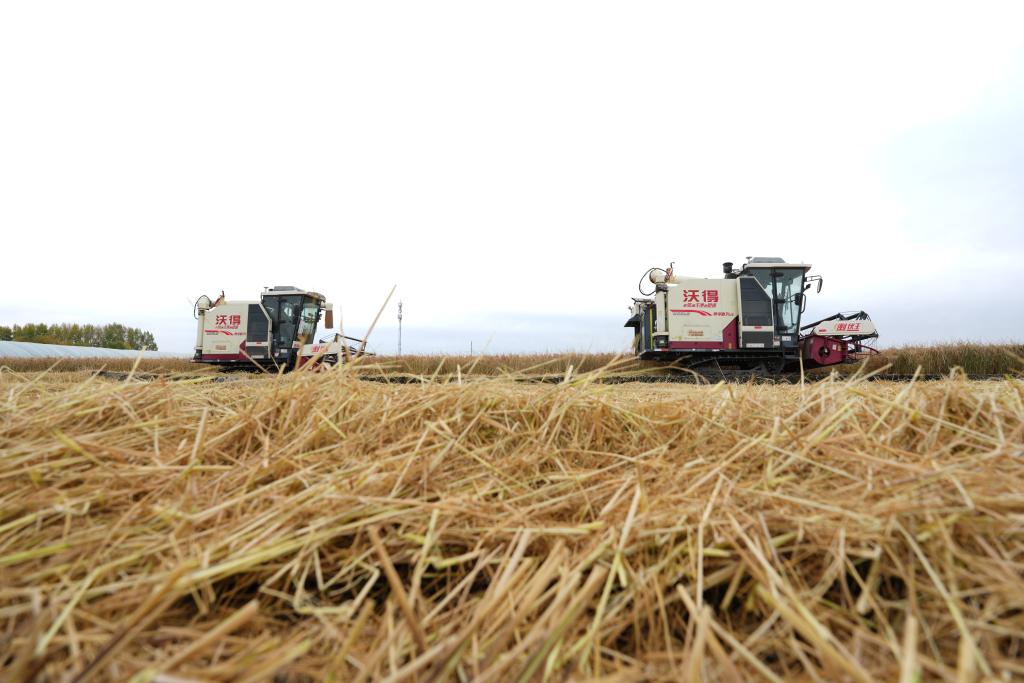
Core Viewpoint - Jilin Province is focusing on high-quality agricultural mechanization to ensure food production safety, achieving a comprehensive mechanization rate of 94.6%, which is among the highest in the country, thereby strengthening the foundation for stable and increased grain production [1][10]. Group 1: Agricultural Mechanization Policies - Jilin Province has implemented a series of policies to promote full mechanization in grain production, including precise subsidies for agricultural machinery purchases and a clear "优机优补" (优质机械优先补贴) policy, which has led to the optimization of agricultural equipment structure [3][10]. - The province has seen a shift from traditional farming tools to high-end intelligent machinery and large horsepower tractors, with features like unmanned driving and precision operations becoming the norm [3][10]. Group 2: Protective Tillage Techniques - Jilin is promoting five main models of protective tillage, including full coverage no-till sowing and strip tillage with straw cover, aiming to implement protective tillage on 41.79 million acres by 2025, which is more than double the area at the beginning of the "14th Five-Year Plan" [5][12]. - The comprehensive mechanization rate for crop farming has increased by 3.6 percentage points compared to the beginning of the "14th Five-Year Plan," exceeding the national average by nearly 20 percentage points [5][12]. Group 3: Agricultural Machinery Subsidy Policies - The province has expanded its agricultural machinery scrap and update subsidy policy, increasing the types of subsidized machinery from 12 categories and 40 types to 28 categories and 130 types, with some subsidies raised by 50% [8][15]. - Over the past two years, Jilin has secured 234 million yuan in subsidy funds to accelerate the elimination of old agricultural machinery and promote structural upgrades [8][15]. Group 4: Technological Advancements - Jilin Province is collaborating with universities, research institutions, and key enterprises to tackle technological challenges, achieving breakthroughs in the development of key equipment like intelligent no-till sowing machines [7][14]. - The province is also investing an additional 45 million yuan in pilot projects to develop new agricultural machinery tailored for specific crops and complex terrains [15].
西南证券:中国农业无人机行业加速智能驾驶转型 积极开拓海外市场
Zhi Tong Cai Jing· 2025-12-24 02:51
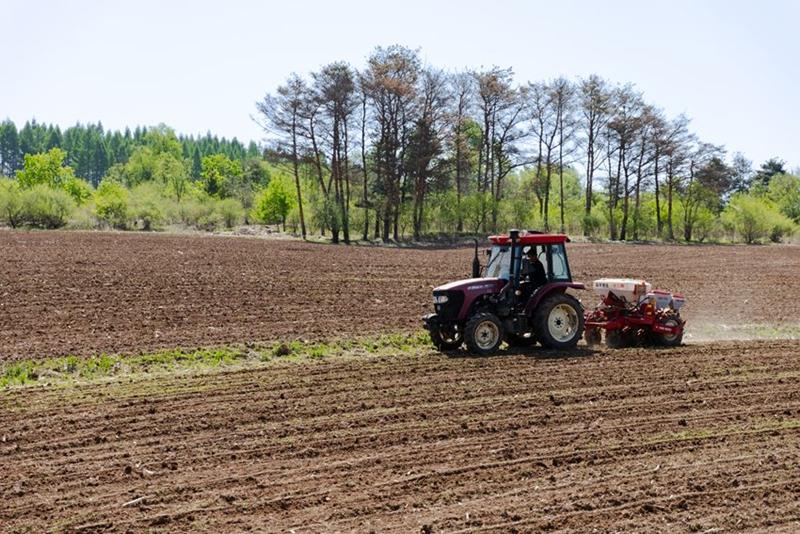
Group 1 - The core viewpoint is that China is actively promoting agricultural mechanization through subsidies, with the comprehensive mechanization rate expected to exceed 75% by 2024, achieving the goals set for the 14th Five-Year Plan ahead of schedule [2][3] - Agricultural drones are a key technology in this transformation, with China leading the global market and holding a significant share of the agricultural drone industry [2][3] - The industry is experiencing three major trends: a slowdown in domestic market competition, a shift towards smart driving technology in agricultural drones, and an acceleration of overseas market expansion by companies seeking new growth [3] Group 2 - The domestic market competition is expected to ease, with prices stabilizing around 30,000 to 40,000 yuan per unit [3] - The transition to smart driving technology is anticipated to lower operational barriers and enhance safety, leading to a rapid increase in the proportion of end consumers [3] - As domestic market penetration increases and prices drop significantly, overseas markets are becoming a target for Chinese agricultural drone companies seeking additional growth [3]

橡胶履带企业元创股份登陆深交所
Zhong Guo Hua Gong Bao· 2025-12-23 04:22
Core Viewpoint - Yuan Chuang Technology Co., Ltd. has successfully listed on the Shenzhen Stock Exchange, aiming to raise 485 million yuan through its IPO to enhance its production capabilities and financial stability [1] Group 1: Fundraising Purpose - The funds raised will be allocated to three main areas: construction of a production base, establishment of a technology center, and supplementing working capital [1] - The production base project focuses on relocating and expanding the existing capacity for rubber tracks and track plates, which will enhance the company's main production functions and scale [1] - The technology center project aims to improve the company's R&D capabilities and foster independent innovation in its core business [1] - The working capital project is intended to support future performance growth and product promotion, thereby improving the company's financial condition and laying a foundation for future expansion [1] Group 2: Industry Context - The company highlights that the national push for high-quality development in manufacturing, coupled with an aging population and a decrease in agricultural labor, will lead to an irreversible increase in agricultural mechanization rates, supporting long-term profitability [1] - Through this financing and the implementation of the fundraising projects, the company aims to elevate its level of intelligent manufacturing, enhance scale effects, and optimize product structure [1]