
智能可感知脑起搏器

Search documents
聚焦脑机接口 山西密集落地临床应用与研究平台
Zhong Guo Xin Wen Wang· 2025-11-18 07:08
Core Insights - The establishment of multiple brain-computer interface (BCI) clinical research centers in Shanxi marks a significant acceleration in the research and application of BCI technology in the region [1] - BCI technology is gaining global attention as a new form of human-computer interaction, aiming to create a connection between the brain and external devices for collaborative interaction between biological and machine intelligence [1] Group 1: Clinical Applications - Shanxi Provincial People's Hospital successfully utilized BCI technology in a surgery for a patient with a high-grade glioma, allowing for real-time monitoring and mapping of brain function, which led to maximal safe tumor removal while preserving motor function [2] - Similar successful surgeries were reported at Shanxi Medical University First Hospital, where a domestic BCI system was used to provide a visual brain function map during surgery for a rare deep brain tumor, resulting in complete tumor removal without damaging neural function [5] Group 2: Neurological Treatment Innovations - The combination of BCI and neural modulation offers new hope for patients with difficult neurological conditions, such as a patient suffering from obsessive-compulsive disorder who underwent deep brain stimulation, leading to significant improvement in her condition [6][8] - A new generation of intelligent, perceivable brain pacemakers has been implanted in patients with consciousness disorders, enabling two-way communication with the brain by both sending and receiving signals [8] Group 3: Interdisciplinary Collaboration - Shanxi is exploring the integration of BCI with traditional Chinese medicine, particularly acupuncture, to enhance rehabilitation outcomes for patients with motor impairments [9] - The development of BCI technology relies on interdisciplinary collaboration, with Shanxi medical institutions actively partnering with universities and research institutes to foster innovation [9] - Challenges such as implant rejection and signal instability in clinical applications are being addressed through the establishment of industry standards and collaborative efforts between capital and policy [9]

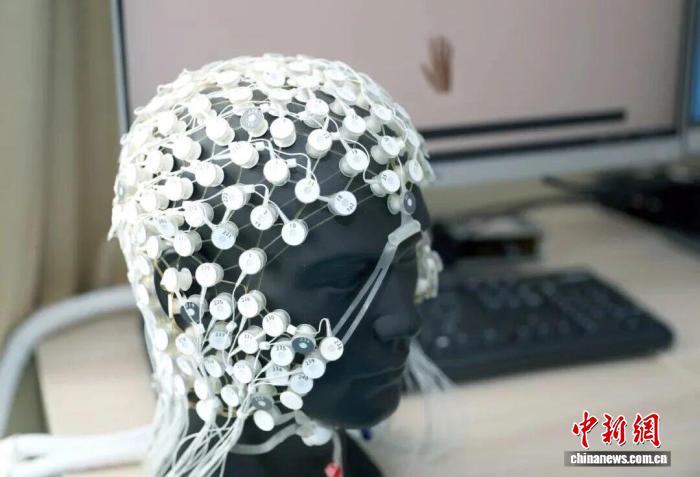
山西成立脑机接口临床研究中心 攻关神经疾病治疗难题
Zhong Guo Xin Wen Wang· 2025-10-25 01:41
Core Insights - The establishment of the first clinical research center for brain-machine interfaces in Shanxi marks a significant advancement in the treatment of difficult-to-treat neurological conditions, with the potential to benefit many patients [1][2] - The center will focus on innovative treatments such as deep brain stimulation (DBS) and intelligent perceivable brain pacemakers, which can adjust brain function and collect brain electrical signals [1][2] Group 1 - The first patient, Ms. Zhao, experienced significant improvement in her condition after undergoing DBS, highlighting the potential of this technology for patients with severe obsessive-compulsive disorder [1] - The center is equipped with advanced facilities, including a composite operating room and intelligent surgical robots, to support its multidisciplinary approach [2] - The center aims to collaborate with universities and enterprises to explore applications of brain-machine interfaces in various neurological disorders, including epilepsy, Parkinson's disease, dementia, and obsessive-compulsive disorder [2] Group 2 - The center's multidisciplinary team includes specialists from neurosurgery, neurology, mental health, rehabilitation medicine, and medical imaging, enhancing the scope of treatment options available [2] - Future plans include using neurostimulation techniques to aid in the recovery of patients with consciousness disorders, such as those in a vegetative state [2] - The innovative approach of the center represents a shift towards personalized treatment pathways for patients with neurological conditions [1][2]