
智能造楼机

Search documents
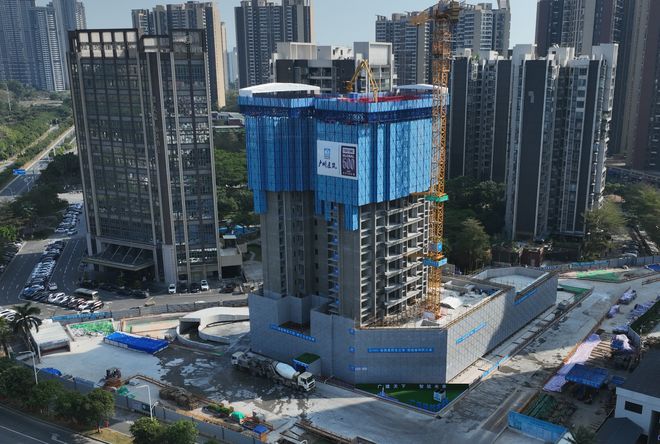
广州南沙城中村改造新进展,鹿颈村首期安置房预计今年底完工
Nan Fang Du Shi Bao· 2026-02-10 13:05
Core Insights - The Nansha Lujing Village urban renewal project is progressing rapidly, with the first phase of the resettlement housing expected to be completed by the end of 2026, utilizing advanced construction technology to achieve a construction speed of one floor every three days [2][3] Group 1: Project Overview - The project covers a total land area of 27.2 hectares, with an implementation area of 8.87 hectares and a total existing building area of 99,300 square meters [2] - The project involves approximately 265 households and a total population of about 834 residents [2] Group 2: Construction Technology - The project employs an intelligent building machine that integrates hydraulic power, intelligent control, and a steel truss platform, significantly reducing the construction time from seven days per floor to three days [3] - The intelligent building machine includes a smart concrete distribution system and an automated curing system, enhancing construction quality with a project quality rate of 98% [3] Group 3: Environmental Adaptation - The building machine is equipped with an electric rain canopy to create a stable working environment, ensuring that construction can continue during rain and high temperatures [3]

推动建筑业以“智”提质,山东省智能建造工作会召开
Qi Lu Wan Bao· 2025-12-10 06:27
Core Viewpoint - The Shandong Province is advancing its smart construction initiatives to enhance the quality and efficiency of the construction industry, transitioning from scale expansion to quality and effectiveness [1][3]. Group 1: Smart Construction Initiatives - A meeting was held to summarize and deploy key tasks for smart construction in Shandong, emphasizing industrialization, digitalization, and green development [1]. - The Shandong Province has established Jinan, Dongying, and Yantai as the second batch of smart construction pilot cities, aiming to promote differentiated exploration and replicable experiences [2][3]. Group 2: Technological Advancements - Smart construction technologies are being utilized to address traditional industry challenges such as low efficiency and high resource waste, with innovations like AI in design, robotic installations, and drones for inspections [2]. - The focus is on deepening digital design applications and establishing collaborative design platforms to enhance integration across various construction aspects [4]. Group 3: Industry Collaboration - The initiative aims to create a new ecosystem through industry collaboration, promoting the integration of production and construction processes, and supporting the development of prefabricated buildings [5][6]. - There is a push for cross-industry resource integration, encouraging the formation of comprehensive consulting firms that utilize BIM and other information technologies [6]. Group 4: Talent Development - The province is committed to cultivating high-end talent in the smart construction field by collaborating with universities and vocational schools to develop relevant curricula and skills competitions [6].