智能建造

Search documents
政策驱动结构切换、技术赋能转型升级——2026年政府工作报告建筑施工政策解读
Lian He Zi Xin· 2026-03-23 04:40
Investment Rating - The report indicates a positive outlook for the construction industry, driven by government policies and infrastructure projects [5][13]. Core Insights - The 2026 government work report emphasizes the importance of the construction industry in achieving strategic goals through the implementation of 109 major projects, focusing on new quality productivity, modern infrastructure, urban-rural integration, and green low-carbon transformation [4][13]. - The construction sector is expected to benefit from a more proactive fiscal policy and moderately loose monetary policy, which will support infrastructure development [5][6]. - There are structural opportunities in the demand for new quality productivity-related fields, particularly in the construction of new power systems [5][9]. Summary by Sections Government Work Report Overview - The report outlines the government's focus on stabilizing economic growth with a target of 4.5%-5% for 2026, supported by increased public budget spending and a proactive fiscal policy [5][6]. - The government plans to issue 1.3 trillion yuan in long-term special bonds to support major projects and new infrastructure [5][6]. Infrastructure and Construction Demand - The construction industry is set to receive ongoing demand support from 109 major projects aimed at modernizing infrastructure and promoting green development [5][10]. - The report highlights the need for construction companies to adapt to policy-supported areas and enhance their capabilities in smart and green construction [12][13]. Real Estate Policy and Market Stability - The report indicates a shift in real estate policy towards long-term stability and quality improvement, with a focus on optimizing housing supply and preventing debt defaults [7][8]. - The "white list" system for ensuring housing delivery is expected to help alleviate cash flow pressures for construction companies [8]. New Quality Productivity and Energy Construction - The government prioritizes the development of new quality productivity, including sectors like integrated circuits and aerospace, which will create new demands for construction companies [9][10]. - Energy construction, particularly in building a new power system and smart grid, is identified as a core area for growth, with significant investment planned [10][11]. Smart Construction and Industry Transformation - The report emphasizes the importance of smart construction and the modernization of the construction industry, with plans for significant investment in technology upgrades [11][12]. - The transition from labor-intensive to technology-intensive and knowledge-intensive practices is highlighted as a key goal for the industry [12].
两会政府工作报告学习:中央定调积极,关注未来产业和智能建造
East Money Securities· 2026-03-06 07:04
Investment Rating - The report maintains an investment rating of "Outperform the Market" for the construction and decoration industry, indicating an expected relative performance increase of over 10% compared to the benchmark index [16]. Core Insights - The government work report emphasizes a proactive fiscal policy with a target economic growth rate of 4.5%-5% for 2026, alongside a significant increase in budgetary spending and special bond issuance to support infrastructure and urban development projects [8][9]. - The focus on developing smart construction and future industries is highlighted, with an emphasis on integrating advanced technologies such as AI and robotics into traditional construction processes [9][10]. - The report suggests that the construction sector will benefit from increased government investment, particularly in key infrastructure projects, which is expected to drive demand for construction materials and services [8][9]. Summary by Sections Macroeconomic Outlook - The government aims for a fiscal deficit rate of around 4% and plans to issue 1.3 trillion yuan in long-term special bonds to support infrastructure projects, with a total public budget expenditure reaching 30 trillion yuan [8][9]. - The report anticipates that the issuance of special bonds and other financial instruments will improve the funding environment for the construction industry, potentially leading to increased new orders and project completions [8][9]. Investment Focus - The report identifies key investment areas including new quality productivity, new urbanization, and comprehensive human development, with a projected annual investment space exceeding 200 billion yuan in high-standard farmland construction [9]. - Major projects such as the construction of railways and canals are expected to have significant investment potential, with estimates suggesting a market space of approximately 800 billion yuan for canal construction [9]. Industry Transformation - The report emphasizes the importance of smart construction and the modernization of the construction industry, with a focus on digital design and robotic-assisted construction methods [9][10]. - Companies are encouraged to explore cross-industry opportunities in emerging sectors such as AI, quantum technology, and low-altitude economy, with several firms already making strategic moves in these areas [9][10]. Urban Renewal and Real Estate - The report outlines plans for high-quality urban renewal projects, including the renovation of old residential areas and infrastructure safety improvements, with an estimated market scale exceeding 1 trillion yuan [9][10]. - The real estate market is expected to stabilize, with policies aimed at boosting housing supply and improving the quality of housing, which may benefit construction material companies [12]. Renewable Energy Initiatives - The government is set to promote green and low-carbon economies, with a focus on developing hydrogen and other green fuels, as well as enhancing the clean utilization of fossil energy [9][10]. - The report indicates that companies involved in green energy projects are likely to benefit from these initiatives, with significant investments planned in renewable energy infrastructure [9][10].
马年“马场”开门红:新春第一会引爆广州价值重估
2 1 Shi Ji Jing Ji Bao Dao· 2026-02-27 23:16
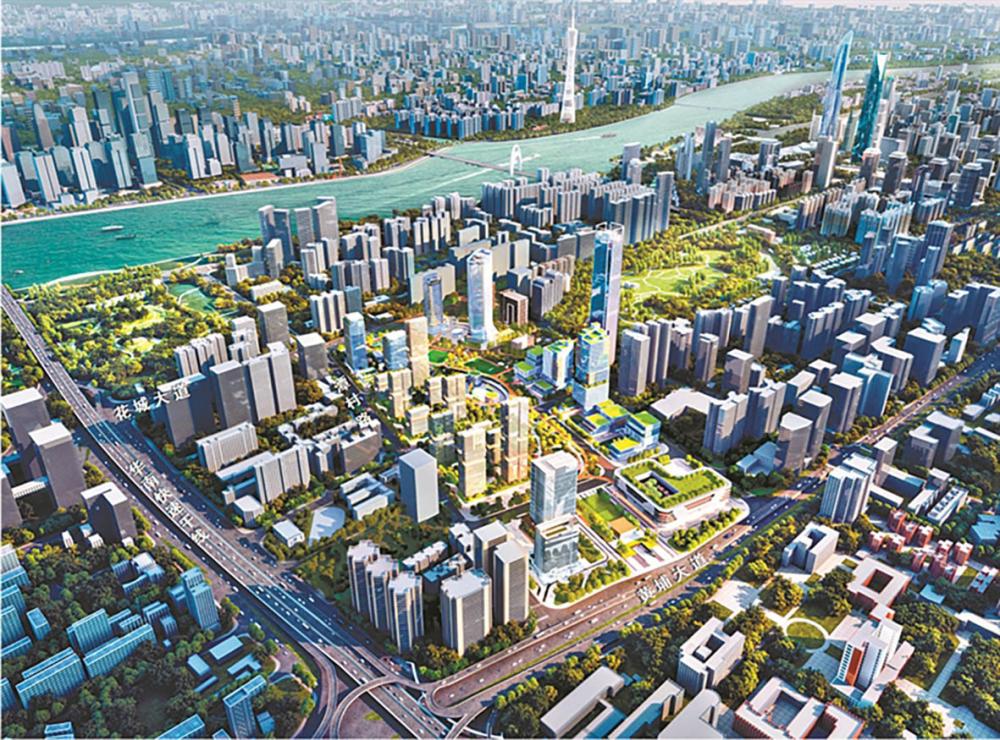
Core Insights - The Guangzhou high-quality development conference highlighted significant urban development initiatives, including a landmark land transaction valued at over 20 billion yuan, which has led to a re-evaluation of "Guangzhou value" [2][7]. Land Transaction Details - The Ma Chang land parcel was sold for 23.6 billion yuan after intense bidding, with a premium rate of 26.6%, marking it as the second-highest total price for a land deal in Guangzhou [2][3]. - The land covers approximately 194,500 square meters, with a total construction area of 567,000 square meters, and is designated for mixed-use including residential, commercial, and educational purposes [3][5]. Economic Impact - The Ma Chang project is expected to contribute approximately 34.6 billion yuan to GDP annually, generate 4.5 billion yuan in new tax revenue, and create 60,000 jobs once fully developed [2][3]. - The project is part of a broader strategy to enhance Guangzhou's economic landscape, with 57 major projects signed at the conference, totaling an investment of 130.5 billion yuan across various advanced sectors [11]. Urban Development Strategy - The Ma Chang area is positioned as a strategic hub within the "Pearl River New Town—Financial City—Pazhou" triangle, aiming to elevate the city's status as a world-class urban center [2][3]. - The development will include high-end commercial spaces, luxury retail, and a central sports park, reflecting a shift towards integrating urban living with cultural and recreational facilities [5][8]. Industry Trends - The transaction signifies a shift in Guangzhou's real estate market, indicating a stabilization and renewed confidence among developers, as evidenced by the high participation rate in the bidding process [7][8]. - The city is transitioning from "incremental expansion" to "quality enhancement," focusing on urban renewal and sustainable development practices [8][9]. Future Projections - Guangzhou's GDP has reached 3.2 trillion yuan, with ongoing population inflow and industrial upgrades, suggesting a robust economic outlook [8][11]. - The city aims to develop a smart construction industry projected to exceed 500 billion yuan by 2030, further supporting urban renewal initiatives [10].


我市15个项目入选省级智能建造试点项目
Nan Jing Ri Bao· 2026-02-26 02:42
Core Insights - A new batch of intelligent construction pilot projects in Jiangsu Province has been announced, with 15 projects from Nanjing selected, covering various types such as hospitals, residential developments, transportation hubs, and rail transit [1] Group 1: Intelligent Construction Projects - Nanjing North Station is highlighted as the largest railway hub station in the northern Jiangsu section of the national "eight vertical and eight horizontal" high-speed rail network, focusing on full lifecycle digital management to set a benchmark for intelligent construction in railway hubs [1] - The project utilizes cutting-edge technologies such as IoT, big data, and artificial intelligence to establish a panoramic intelligent construction management platform, featuring eight core modules and over 30 scenario-based applications for comprehensive smart control throughout the construction process [1] Group 2: Smart Construction Techniques - The intelligent construction phase implements full-process digital control, including a Beidou automated monitoring system for deep foundation stress and displacement data collection, real-time monitoring of temperature differences in 143,000 cubic meters of large-volume concrete, and a smart electricity system that monitors line status 24/7 [1] - Various construction robots have been deployed, significantly enhancing the precision of construction processes, including leveling, polishing, and sealing operations [1] Group 3: Metro Line 4 Phase II - The second phase of Metro Line 4 is noted as Nanjing's fourth cross-river metro line, with the core control project being the shield tunnel section between Binjiang Station and Jiangxinzhou, which is the deepest cross-river metro tunnel in the Yangtze River Delta region at 68.58 meters below the water surface [2] Group 4: Challenges and Innovations - The tunnel section faces significant challenges due to complex geological conditions, including soft soil, gravel, and mudstone, with high water pressure and risks of leakage, requiring advanced technical solutions [2] - The project employs a multi-level excavation control system based on a smart shield management system, achieving remote control capabilities for shield machines, and has developed a fourth-generation tool-changing robot that reduces tool change time to one-third of traditional methods [2]
他们,将影响你的生意和生活|住房和城乡建设部党组书记、部长倪虹
Jing Ji Guan Cha Bao· 2026-02-25 10:17
Core Viewpoint - The Ministry of Housing and Urban-Rural Development emphasizes the importance of high-quality development in housing and urban construction, aiming to contribute to national modernization and rejuvenation through targeted policies and strategies [1][2]. Group 1: Policy Focus - The national housing and urban construction work meeting highlights the need for better coordination between investments in infrastructure and human resources, as well as balancing public welfare and economic growth [2][3]. - A comprehensive approach to urban development is advocated, integrating various construction initiatives and establishing a scientific evaluation system for urban development [3][4]. - The establishment of a new model for real estate development is crucial, focusing on the relationship between current and long-term strategies, market dynamics, and risk prevention [3][4]. Group 2: Real Estate Market Stability - The policy stresses the importance of stabilizing the real estate market through city-specific measures and precise policies, allowing local governments to adjust real estate policies based on local conditions [4][7]. - Emphasis is placed on the need for a market-oriented and legal framework to mitigate real estate company debt risks and protect buyers' rights [4][5]. Group 3: Urban Renewal and Infrastructure - High-quality urban renewal is prioritized, including the renovation of old residential areas and the development of community spaces, which aims to enhance living conditions [4][6]. - The construction of new urban infrastructure, such as underground utility networks, is essential for modern urban development [6][7]. Group 4: Construction Industry Transformation - The construction industry is encouraged to adopt innovative practices, focusing on smart and green building methods to enhance productivity and sustainability [5][6]. - Safety considerations are to be integrated throughout the entire lifecycle of building projects, ensuring robust management and regulatory frameworks [6][7]. Group 5: Future Outlook - The year 2026 marks the beginning of the "14th Five-Year Plan," with a focus on modernizing urban areas, stabilizing the real estate market, and upgrading the construction industry [7]. - The anticipated policies aligned with these objectives are expected to unveil new business opportunities within the real estate sector [7].
河北省建筑节能成效显著 去年全省城镇竣工绿色建筑6918万平方米
Xin Lang Cai Jing· 2026-02-20 00:07
Group 1 - The construction industry in Hebei Province is a significant pillar of the national economy, with a projected registered real estate value of 805.96 billion yuan by 2025, reflecting a year-on-year growth of 4.7% [1] - The development of intelligent construction is an inherent requirement for the transformation of the construction industry, exemplified by the Zhongke Xiong'an Technology Park project, which showcases deep applications of intelligent construction technology [1] - Hebei Province has established Baoding City and Xiong'an New Area as national pilot cities for intelligent construction, nurturing 12 provincial pilot enterprises and creating 25 demonstration projects across various scenarios [1] Group 2 - The energy-saving achievements in construction are notable, with 69.18 million square meters of green buildings completed in urban areas by 2025, and 22.47 million square meters of prefabricated buildings started, accounting for 38% of the new urban construction area [2] - The province promotes prefabricated rural housing under the principle of "household autonomy, voluntary enterprise participation, and government support," with 9,868 households voluntarily opting for prefabricated rural housing, totaling 20,000 households [2] - In the past year, Hebei Province's construction industry saw the addition of 14 new first-class qualifications, the application for 2 special-grade qualifications, and the establishment of 8 third-level subsidiaries of central enterprises in the construction sector [2]
我省建筑节能成效显著
Xin Lang Cai Jing· 2026-02-19 23:02
Core Insights - The construction industry in the province is a significant pillar of the national economy, with a projected registered real estate value of 805.96 billion yuan by 2025, reflecting a year-on-year growth of 4.7% [1] Group 1: Smart Construction Development - The development of smart construction is an inherent requirement for the transformation of the construction industry, exemplified by the Zhongke Xiong'an Technology Park project, which will be completed by the end of 2025 [1] - The project incorporates advanced technologies such as facial recognition for worker entry, AI algorithms for safety behavior recognition, and automated collision avoidance systems for cranes, showcasing a shift from traditional chaotic construction sites to efficient operations [1] - The province has established Baoding and Xiong'an New Area as national pilot cities for smart construction, nurturing 12 provincial pilot enterprises and creating 25 demonstration projects across various sectors [1] Group 2: Energy Efficiency and Green Building - The province achieved significant energy efficiency results, with 69.18 million square meters of green buildings completed in urban areas by 2025, and 22.47 million square meters of prefabricated buildings started, accounting for 38% of new urban construction [2] - Nearly 600,000 square meters of existing buildings underwent energy-saving renovations, contributing to the overall sustainability goals [2] - The province promotes prefabricated rural housing under a model of "household autonomy, voluntary enterprise participation, and government support," with 9,868 households voluntarily opting for prefabricated homes, totaling 20,000 households [2]
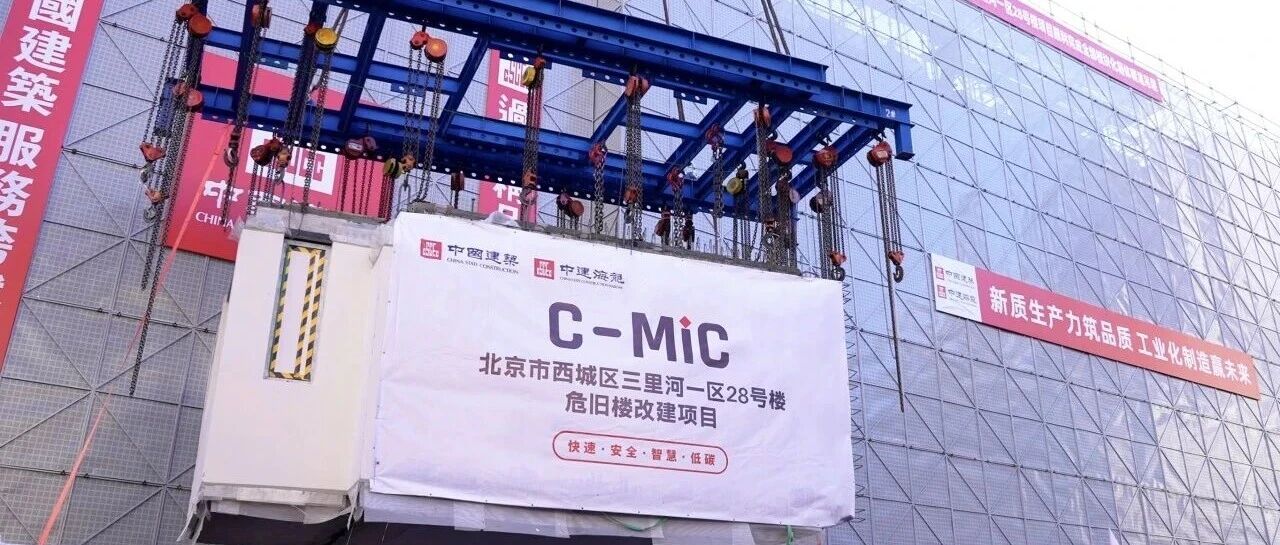
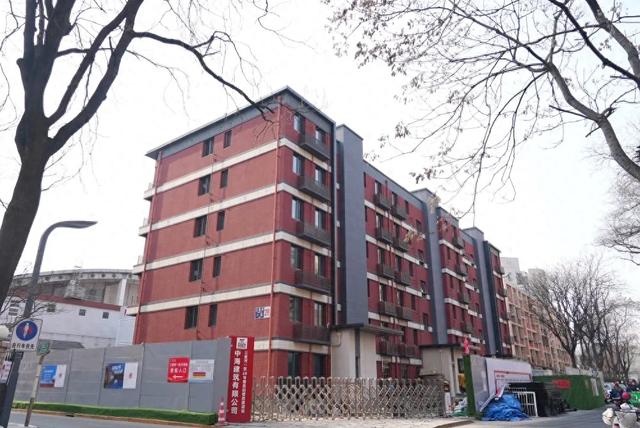
“墙体开裂、蟑螂横行”的老楼,从拆除到原址建成新楼,仅用46天
Xin Lang Cai Jing· 2026-02-15 01:08
Core Viewpoint - The successful completion of the renovation project at No. 28, Sanlihe District, Beijing, demonstrates the effectiveness of the "original demolition and reconstruction" approach, supported by advanced construction technologies, resulting in improved living conditions for residents [1][5][6]. Group 1: Project Overview - The renovation project transformed a dilapidated building into a new six-story residential structure in just 46 days, showcasing rapid construction capabilities [1][6]. - The project involved extensive communication and collaboration among 54 households, ensuring that residents' needs and preferences were met through tailored housing solutions [5][6]. Group 2: Technological Innovation - The construction speed was significantly enhanced by the "intelligent construction-MiC technology," which allowed for 90% of the building's components to be prefabricated in a factory setting [6]. - This innovative approach reduced construction time by approximately 75% compared to traditional methods, while also minimizing construction waste by 75%, material loss by 25%, and carbon emissions by 30% [6]. Group 3: Policy and Community Engagement - The project aligns with national policies promoting the self-renewal of old housing, with No. 28 being the second pilot project in the region [5]. - The success of the project relied on thorough consultations and the development of customized plans for each household, reflecting a community-driven approach to urban renewal [5][6].
中建兴业:以绿智创新融筑未来
Xin Lang Cai Jing· 2026-02-13 16:23
Core Viewpoint - The article highlights the innovative practices of China State Construction Engineering Corporation (CSCEC) in integrating photovoltaic technology with architectural aesthetics, showcasing a successful model for state-owned enterprises to achieve high-quality development through innovation [1][5]. Group 1: Technological Innovations - The Qianhai Ice and Snow World features a roof that is a 35,000 square meter curtain wall system, capable of withstanding typhoons and generating over 6 million kilowatt-hours of green electricity annually, equivalent to planting 270,000 trees in Shenzhen [2][3]. - The core technology behind this is the Building Integrated Photovoltaics (BIPV) developed by Far East Green Energy, which allows sunlight to be converted directly into electricity, providing a continuous supply of green power for buildings [2][3]. - Far East Green Energy has achieved significant breakthroughs in the curtain wall sector, having constructed over 1,000 projects globally, including iconic structures like the Burj Khalifa and the OPPO International Headquarters [3]. Group 2: Industry Standards and Practices - The company is actively involved in setting local BIPV standards in cities like Shenzhen and Shanghai, addressing the challenges of aligning the 50-year lifespan of buildings with the 20-30 year operational cycle of photovoltaic systems [4][5]. - The digital management platform at the Zhuhai base allows for seamless integration from design to installation, with an annual production capacity of 600,000 square meters for complex curtain walls [4]. Group 3: Market Expansion and Business Models - Far East Green Energy is exploring innovative business models, such as investment-sharing for retrofitting old buildings with energy-efficient systems and photovoltaic installations, adapting to market demands [6]. - The company has achieved a 70% market share in Hong Kong, Macau, and overseas markets, with Singapore serving as a key hub for expansion into Asia and the Middle East [8].
像造汽车一样造房子,危旧住宅46天原地变新房
第一财经· 2026-02-13 03:36
Core Viewpoint - The article discusses the innovative approach to urban renewal in Beijing, specifically focusing on the successful renovation of a nearly 50-year-old residential building using smart construction technology, which allows for rapid and high-quality rebuilding, addressing long-standing issues faced by residents [3][5][10]. Group 1: Project Overview - The renovation project of Building 28 in Xicheng District, Beijing, was initiated in September 2025 and completed in less than six months, showcasing a significant reduction in construction time compared to traditional methods [5][6]. - The project utilized a "one household, one policy" approach to cater to the diverse needs of the 54 resident households, offering six different housing layouts tailored to individual requirements [5][6]. - The building, originally constructed in 1978, faced numerous structural issues, prompting strong resident demand for renovation [5][6]. Group 2: Smart Construction Technology - The project employed the "Intelligent Construction-MiC Technology," which integrates high levels of industrialization and smart manufacturing, allowing for 90% of construction processes to be completed in a factory setting [8][9]. - This technology enabled a construction speed that was 75% faster than traditional methods, while also reducing construction waste by 75%, material loss by 25%, and carbon emissions by 30% [9][10]. - Each module of the building was assigned a unique digital identity, facilitating maintenance and management throughout the building's lifecycle [9]. Group 3: Policy and Financial Innovations - The project introduced a collaborative funding model where residents, the government, and property units share costs, making the renovation financially feasible for residents [6][10]. - The approval process for the project was streamlined, achieving a 90% reduction in the time required for necessary permits and documentation [6][10]. - The initiative aligns with national policies promoting urban renewal and the transformation of old housing, with various provinces adopting similar strategies [12][13]. Group 4: Future Implications - The article highlights a shift in urban development in China from expansion to enhancing existing housing quality, with "original demolition and reconstruction" expected to become a mainstream model for housing renovation by 2030 [12][13]. - The successful implementation of this project serves as a replicable model for urban renewal in densely populated areas across China, potentially influencing future housing policies and construction practices [10][13].