机敏级核潜艇

Search documents
美军应对中国“新保单”遭澳质疑
Xin Lang Cai Jing· 2026-02-09 05:52
Group 1 - The core viewpoint of the article is that the U.S. plans to deploy four submarines to Australia's Stirling base as part of the AUKUS agreement to enhance military integration and deter China, despite facing significant challenges and criticisms [1][2]. Group 2 - The Australian government is investing approximately $5.6 billion for the construction of training centers, barracks, submarine docking modifications, radioactive waste management facilities, and power supply facilities at Stirling base [1]. - An additional $8.4 billion is allocated for the construction of related maintenance and manufacturing facilities nearby [1]. - Starting in 2027, four U.S. Virginia-class nuclear submarines and one British Astute-class nuclear submarine will rotate at Stirling base, providing a strategic advantage for U.S. military operations in potential conflicts with China [1]. Group 3 - Challenges include Australia's lack of experience in operating nuclear-powered submarines, raising concerns about the readiness of dry docks when needed [2]. - The financial burden of constructing the necessary base facilities is substantial, and local residents express concerns about radioactive waste and the potential for the area to become a military target [2]. - Former Australian Prime Minister Turnbull criticized the AUKUS agreement, arguing that establishing a U.S. submarine base in Stirling while Australia lacks its own submarines undermines national interests and sovereignty [2]. Group 4 - The U.S. Congress is considering not selling nuclear submarines to Australia due to concerns that Australia may not commit to supporting the U.S. in potential conflicts with China, which could limit the operational control of these submarines [2]. - The report indicates that submarines operated under U.S. command from Australian bases could be deployed immediately, enhancing military readiness [2]. Group 5 - The Australian Greens' defense and foreign affairs spokesperson criticized the AUKUS agreement, claiming it jeopardizes Australian sovereignty and serves U.S. interests at a significant public cost [3]. - The spokesperson highlighted the unfairness of the agreement, suggesting that it reflects a broader trend of U.S. pressure on allies [3].
推动与澳军事整合,美军应对中国“新保单”受澳大利亚质疑
Huan Qiu Shi Bao· 2026-02-08 22:37
Group 1 - The core viewpoint of the article is that the U.S. plans to deploy four submarines to Australia's Stirling base as part of the AUKUS agreement, aimed at enhancing military integration and deterring China, despite facing significant challenges and criticisms [1][2]. - The Australian government is investing approximately $5.6 billion for the construction of training centers, barracks, submarine dock renovations, radioactive waste management facilities, and power supply facilities at Stirling base [1]. - An additional $8.4 billion is allocated for the construction of related maintenance and manufacturing facilities nearby, with U.S. submarines expected to rotate at Stirling base starting in 2027 [1]. Group 2 - Challenges include Australia's lack of experience in operating nuclear-powered submarines, raising concerns about the readiness of dry docks when needed [2]. - There are significant financial requirements for building the necessary infrastructure, and local residents express concerns about radioactive waste and the potential for the area to become a military target [2]. - Criticism from former Australian Prime Minister Turnbull highlights concerns over national sovereignty, suggesting that establishing a U.S. submarine base in Australia without having its own submarines is not in the country's best interest [2]. - A report from the U.S. Congressional Research Service indicates that the U.S. may reconsider selling nuclear submarines to Australia due to concerns about Australia's commitment in a potential U.S.-China conflict [2]. - The Australian Greens party criticizes the AUKUS agreement as a dangerous concession of sovereignty to U.S. interests, arguing that it unfairly burdens Australia with public funding [3].
强化远程打击、网络作战及军工产能,英国要将军队转向“备战状态”
Huan Qiu Shi Bao· 2025-06-02 22:52
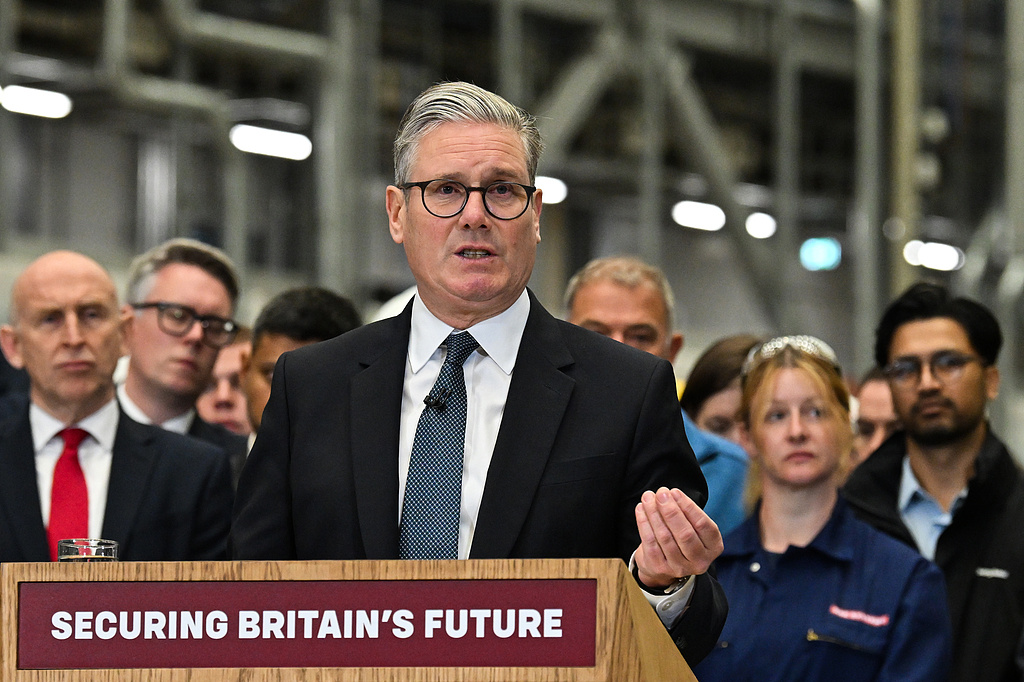
Group 1 - The UK Prime Minister Starmer announced a new Strategic Defense Review that includes 62 recommendations aimed at enhancing the UK's military capabilities, with a focus on the direct threat posed by Russia [1][3] - The review emphasizes that the threats faced by the UK are more severe and unpredictable than at any time since the Cold War, citing examples such as the Russia-Ukraine conflict and cyberattacks [3] - Plans include the construction of 12 new attack submarines, the establishment of at least 6 new munitions factories, and investments in new air defense and missile systems [3][4] Group 2 - The UK government will invest £15 billion in modernizing nuclear weapon production facilities as part of the "Dreadnought" strategic submarine program [4] - A volunteer home defense force will be established to protect critical national infrastructure from drone attacks and other threats [4] - The UK is considering purchasing F-35A fighter jets to restore its air-launched nuclear deterrent capabilities [4] Group 3 - Starmer expressed 100% confidence in achieving the outlined military plans, which represent the highest sustained growth in defense spending since the Cold War [4] - The UK Defense Secretary acknowledged that any plans to expand the military size would have to wait until after the 2029 elections, highlighting the current size of the armed forces as the smallest in 300 years [4] - Criticism arose from opposition leaders regarding the lack of a specific timeline for increasing defense spending to 3% of GDP [4][5]