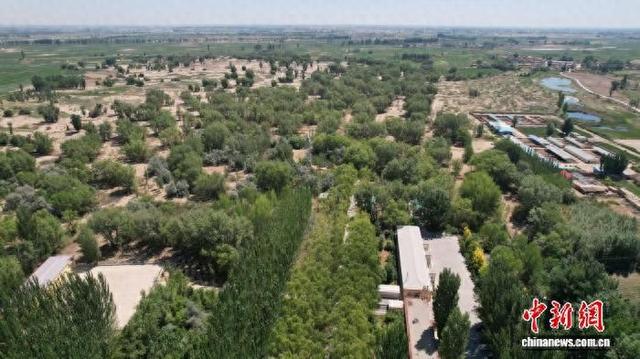
杨树

Search documents
(新春走基层)三代人接续奋斗 塞北“沙窝子”变“绿海洋”
Zhong Guo Xin Wen Wang· 2026-02-06 08:09
Core Viewpoint - The article highlights the transformation of the XinHua Forest Farm in Inner Mongolia from a desertified area to a thriving green ecosystem through over 60 years of continuous efforts in afforestation and ecological restoration [1][3]. Group 1: Historical Context - The XinHua Forest Farm was established in the 1960s to combat severe desertification, with initial conditions characterized by sand dunes and saline-alkali soil [3]. - The area faced significant challenges, including frequent sandstorms that obstructed daily life, necessitating the establishment of a dedicated workforce for afforestation [3]. Group 2: Ecological Achievements - Over the past 60 years, the forest farm has planted 7.55 million trees across 46,600 acres, achieving a forest coverage rate of 88% [3]. - The farm has successfully fixed 6.36 million tons of sand and sequestered 146,300 tons of carbon, while the surrounding lakes have expanded from 500 acres to 700 acres [5]. - The number of sandstorm days has drastically reduced from 136 in 1960 to just 19 in 2023, and the diversity of wildlife has increased to over 80 species [5]. Group 3: Technological Innovations - The introduction of mechanized equipment has significantly improved the efficiency of afforestation efforts, with new machines outperforming manual labor by several times [7]. - Collaboration with research institutions has led to the establishment of expert workstations focused on ecological restoration and the development of resilient tree species [7]. Group 4: Economic Development - The forest farm has implemented models that integrate local communities into its operations, resulting in an average annual income increase of approximately 5,000 yuan per person for over 2,000 villagers involved in various projects [9]. - The integration of photovoltaic systems with afforestation efforts has created a dual benefit of ecological restoration and economic gain, covering 24,000 acres [9].