
水洗棉

Search documents
别拿面料玩文字游戏
Xin Lang Cai Jing· 2026-02-27 22:32
春节前,不少消费者忙着添置新衣。"亲肤棉""水洗棉""牛奶绒"等一批新面料,令一些消费者直呼摸不着头 脑。事实上,在纺织纤维的规范命名体系中,"亲肤棉""水洗棉"均属于不规范表述。不同于"纯棉""棉混 纺"等产品原料表述,"水洗棉""亲肤棉"等名称不代表面料含有棉纤维成分,主要是商家的营销手段。这些商 家之所以在名称或宣传上做文章,刻意植入"亲肤""水洗"等字样,强调产品与天然棉质感的联系,无非是想 提升产品的市场竞争力,却也对消费者形成误导。对此,有必要加大监管力度,同时也提醒消费者,在选购 产品时务必查看标签上的纤维成分信息,切勿被商家的文字游戏忽悠。(时 锋) 王 铎作 ...

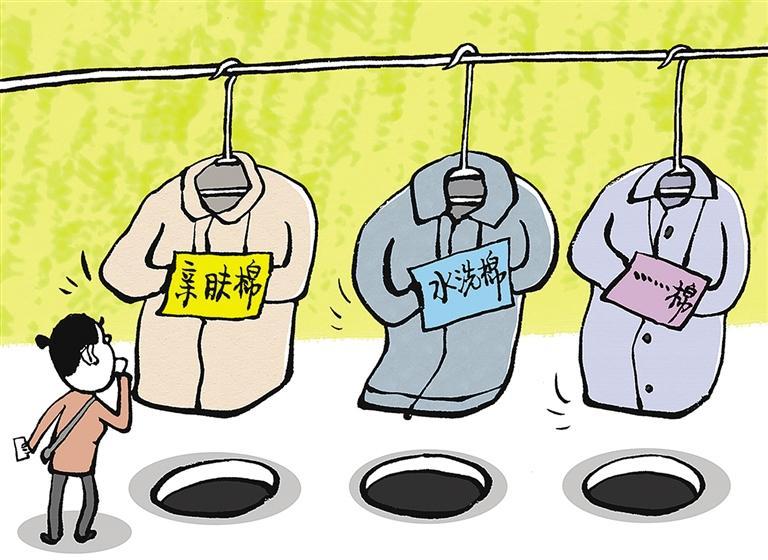
“亲肤棉”“水洗棉”……添置新衣,别被这些名字忽悠
Ren Min Ri Bao· 2026-02-09 00:55
Core Viewpoint - The article emphasizes the importance of understanding fabric names and their actual composition, warning consumers against misleading marketing terms like "skin-friendly cotton" and "washed cotton" which do not necessarily indicate the presence of cotton fibers [1][2]. Group 1: Fabric Composition and Misleading Terms - Terms like "skin-friendly cotton" and "washed cotton" are considered non-standard expressions in the textile fiber naming system and do not guarantee the presence of cotton fibers [1][2]. - Many retailers use these terms to enhance market appeal, misleading consumers into associating these products with the qualities of natural cotton [1][2]. - Proper labeling of fiber content is mandated by national standards, but some businesses exploit ambiguous terminology to attract buyers [1][2]. Group 2: Characteristics of Various Fabrics - Different synthetic fibers such as spandex, nylon, polyester, and acrylic have distinct properties and applications, with spandex being known for elasticity, nylon for durability, and polyester for wrinkle resistance [2]. - New fabric types like "ice silk," "milk velvet," and "graphene" are introduced, each with unique characteristics, but some may be mere marketing gimmicks [2]. - Consumers are advised to check product labels for fiber composition to avoid being misled by fancy names [2]. Group 3: Methods for Identifying Fabric Types - Consumers can initially assess fabric characteristics by touch, noting that cotton feels soft while synthetic fibers may feel different [3]. - A burning test can be conducted on small fiber samples to identify fabric types based on their burning characteristics and odors, although this should be done cautiously [3]. - The burning characteristics of various fibers, such as cellulose fibers burning quickly with a paper-like smell, can help in identifying the material [3].