
水电供应

Search documents
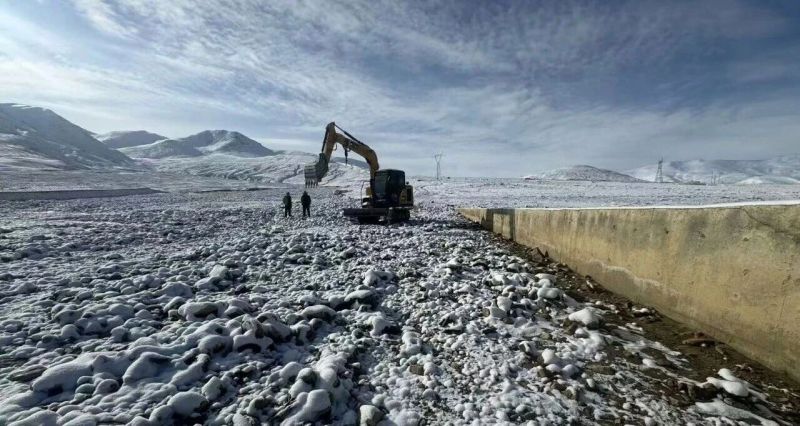
冰峰下的脉搏——拉洛水电的极地坚守与春灌序章
Zhong Guo Fa Zhan Wang· 2026-01-13 06:01
Core Viewpoint - The article highlights the challenges and efforts of Lalo Hydropower Company in maintaining water supply and power generation in the harsh winter conditions of Tibet, emphasizing the importance of technology and human collaboration in ensuring operational safety and efficiency. Group 1: Operational Challenges - The winter season presents significant challenges for the Lalo Hydropower Company, including frozen channels and snow-covered power lines, which require dedicated efforts from the team to maintain operations [1][4] - The team faces extreme weather conditions that can make concrete and metal components brittle, complicating the inspection process [4][7] Group 2: Technological Advancements - Recent technological upgrades have transformed operations, with real-time video monitoring and remote fault detection significantly reducing response times to issues [7] - The combination of smart technology and human oversight has increased inspection frequency by 80%-90%, enhancing the safety and reliability of the water supply system [7] Group 3: Community Engagement - The company has established a communication mechanism with local farmers to accurately assess irrigation needs, ensuring efficient water distribution for agricultural purposes [8] - Positive feedback from farmers indicates improved satisfaction with water supply management during the spring irrigation season [8] Group 4: Commitment and Teamwork - The team demonstrates unwavering commitment, often working in extreme conditions to ensure the safety and functionality of the water supply system [9][10] - The collaborative spirit among team members is crucial for addressing emergencies and maintaining operational integrity in challenging environments [9][10]

刘家峡水库今起调增出库流量保障黄河流域秋浇冬灌
Xin Hua She· 2025-10-24 10:21
Core Viewpoint - The State Grid Gansu Liujiashan Hydropower Plant has increased the daily outflow of the Liujiashan Reservoir to 1,400 cubic meters per second to support agricultural irrigation needs along the Yellow River in Inner Mongolia and Ningxia, starting from October 24 [1] Group 1: Agricultural Support - The autumn and winter irrigation are crucial for improving soil moisture and ensuring food security for the coming year [1] - The Inner Mongolia Hetao Irrigation District plans to complete autumn irrigation over an area of more than 4.3 million acres, with a total water usage of nearly 950 million cubic meters [1] - The Ningxia Yellow River Irrigation District plans to divert around 1 billion cubic meters of water, irrigating over 5 million acres over a period of 37 days [1] Group 2: Water Resource Management - Liujiashan Reservoir plays a key role in irrigation, flood control, and ice prevention in the upper reaches of the Yellow River [1] - The increase in outflow not only meets the irrigation needs but also prepares for the upcoming winter ice prevention period by freeing up reservoir capacity [1] - Efficient water resource scheduling is emphasized as temperatures drop and the Yellow River basin transitions into autumn and winter [1]
刘家峡水电厂:绷紧“防汛弦” 筑牢“安全堤”
Zhong Guo Neng Yuan Wang· 2025-08-06 08:44
Core Points - Liujiashan Hydropower Plant is currently in a critical flood prevention period, strictly following the Yellow River Water Resources Commission's dispatch requirements to control the daily outflow of Liujiashan Reservoir at 700 cubic meters per second to ensure flood safety in the Yellow River basin [1][2] - The plant has issued a yellow rainstorm warning and is enhancing monitoring and multi-dimensional prevention measures to strengthen flood safety [1] - Liujiashan Hydropower Plant is a key water conservancy project in the upper reaches of the Yellow River, with flood prevention being a core aspect of its safe production [1] - The plant is actively improving the accuracy of forecasts and extending the prediction period by strengthening information sharing with water conservancy and meteorological departments [1] - Eight flood prevention emergency teams have been organized to conduct comprehensive inspections and adjustments of various facilities to ensure stable operation [1] - The plant has optimized its flood emergency response plan and conducts regular practical drills, ensuring a 24-hour duty system and rapid response mechanisms [1] Industry Context - The Liujiashan Hydropower Plant is focused on achieving a balance between flood safety and water resource utilization, aiming for a "win-win" situation in flood prevention and summer peak power supply [2]
四川省2025年度水库水电站防汛抗震演练在雅安市石棉县大岗山水电站举行
Shui Li Bu Wang Zhan· 2025-04-23 02:26
Core Viewpoint - The recent flood and earthquake emergency drill conducted at the Dagangshan Hydropower Station in Sichuan Province effectively tested various emergency response measures, enhancing the province's flood and earthquake prevention capabilities [1][2]. Group 1: Emergency Drill Overview - The drill simulated a 6.8 magnitude earthquake occurring 20 kilometers from the Dagangshan Hydropower Station, combined with heavy rainfall leading to a landslide and the formation of a barrier lake [1]. - The emergency response included real-time monitoring of dam data, urgent rescue operations for trapped personnel, and the use of drones for slope inspections, successfully completing 46 drill scenarios [1]. Group 2: Official Feedback and Recommendations - Officials from the Sichuan Provincial Water Resources Department praised the drill for its smooth coordination and effective response processes, emphasizing the importance of a unified command and technological support [2]. - Recommendations were made to strengthen the disaster prevention mechanism, ensure accountability at all levels, and enhance emergency preparedness through regular drills and resource management [2]. Group 3: Commitment to Safety and Stability - The Guoneng Dadu River Company expressed its commitment to implementing central and provincial directives on flood and earthquake disaster reduction, aiming to establish a more efficient safety emergency system [2]. - The company highlighted the importance of safeguarding public safety and ensuring stable energy supply, contributing to the economic development of Sichuan Province [2].