永磁无刷电机

Search documents
哈工大助力月球找水,中国要争全球第一!
机器人大讲堂· 2026-03-14 05:48
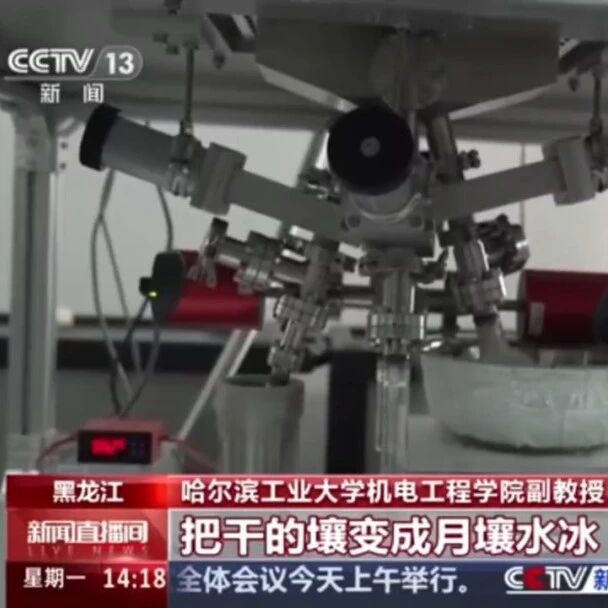
Core Viewpoint - China's space exploration is set to achieve a historic milestone with the Chang'e 7 mission, targeting the lunar South Pole-Aitken Basin, believed to contain significant water ice resources [1][2]. Group 1: Mission Overview - The Chang'e 7 mission aims to be the first to locate water on the Moon, with a focus on the South Pole region, which presents extreme environmental challenges [2][5]. - The mission will utilize a unique "four instruments and one satellite" configuration, including a lander designed for close-range exploration of permanently shadowed craters [5][41]. Group 2: Technological Contributions - Harbin Institute of Technology (HIT) plays a crucial role in preparing for the mission by simulating lunar conditions and developing technology to create lunar regolith water ice samples [7][10][16]. - HIT has been integral to China's lunar exploration efforts for over 20 years, contributing key technologies for various missions, including the recent Chang'e 6 mission [17][19]. Group 3: Historical Contributions - HIT has a rich history of contributions to lunar exploration, including innovations such as the "elevator" for the Yutu rover and specialized wheels for traversing soft lunar soil [21][23]. - The institute has developed various technologies to support lunar rover operations, including low-gravity simulation equipment and advanced control systems [25][29][33]. Group 4: Human Capital - HIT has cultivated a strong team of experts who have significantly influenced China's lunar exploration program, including notable alumni who have held leadership roles in the space sector [36][39]. - The contributions of HIT alumni are evident in the foundational technologies and strategies that have shaped the country's lunar exploration roadmap [37][41].