沼液

Search documents
山东宁阳:牧场里的“循环账”
Xin Lang Cai Jing· 2026-01-17 05:22
Group 1 - The core idea of the article is the innovative waste management practices implemented by Shandong Shengli Animal Husbandry Co., Ltd., which transforms livestock waste into valuable resources, enhancing both environmental sustainability and economic efficiency [1][2][3] Group 2 - The farm houses over 3,800 dairy cows, producing more than 70 tons of fresh milk daily, while generating approximately 30 kilograms of manure per adult cow each day [1] - The farm utilizes automated manure cleaning equipment to minimize odor and processes the manure through a series of fermentation beds, resulting in odorless, fluffy bedding material after 12 to 15 days of anaerobic fermentation [1][2] - The anaerobic fermentation of liquid manure generates biogas, producing between 1,500 to 2,200 degrees of electricity daily, which powers 144 large fans to cool the cows [2] - The farm processes about 1,600 cubic meters of solid manure monthly, saving nearly 600,000 yuan annually on bedding material, while producing 700,000 cubic meters of biogas and over 500,000 degrees of electricity each year [2] - The treated liquid manure is used as organic fertilizer on over 2,800 acres of land, improving soil quality and creating a sustainable agricultural ecosystem [2][3] - The farm's waste management model exemplifies the concept that waste can be a resource when managed correctly, forming a closed-loop system of "cattle raising - waste - energy - fertilizer - planting" [2][3]
探索“无废农牧”新模式,云浮新兴让畜禽粪污“变废为宝”
Zhong Guo Huan Jing Bao· 2025-12-28 10:13
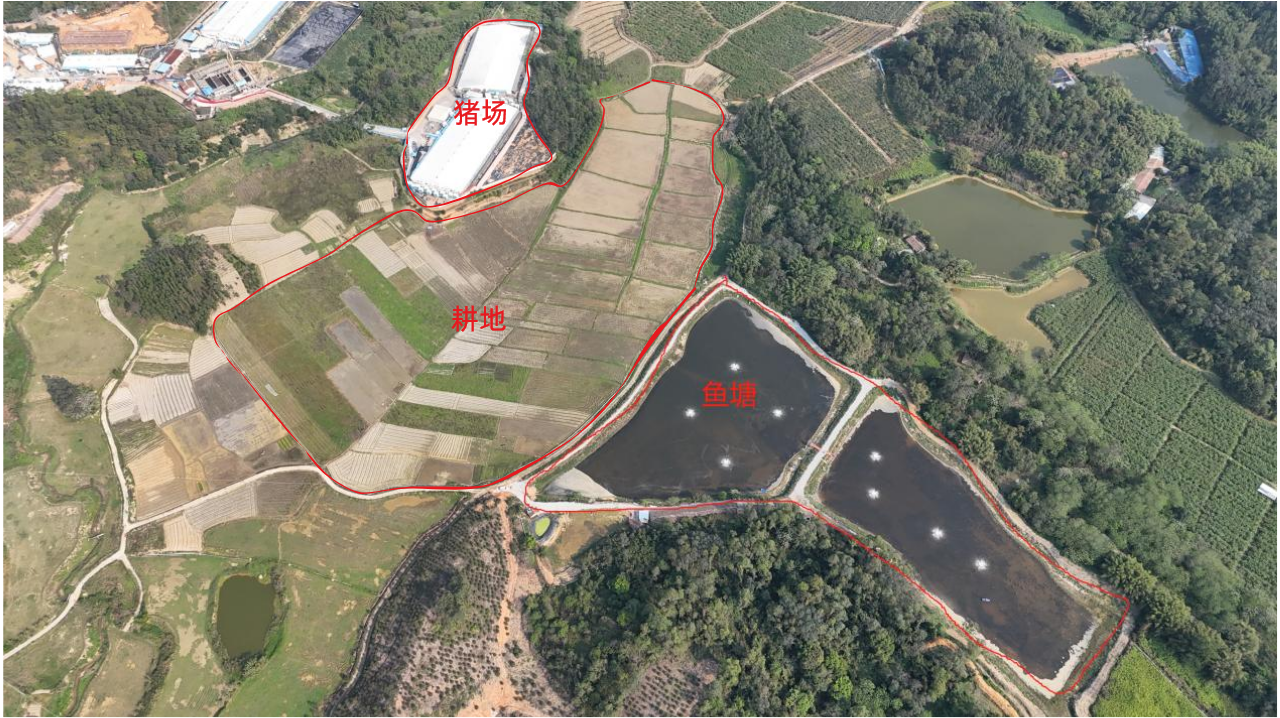
Core Viewpoint - The article highlights the transformation of traditional livestock farming in Xinxing County, Guangdong Province, towards an eco-friendly and resource-recycling model, addressing pollution issues while promoting sustainable agricultural development [1]. Group 1: Transformation of Livestock Farming - Xinxing County has shifted from a "heavy farming, light governance" model to an intelligent, ecological, and resource-oriented approach, creating a "waste-free agricultural and animal husbandry" closed-loop system [1]. - The county has successfully implemented a "pig-biogas-field-fish" and "pig-biogas-forest" ecological agricultural cycle, turning waste into valuable resources [2][5]. Group 2: Resource Utilization and Economic Benefits - The high village pig farm processes waste into biogas, liquid fertilizer, and solid waste, achieving over 95% resource utilization of livestock waste [2]. - The farm's 105 acres of arable land can absorb 20 cubic meters of biogas liquid and 1 ton of pig manure per acre, resulting in a 60% utilization rate of biogas liquid and 100% for pig manure, significantly enhancing crop yield and quality [3]. Group 3: Technological Innovations - The county promotes a "company + base + farmer" model for intensive farming, leveraging IoT and big data for smart upgrades, which improves livestock growth efficiency and reduces waste generation [5]. - The introduction of solar oxygen machines and energy-efficient pumps, combined with smart control systems, optimizes energy use and reduces carbon emissions in livestock farming [7]. Group 4: Extension of Waste-Free Concept - The successful practices in the agricultural sector have led to the initiation of "waste-free county" and "waste-free agricultural town" projects, aiming to extend the waste-free concept to urban construction, industrial production, and daily consumption [8]. - The county is focused on creating a model that balances ecological and economic benefits, with ongoing improvements in the "waste-free agricultural" model expected to provide replicable experiences for other regions [8].