
泗州戏

Search documents
传承人陈凤:我们会一直演下去
Xin Lang Cai Jing· 2026-01-15 17:23
Core Viewpoint - The performance of Suzhou Opera and Weidiao Flower Drum Opera in Huaiyuan County highlights the cultural significance and historical value of Weidiao Flower Drum Opera, which is facing challenges in preservation and transmission due to changing societal interests and a declining number of young practitioners [1][2]. Group 1: Cultural Significance - Weidiao Flower Drum Opera, a rare local drama form in Anhui Province, has a history of nearly 700 years, tracing back to the Hongwu period of the Ming Dynasty [1]. - It is recognized as part of the "Three Flowers of the Huai River," alongside Huagu Lantern and Fengyang Flower Drum, representing a blend of military culture and local customs [1]. Group 2: Challenges in Transmission - In 2021, Weidiao Flower Drum Opera was officially listed as an endangered art form, with young people showing less interest in learning due to perceived difficulties and lack of financial incentives [2]. - The leader of the Weidiao Flower Drum Opera troupe expressed concerns about the dwindling number of dedicated practitioners willing to invest time in mastering the art [2]. Group 3: Support and Revival Efforts - The Anhui Provincial Department of Culture and Tourism has provided annual funding for 100 public performances of Weidiao Flower Drum Opera over the past five years, along with financial support for training new inheritors [2]. - Upcoming performances, including an original piece titled "Heart Seat Dustless" and a modern-themed play "Deep Affection Long Road," aim to elevate the opera's profile and reach international audiences [2][3].
00后剧团团长:让300年“拉魂腔”穿越时空
Xin Lang Cai Jing· 2026-01-04 23:11
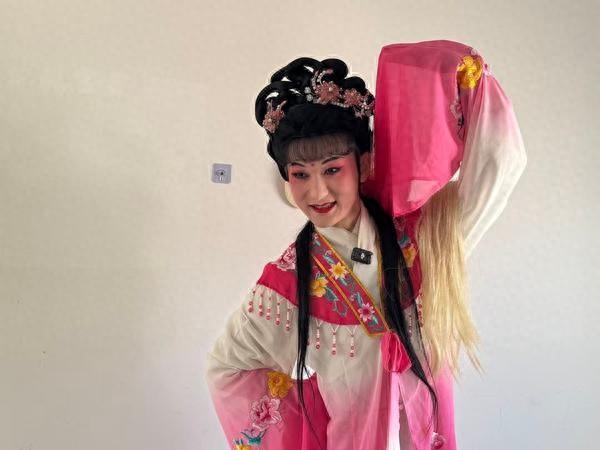
Core Viewpoint - The article highlights the journey of Gong Jianqiang, a young inheritor of the traditional Suzhou opera, who is dedicated to preserving and innovating this nearly 300-year-old art form while addressing the challenges faced by traditional Chinese opera, particularly the aging audience and the need for younger performers [2][5]. Group 1: Background and Personal Journey - Gong Jianqiang, born in 2003, became involved with Suzhou opera at the age of 8 and has since grown into a key figure in the preservation of this intangible cultural heritage [2]. - He was inspired by a local performance and trained rigorously, often practicing in challenging conditions, which solidified his commitment to the art [3][4]. - By the age of 14, he was recognized as a county-level representative inheritor of the non-material cultural heritage and won a gold medal in a regional competition [4]. Group 2: Challenges and Innovations - The traditional opera faces significant challenges, including an aging audience and a lack of younger performers, prompting Gong to focus on training new talent [5]. - In 2021, he enrolled in a media program, which became pivotal for his innovative approach to preserving Suzhou opera [5]. - In 2023, he founded the "Bengbu City Yujilin Youth Suzhou Opera Troupe" with his savings to provide a platform for young actors [6]. Group 3: Digital Transformation and Outreach - Gong has recognized the potential of digital platforms, utilizing live streaming to reach a broader audience, with one performance attracting nearly 4,000 online viewers [6]. - He has also worked on digitizing scripts and recordings of nearly lost performances, aiming to preserve the art form for future generations [6][7]. - His efforts have led to a significant increase in viewership, with a cumulative audience of 500,000 for a recent live-streamed event [8]. Group 4: Artistic Development - Gong emphasizes the importance of artistic quality, refining makeup and costume design, and moving towards more relatable character portrayals in performances [7]. - His portrayal of characters has been noted for its emotional depth, contributing to a more engaging experience for audiences [7].

非遗传承生力军扩容
Zhong Guo Qing Nian Bao· 2025-10-12 23:17
Core Insights - The article emphasizes the increasing importance of inheriting and promoting traditional Chinese culture, particularly focusing on the protection and transmission of intangible cultural heritage (ICH) [1][5][18] - There is a growing demand for specialized and high-quality talent in ICH protection, leading to the establishment of relevant programs in local universities [1][5][18] - The implementation of "targeted college entrance examinations" has allowed many vocational school graduates to enter undergraduate programs focused on ICH, thus becoming a vital force in its transmission [4][7][12] Group 1: Importance of ICH and Educational Initiatives - The Chinese government is placing greater emphasis on the inheritance and promotion of traditional culture, with a focus on ICH protection and transmission [1][5] - As of 2021, the Ministry of Education has established ICH protection programs in 25 universities, reflecting the growing recognition of this field [5][18] - Local universities are increasingly opening programs related to ICH, with a notable increase in enrollment from vocational schools through "targeted college entrance examinations" [4][5][7] Group 2: Role of Vocational Schools and Student Experiences - Many vocational school graduates are successfully transitioning to undergraduate programs in ICH, contributing significantly to its preservation [4][12][16] - Students from vocational backgrounds often possess solid foundational skills and a strong work ethic, making them well-suited for ICH roles [15][18] - The experiences of students like Zhang Wen illustrate the journey from vocational education to professional ICH roles, highlighting the passion and dedication required [10][12] Group 3: Challenges and Future Prospects - Despite the positive trends, there are concerns regarding the initial perception of ICH programs as niche or less recognized, which may affect student recruitment [8][9] - The need for a clear employment market and industry prospects for ICH graduates remains a topic of discussion among educators [8][9] - The integration of ICH education with modern practices and digital technologies is seen as essential for attracting new talent and ensuring the relevance of ICH in contemporary society [18]
