非遗传承

Search documents
一针一线,传承百岁匠心
Xin Lang Cai Jing· 2026-02-27 20:32
Group 1 - The article highlights the cultural significance of the traditional handmade "tiger head shoes" in Jiangyin, which are believed to bring good fortune and ward off evil spirits, especially during festivals and children's milestones [1][2] - The craftsmanship of "tiger head shoes" involves complex techniques, requiring at least three to five days to complete a pair, with over a dozen steps in the process, emphasizing the dedication and skill involved [2][3] - The shoes have gained recognition beyond Huangdan Village, becoming a living representation of Jiangyin's intangible cultural heritage, although the transmission of this craft faces challenges due to a lack of interest from younger generations [2][3] Group 2 - Ge Jianwei, a representative inheritor of the intangible cultural heritage project, has established a workshop that integrates traditional techniques with modern design, creating a variety of cultural products based on the tiger head motif [2][3] - The workshop has developed educational programs that aim to innovate and promote the traditional craft, making it accessible and appealing to a broader audience [3] - Upcoming events, such as the Lantern Festival activities, will provide opportunities for the public to engage with the craft, further promoting awareness and appreciation of the "tiger head shoes" [3]
南方电网广西百色隆林供电局:跳坡节民俗活动在广西隆林遍地开花
Zhong Guo Neng Yuan Wang· 2026-02-27 08:39
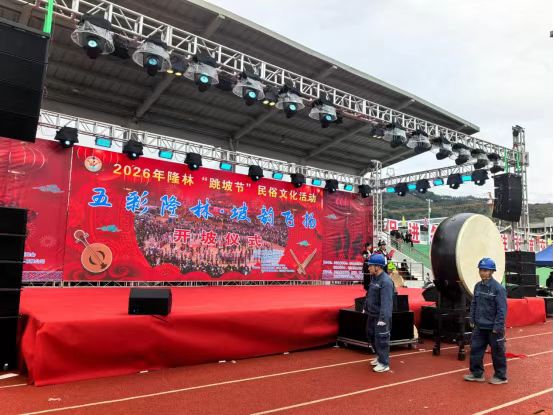
Core Viewpoint - The 2026 Jumping Slope Festival in Longlin, Guangxi, is a significant cultural event celebrating the Miao ethnic heritage and promoting multi-ethnic interactions, scheduled from February 17 to 25, showcasing various traditional activities and ensuring reliable power supply for the festivities [1][3][10]. Group 1: Festival Overview - The Jumping Slope Festival is recognized as a representative cultural event of Longlin and is classified as an intangible cultural heritage at the autonomous region level, reflecting the historical memories and cultural genes of the Miao people [3]. - The festival will feature a "main venue + sub-venues" model, with activities spread across multiple locations, including traditional performances such as pole raising and folk dances, attracting thousands of participants and visitors [3][5]. Group 2: Power Supply Assurance - The Southern Power Grid's Guangxi Baise Longlin Power Supply Bureau has developed a specialized power supply plan to ensure stable electricity throughout the festival, conducting thorough inspections of power lines and equipment [5][10]. - Emergency power vehicles have been deployed to key areas, with a 24-hour standby team to ensure zero power interruptions during the event [5][10]. Group 3: New Energy Services - In response to the increase in self-driving tourists, the power supply bureau has optimized the layout of new energy charging stations, adding eight fast-charging stations during the festival, achieving a 92% utilization rate, which is three times higher than usual [7][8]. - A "charging + tourism" package has been introduced, offering cultural experience vouchers to visitors who charge their vehicles, enhancing the integration of green travel with cultural tourism [8]. Group 4: Safety and Community Engagement - The power supply team has actively engaged in safety education, distributing electrical safety manuals and providing guidance on safe electricity use during the festival [8][10]. - The festival serves as a platform to blend traditional culture with modern electrical services, showcasing how electricity can connect the past and future while supporting local economic development [10][12].

多彩乡村产业兴|河南潢川:千年空心面牵出亿元大产业
Ke Ji Ri Bao· 2026-02-27 07:21
Core Viewpoint - The article highlights the cultural significance and economic impact of Huangchuan Hollow Tribute Noodles, a traditional food product from Henan Province, which has evolved from a royal delicacy to a staple in local households, generating an annual output value of 300 million yuan [1]. Group 1: Historical Significance - Huangchuan Hollow Tribute Noodles have a history dating back to the Tang Dynasty, with records indicating its production in the region as early as that time, gaining national recognition for its quality [2]. - In 2013, the noodles were designated as a national geographical indication product, and in 2021, the production technique was included in the list of intangible cultural heritage representative projects in Henan Province [2]. Group 2: Craftsmanship and Production - The production process of Huangchuan Hollow Tribute Noodles involves 27 intricate steps and takes over 20 hours, emphasizing the meticulous craftsmanship and traditional methods employed [2][3]. - The noodles are made from carefully selected natural green wheat flour from the Huai River basin, using only water, salt, and sesame oil, without any preservatives [2]. Group 3: Industry Transformation - The local government has initiated a plan to transform the noodle industry from traditional methods to a modern, refined approach, establishing a complete industrial chain [4]. - The company, Wangxin Food, has adopted an innovative "company + intangible heritage workshop + cooperative" model to lead the industry development while maintaining traditional practices [4]. Group 4: Economic Impact - Wangxin Food has positively impacted the local economy, benefiting 776 households and 2,000 workers, with an average annual income increase of 37,000 yuan per household [5]. - The company has successfully integrated e-commerce and cultural tourism, allowing visitors to experience the noodle-making process firsthand and expanding its market reach [5][6]. Group 5: Brand Development - Huangchuan Hollow Tribute Noodles have gained recognition as a high-quality product, entering the "Yunong Excellent Products" list and expanding into the Shanghai market [6]. - The product serves as a bridge connecting historical culture, local customs, and the industrial chain, playing a crucial role in rural revitalization efforts in Huangchuan [6].
当非遗成为日常
Xin Lang Cai Jing· 2026-02-27 07:05
Group 1 - The core idea of the articles highlights the increasing popularity of intangible cultural heritage (ICH) courses in community education, reflecting a revival of traditional lifestyles among citizens [1][2] - The spring semester courses include a significant proportion of ICH content, indicating a growing interest in traditional skills and arts among the public [1] - Various courses are offered, such as traditional lacquer repair techniques and advanced classes in classic crafts like Song brocade and high-temperature enamel, showcasing the depth of cultural heritage being taught [1] Group 2 - The course offerings in community night schools, day schools, and weekend art education classes are based on citizen preferences and the availability of qualified instructors and space, allowing for the expansion of ICH courses [2] - The integration of national trends into the lives of people across all age groups is evident, as seen in the demand for skill enhancement and cultural education [2] - The revival of traditional lifestyles is expected to have a long-term positive impact on cultural confidence, as indicated by the current course offerings [2]
陕西文旅 “马”力全开
Shan Xi Ri Bao· 2026-02-27 00:24
Core Insights - The tourism market in Shaanxi experienced a significant surge during the Spring Festival, with domestic tourist arrivals reaching 67.77 million, a year-on-year increase of 17.34%, and total domestic spending amounting to 47.16 billion yuan, up 20.78% [1][4] Group 1: Cultural and Tourism Activities - Shaanxi launched 1,887 cultural tourism activities under seven major themes, enhancing the festive atmosphere during the Spring Festival [1] - The integration of traditional cultural activities with intangible cultural heritage was prominent, with over 210 events and more than 1,400 sessions attracting nearly 5 million participants [2] Group 2: Technological Integration - The introduction of technology in cultural experiences was highlighted, with interactive robot performances and XR technology enhancing visitor engagement and bringing historical culture to life [3] Group 3: Economic Impact and Consumer Engagement - The implementation of 120 "warm-hearted" measures aimed at reducing travel costs and boosting consumer spending was noted, leading to a 19.02% increase in visitor numbers and a 21.76% rise in tourism revenue at monitored attractions [4] - The inbound tourism market saw a dramatic increase, with the number of inbound tour groups and visitors rising by 179.3% and 225.2% respectively compared to the previous year [5]
让非遗在创新中传承
Xin Lang Cai Jing· 2026-02-26 20:43
Core Viewpoint - The article emphasizes the enduring legacy and cultural significance of Mongolian long song, highlighting its deep roots in the nomadic lifestyle and its evolution through oral tradition and innovation. Group 1: Cultural Roots - The first layer of the long song's legacy is its cultural foundation, deeply rooted in the nomadic lifestyle of the Mongolian people, reflecting their genuine emotions towards nature and life [1] - The long song features a distinct characteristic of long, flowing melodies with few words, symbolizing the vastness of the grasslands and the deep sentiments of the herders [1] - Each melody of the long song encapsulates rich emotions tied to the seasons and pastoral life, showcasing a harmonious relationship between humans and nature [1] Group 2: Oral Tradition - The second layer of the long song's legacy is its living wisdom, passed down through generations via oral tradition without fixed written records [2] - The transmission occurs naturally through familial and community interactions, allowing the long song to maintain its authenticity and vibrancy over centuries [2] - This method of passing down knowledge fosters a deep cultural connection and ensures the long song retains its original essence [2] Group 3: Innovation and Development - The third layer of the long song's legacy is its ability to innovate while preserving its core characteristics, adapting to contemporary developments [3] - The evolution includes transitioning from solo performances to choral renditions, and integrating various musical instruments, enhancing its expressive power [3] - The long song has expanded from local performances to international stages, with younger generations incorporating modern elements and digital platforms to keep the tradition alive [3] - This dual approach of preserving tradition while embracing innovation exemplifies the dynamic nature of Chinese traditional culture [3]
探寻秦淮花灯的百年光影
Xin Lang Cai Jing· 2026-02-26 16:38
Core Viewpoint - The 40th Qinhuai Lantern Festival highlights the cultural significance of lantern-making in Nanjing, showcasing the blend of tradition and modernity in this art form [1][4]. Group 1: Lantern-Making Tradition - The lantern-making process has evolved from using bamboo to steel wire, but the core techniques remain unchanged, emphasizing the importance of craftsmanship [2]. - The most challenging lantern to make is the qilin lantern, which incorporates historical styles and modern technology like 3D printing [2]. - The color preferences for lanterns have shifted, with red being favored for its auspiciousness, especially during the Year of the Horse [2]. Group 2: Market Trends and Consumer Preferences - A survey conducted among 50 stalls along Zhanyuan Road revealed that 60% of the lanterns are traditional designs, while 40% are creative designs [2]. - Older citizens prefer traditional lotus lanterns, while parents aged 30-45 tend to buy zodiac or interactive lanterns for their children, and teenagers are more interested in LED and cartoon designs [2]. Group 3: Cultural Significance and Future Perspectives - Buying lanterns during the New Year is a customary practice for Nanjing residents, symbolizing good fortune [3]. - Young reporters expressed a desire to integrate traditional lantern-making with modern technology, indicating a forward-looking approach to cultural heritage [3][5]. - The commitment to preserving this art form is evident in the dedication of artisans like Sun Song, who views his work as both a livelihood and a means of cultural transmission [2][5].
(新春走基层)烟火滋味非遗传承 山西男子“守艺”空心丸子汤30余载
Zhong Guo Xin Wen Wang· 2026-02-26 06:49
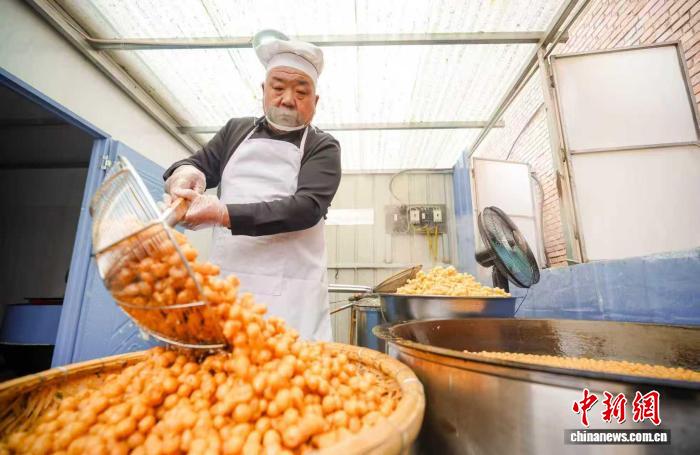
Core Viewpoint - The article highlights the dedication of a man named Wang Shuanghong, who has preserved the traditional craft of making hollow meatballs soup for over 30 years, emphasizing its significance as a local intangible cultural heritage in Shanxi Province, China [1][3]. Group 1: Craftsmanship and Ingredients - Hollow meatballs soup is characterized by its crispy exterior and hollow interior, which remains crunchy regardless of how long it is kept [3][5]. - The main ingredients for the hollow meatballs include fine flour, bean curd, and a bit of alkali, which are allowed to rest for over half an hour [3]. - The frying technique is crucial, involving two stages: the first fry at over 350 degrees Celsius for rapid expansion, and the second fry at around 300 degrees Celsius to achieve a dry and crispy texture [3][5]. Group 2: Culinary Process - The preparation of the soup involves combining various ingredients such as seaweed, vermicelli, and fried tofu to enhance the flavor profile, with the hollow meatballs added just before serving to maintain their crispiness [5]. - The cooking process is straightforward, focusing on allowing the ingredients to absorb flavors before introducing the fried meatballs [5]. Group 3: Cultural Transmission - Wang Shuanghong's commitment to his craft has influenced his son, Wang Gaofei, who has developed a passion for the art of making hollow meatballs, recognizing it as not just a skill but a cultural legacy [5]. - Wang Gaofei expresses a desire to continue the tradition, emphasizing that the transmission of this culinary art relies on more individuals willing to learn and uphold the craft [5].
数智技术重构非遗传承新生态
Xin Hua Ri Bao· 2026-02-25 23:34
Core Viewpoint - The article emphasizes the importance of intangible cultural heritage (ICH) as a vital part of local history and culture, highlighting the need for digital transformation to address challenges in its transmission and preservation [1] Group 1: Digital Transformation of ICH - The construction of a digital knowledge graph is crucial for the systematic protection of regional ICH, integrating both explicit and implicit cultural elements to create a dynamic preservation model [2][3] - The launch of the "Henan ICH Map" exemplifies the integration of ICH resources through digital technology, mapping various cultural dimensions such as geographical distribution and talent lineage [3] Group 2: Multi-modal Experience and Immersive Transmission - The inherent non-material nature of ICH necessitates innovative transmission methods that incorporate multi-sensory experiences, breaking traditional barriers and enhancing engagement [4] - Technologies like VR, AR, and MR are being utilized to create immersive experiences, allowing users to interact with ICH in a virtual environment, thus addressing the challenges of traditional transmission methods [5] Group 3: Media Integration and Enhanced Communication - The rise of new media platforms has transformed the way ICH is communicated, with platforms like Douyin and Xiaohongshu significantly increasing the visibility and engagement of ICH content [6][7] - The integration of traditional and new media enhances the effectiveness of ICH dissemination, allowing for targeted and interactive storytelling that resonates with audiences [7] Group 4: Challenges of Digitalization - The reliance on algorithms in ICH transmission raises concerns about the potential loss of individual style and regional characteristics, leading to homogenization of cultural expressions [8][9] - There is a need to establish mechanisms for protecting local cultural genes while navigating the challenges posed by digital technologies, ensuring that the essence of ICH is preserved [9]
新春走基层 | 博兴:非遗“花饽饽”蒸出浓浓年味 百年技艺焕发新生机
Xin Lang Cai Jing· 2026-02-25 23:03
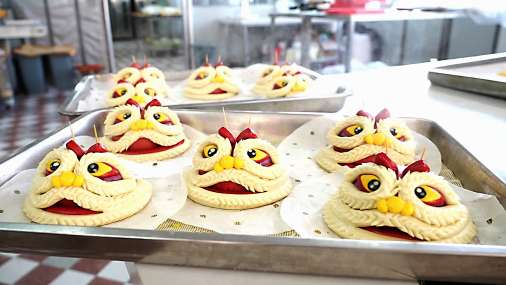
Core Viewpoint - The traditional craft of Huabao (flower steamed buns) in Boxing County has evolved into a popular item for the New Year, blending cultural heritage with modern consumer preferences [1][5]. Group 1: Traditional Craft and Innovation - Huabao has a nearly century-long history and is now a staple in local households during festive seasons, symbolizing good fortune and cultural continuity [1]. - The craft has been passed down through five generations, with the current inheritor, Zheng Huan, focusing on both preserving traditional techniques and innovating to meet modern tastes [1][2]. - The production facility established by Zheng Huan spans 3,000 square meters and employs over 30 workers, transitioning the craft from small workshops to larger markets [1]. Group 2: Ingredients and Health Aspects - The recipe for Huabao has been modified to include ingredients like lard and sugar, enhancing flavor and aligning with contemporary preferences [2]. - All colors used in the buns are derived from natural fruit and vegetable juices, ensuring no artificial additives are present, which promotes health and aesthetic value [2]. Group 3: Market Strategy and Consumer Appeal - The business has adopted a dual sales model combining online OEM processing with offline supermarket sales, broadening market reach and transforming the craft into a viable industry [4]. - The best-selling product this year is the "Lion Dance Flower Bun Gift Box," featuring various auspicious shapes that resonate with consumers' desires for meaningful gifts [4].