注气业务

Search documents
从主板撤退后转战北交所:凯龙洁能毛利率两年半下滑10个百分点 产能利用率未饱和之下仍计划扩产
Mei Ri Jing Ji Xin Wen· 2026-02-05 14:27
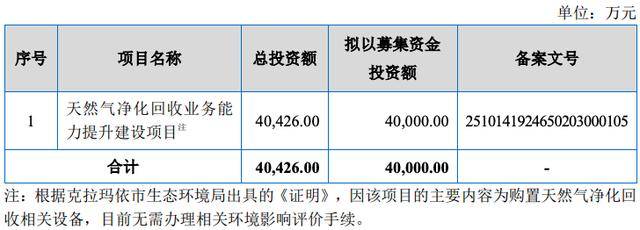
Core Viewpoint - Kaier Clean Energy Co., Ltd. is attempting to list on the Beijing Stock Exchange after previous unsuccessful attempts on other exchanges, facing scrutiny over its concentrated ownership and fluctuating financial performance [2][6]. Ownership Structure and Governance Issues - The company is predominantly controlled by the Zeng family, with the actual controller Zeng Qiang holding 74.69% of shares, and family members collectively controlling 74.93% [2][5]. - There are concerns regarding the governance structure due to the close relationships among board members and management, which may impact operational effectiveness [5]. - Historical issues of shareholding representation have been addressed, but the legacy of these practices raises questions about the company's governance [5][6]. Financial Performance and Revenue Composition - Kaier Clean Energy's revenue has fluctuated between 520 million yuan and 596 million yuan from 2022 to 2024, with net profit experiencing significant volatility, dropping from 102 million yuan in 2023 to 65.5 million yuan in 2024, a decline of 36% [7][8]. - The company's main business, natural gas recovery, has historically contributed over 50% to its revenue, but is currently facing challenges [6][7]. Profitability and Margin Decline - The overall gross margin has decreased from 34.78% to 24.00% over the reporting period, with the gross margin for the core recovery business dropping from 35.22% to 21.64% [12]. - The decline in profitability is attributed to fixed costs remaining high during project transitions and varying margins across different projects [12][13]. Expansion Plans Amidst Challenges - Despite the current underutilization of existing capacity and declining profit margins, the company plans to raise 400 million yuan for an aggressive expansion of its natural gas recovery capabilities, which could increase processing capacity by nearly 60% [13]. - The necessity of this expansion is under scrutiny, especially given the high concentration of revenue from major clients like PetroChina and Sinopec, which poses a risk if these relationships deteriorate [13][14]. Regulatory Scrutiny and Compliance Issues - The Beijing Stock Exchange has raised questions regarding the company's governance, ownership structure, and the implications of its historical shareholding practices [5][6]. - The company has faced penalties for operational issues, including safety violations and environmental concerns, which could impact its reputation and financial standing [15].

凯龙洁能IPO:盈利能力下滑态势延续 曾因股权代持未披露终止挂牌
Xi Niu Cai Jing· 2026-01-09 04:02
Core Viewpoint - Xinjiang Kailong Clean Energy Co., Ltd. has received acceptance for its IPO application from the Beijing Stock Exchange, aiming to raise 400 million yuan for enhancing natural gas purification and recovery capabilities [2][5] Group 1: Company Overview - Kailong Clean Energy was established in 2011, primarily engaged in the purification and recovery of natural gas from oil and gas fields, as well as natural gas power generation and transmission [5] - The company has faced issues in the past, including undisclosed major matters related to shareholder entrustment during its time on the New Third Board from July 2016 to April 2019 [5] Group 2: Financial Performance - In 2024, Kailong Clean Energy reported revenue of 537 million yuan, a year-on-year decline of 9.92%, and a net profit of 44 million yuan, down 8.14% year-on-year, marking the first instance of both revenue and net profit decline since 2016 [6] - For the first three quarters of 2025, the company achieved revenue of 577 million yuan, a year-on-year increase of 44.24%, while net profit remained at 44 million yuan, reflecting an ongoing decline in profitability metrics since 2022 [6] Group 3: Regulatory and Compliance Issues - During the IPO preparation, two subsidiaries of Kailong Clean Energy faced administrative penalties totaling 1.15 million yuan for various compliance issues, including safety and environmental violations [2] - The company has also encountered delays in accounting for fixed assets that have been accepted [2]

IPO雷达 | 家族控股近75%!凯龙洁能转战北交所:毛利率连降、应收账款激增隐忧待解
Sou Hu Cai Jing· 2026-01-03 10:02
Core Viewpoint - The company, Xinjiang Kailong Clean Energy Co., Ltd., has faced challenges in its IPO process and financial performance, with high customer concentration and increasing debt levels posing potential risks to its operations and profitability [1][2][3]. Financial Performance - The company's revenue for the years 2022 to 2024 was reported as 520 million yuan, 596 million yuan, and 537 million yuan respectively, with net profit figures of 95 million yuan, 102 million yuan, and 64 million yuan [3]. - In the first half of 2025, the company reported a revenue increase of 34.10% to 373 million yuan, but net profit decreased by 19.70% to approximately 31 million yuan [4]. - The gross profit margin has declined from 34.78% in 2022 to 24% in the first half of 2025, indicating a significant drop of 10.78 percentage points over two and a half years [4]. Debt and Financial Ratios - The company's asset-liability ratio has been increasing, rising from 39.03% in 2022 to 51.46% in the first half of 2025, indicating growing debt pressure [5]. - The total assets as of June 30, 2025, were approximately 1.54 billion yuan, with total equity of about 794 million yuan [4]. Customer Concentration - The company relies heavily on major clients, specifically China National Petroleum Corporation (CNPC) and China Petroleum & Chemical Corporation (Sinopec), with revenue contributions of 96.79%, 82.71%, 73.38%, and 45.57% from these clients over the years 2022 to 2025 [2]. - The high customer concentration poses risks, as any reduction in collaboration from these major clients could adversely affect the company's financial health [2]. Regulatory and Compliance Issues - The company has faced multiple environmental fines from its subsidiaries between 2024 and August 2025, highlighting potential weaknesses in its internal controls regarding safety and environmental compliance [6].