洗碗刷

Search documents
细菌超500亿!快丢掉!很多人过年天天用,舍不得换,消毒也没用……
Xin Lang Cai Jing· 2026-02-24 12:07
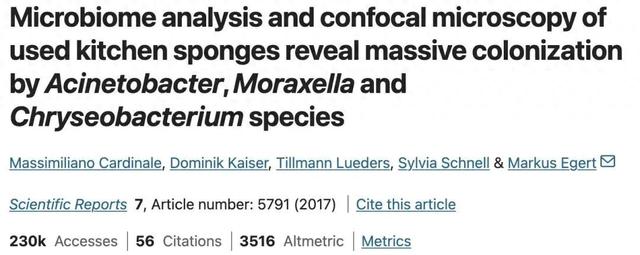
Core Viewpoint - The article highlights the surprising fact that dishwashing sponges, commonly used for cleaning, can harbor an alarming amount of bacteria, making them potentially more contaminated than other kitchen items like trash cans or drains [1]. Group 1: Bacterial Contamination of Dishwashing Sponges - A study published in the journal "Nature" found that a long-used dishwashing sponge can contain up to 54 billion bacteria per cubic centimeter, with a total of 362 different species of bacteria present [1]. - Dishwashing sponges are often wet and retain food residues, creating an ideal environment for bacteria to thrive [7][9]. - The porous structure of sponges allows them to trap moisture and food particles, further promoting bacterial growth [5]. Group 2: Ineffectiveness of Cleaning Methods - Regular cleaning methods, such as using antibacterial dish soap, have been shown to be ineffective in significantly reducing the microbial load on sponges due to the formation of a protective biofilm [10]. - Even after attempts to disinfect sponges using heat or alcohol, bacteria can quickly repopulate once the sponge is returned to a moist environment [10]. Group 3: Alternative Cleaning Solutions - The article suggests several alternatives to traditional dishwashing sponges that are less likely to harbor bacteria, including: - Loofah sponges, which are naturally antibacterial and easier to keep clean [16]. - Dish brushes, which have a simpler structure that makes them less prone to bacterial attachment [17]. - Disposable kitchen cloths, which eliminate the risk of cross-contamination [18]. - New types of wood pulp sponges that dry quickly and inhibit bacterial growth [19].

你“最信任”的清洁工具可能是细菌发源地,一文揭秘
Xin Lang Cai Jing· 2026-02-21 04:52
Core Viewpoint - The article discusses how kitchen sponges, often perceived as harmless, can harbor a vast number of bacteria, making them a significant source of microbial contamination in households [1][5]. Group 1: Structure and Environment - Kitchen sponges have a unique porous structure that creates an ideal environment for bacteria to thrive, allowing for rapid absorption and retention of moisture [2][3]. - A single kitchen sponge can contain over 540 billion bacteria per cubic centimeter, with more than 362 species of bacteria identified [2][3]. Group 2: Sources of Contamination - The primary sources of microbial contamination in kitchen sponges are the various foods handled in the kitchen, including raw meat and fresh produce, which introduce bacteria when touched [4][5]. - Microbial transfer occurs when hands or utensils contaminated with bacteria come into contact with the sponge, further increasing the microbial load [4][5]. Group 3: Cleaning and Alternatives - Regular cleaning of kitchen sponges with antibacterial agents has limited effectiveness in reducing microbial populations due to the sponge's porous nature, which protects bacteria from disinfectants [6]. - The most effective solution to avoid microbial contamination is to use a dishwasher, which employs high temperatures to clean and sanitize [6]. - Alternatives to sponges, such as dish brushes and disposable cloths, are recommended as they are less conducive to bacterial growth [7][8].
你“最信任”的清洁工具可能是细菌发源地 一文揭秘
Yang Shi Xin Wen· 2026-02-21 04:23
Core Viewpoint - The article discusses how kitchen sponges, often perceived as harmless, can harbor a vast number of bacteria, making them a significant source of microbial contamination in households [1][3][10]. Group 1: Structure and Environment - Kitchen sponges have a porous structure that creates an ideal environment for bacteria to thrive, with studies indicating that a single sponge can contain up to 54 billion bacteria per cubic centimeter [1][4]. - The sponge's unique structure allows for a diverse range of bacteria to coexist, with over 362 species identified within a single sponge [6][12]. - The moist conditions within the sponge, combined with frequent use, provide a continuous source of food and water for bacteria, further promoting their growth [7][10]. Group 2: Sources of Contamination - Contaminants introduced to sponges often come from handling raw foods, such as meat and eggs, which can transfer harmful bacteria like Salmonella and E. coli [10][11]. - The kitchen environment, particularly due to the handling of various food items, is identified as having a higher microbial load than other areas of the home, such as bathrooms [10][11]. Group 3: Cleaning and Alternatives - Regular cleaning of sponges is shown to have limited effectiveness in reducing microbial populations, as the porous structure can protect bacteria from disinfectants [12][14]. - The article suggests that using a dishwasher is the most effective method to eliminate bacteria, as it employs high temperatures and drying processes [14]. - Alternatives to sponges, such as dish brushes and disposable cloths, are recommended as they are less conducive to bacterial growth [14][15].