测温仪

Search documents
北京长安街年味儿 从掌灯人点亮华灯开始
Xin Lang Cai Jing· 2026-02-08 17:27
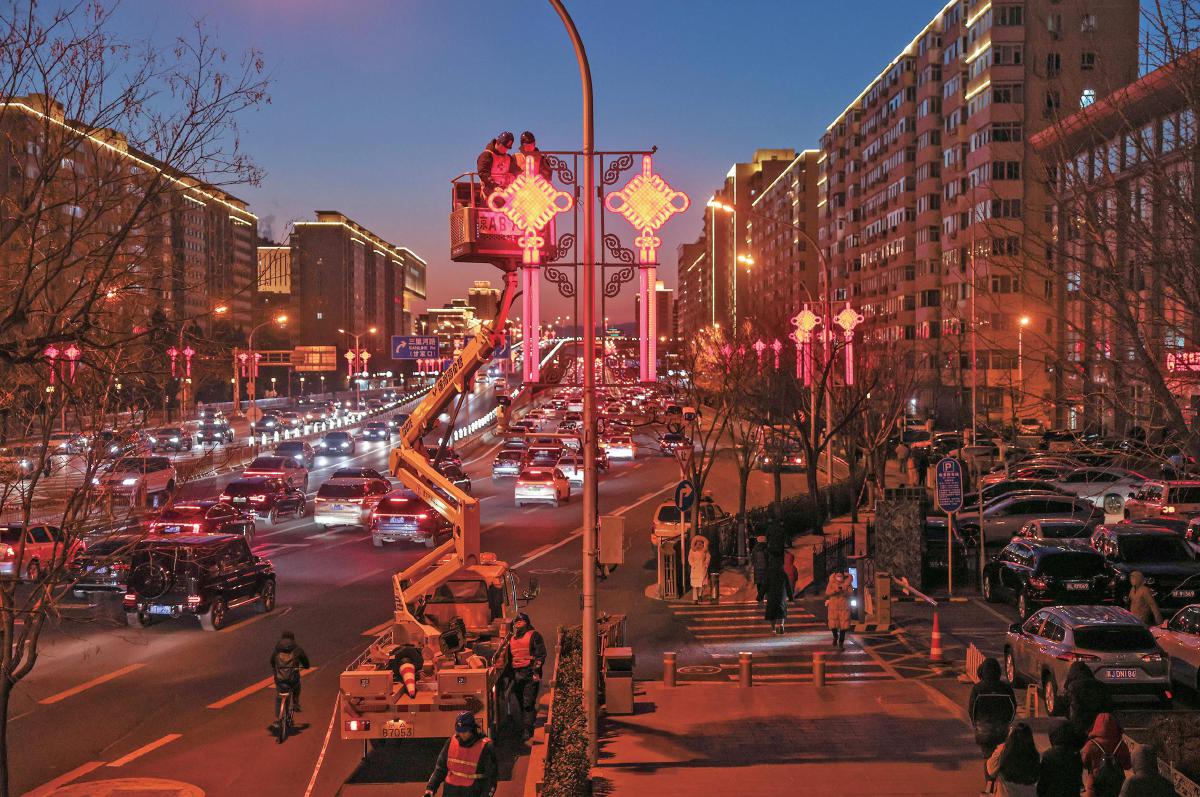
Core Viewpoint - The article highlights the festive preparations and operations of the lighting team in Beijing, specifically focusing on the decoration of Chang'an Avenue with traditional Chinese lanterns and decorations for the Spring Festival, showcasing the dedication and efforts of the "lamp keepers" who ensure the lights are maintained and operational during this important cultural celebration [1][10]. Group 1: Lighting Preparations - On February 6, the Spring Festival lighting decorations along Chang'an Avenue were fully set up, featuring 242 red lanterns and 862 Chinese knot lights, marking the beginning of the "Spring Festival mode" [1][3]. - The lighting team, known as "lamp keepers," is responsible for the installation and maintenance of these decorations, ensuring they shine brightly throughout the festival [3][10]. Group 2: Maintenance Operations - The maintenance team conducts inspections day and night, with each member responsible for checking the functionality and brightness of every lantern, ensuring a uniform display of red lights along the 13-kilometer stretch of Chang'an Avenue [4][8]. - The team utilizes specialized equipment, including temperature measuring devices and high-altitude work platforms, to safely perform maintenance tasks on the lanterns [6][10]. Group 3: Technological Integration - The lighting management system has been upgraded to include a new monitoring system capable of capturing real-time data from over 6,000 light sources, enhancing the team's ability to quickly identify and address any issues [10][11]. - Despite technological advancements, the experience and vigilance of the "lamp keepers" remain irreplaceable, as personal inspections are still necessary to ensure the quality of the lighting [11].

跨越60年:雪域新画卷|青藏高原综合科考:守护地球第三极的中国力量
Yang Shi Wang· 2025-08-21 03:32
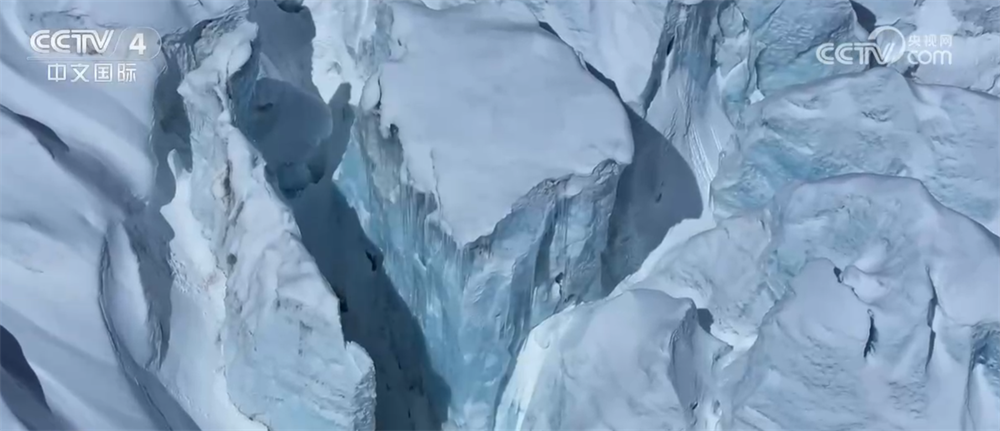
Core Viewpoint - The article highlights the significant impact of climate change on the glaciers of the Tibetan Plateau, which is crucial for Asia's freshwater resources, and discusses ongoing scientific research efforts in the region to monitor these changes [1][15]. Group 1: Glacier Changes and Research - The Tibetan Plateau, known as the "Third Pole," stores one-third of Asia's freshwater resources and is experiencing accelerated warming, leading to rapid glacier changes [1]. - The Laigu Glacier, one of the most affected areas, has shrunk by 10.4% from 1974 to 2023, indicating severe glacier retreat [11]. - The research team is drilling over 100 meters into the glacier to measure internal temperatures, with initial readings showing a temperature of -0.03 degrees Celsius at a depth of 20 meters [9][11]. Group 2: Scientific Exploration and Monitoring - The research conducted by the Chinese Academy of Sciences involves setting up multiple monitoring instruments at various depths to track glacier changes over time [9]. - The rapid melting of glaciers has led to an increase in meltwater, causing the glacier's proglacial lake to expand nearly twofold from 1986 to 2017 [13]. - The ongoing scientific efforts aim to establish a comprehensive understanding of the ecological and climatic changes in the Tibetan Plateau, with significant contributions to global climate change research [21]. Group 3: Mount Everest Research - The article also discusses the establishment of the Everest Atmospheric and Environmental Comprehensive Observation Station, which has been operational since 2004, to monitor climate changes at the highest point on Earth [15][17]. - The station has over 40 sets of comprehensive observation instruments, enabling extensive data collection on hydrology, meteorology, and atmospheric physics [17]. - The highest automatic weather station at 8,830 meters was built during the 2022 "Peak Mission" and fills a scientific data gap for altitudes above 8,000 meters [21].