海底过滤分离器

Search documents
行业聚焦:全球海底过滤分离器市场规模及主要企业排名情况
QYResearch· 2026-03-09 01:57
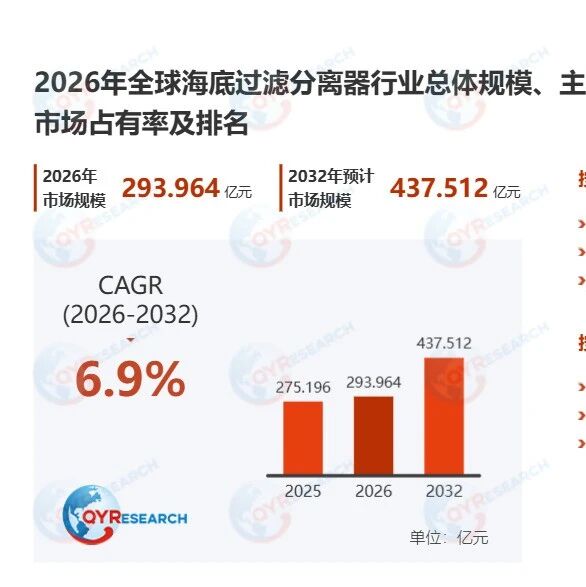
Industry Chain Analysis - The subsea filter separators are critical control devices in subsea production systems, relying on advanced materials science, deep-water structural engineering, and precision fluid separation technology [1][3] - Key materials include duplex stainless steel, super duplex stainless steel, nickel-based alloys (e.g., Inconel), high-strength low-alloy steel, and specialized corrosion-resistant coatings, which are essential for high-pressure and high-temperature environments [1][2] - The upstream supply chain is characterized by high specialization and technical concentration, with components such as filter media, cyclone separation structures, and high-pressure sealing components being crucial [2][3] Midstream: System Engineering Design and Deep-water Integration Capability - The midstream phase is where the value of subsea filter separators is primarily created, involving structural design, pressure vessel manufacturing, fluid path optimization, and system testing [4] - Custom design is necessary based on the fluid characteristics from oil and gas wells, with significant variations in fluid properties across different oil fields [4] - The manufacturing process adheres to strict international standards, emphasizing "zero failure" and extended service life due to high installation costs on the seabed [4] Downstream: Drivers of Deep-water Oil and Gas Development - The demand for subsea filter separators is driven by deep-water and ultra-deep-water oil and gas development, as exploration shifts towards deeper marine areas [5][6] - These separators protect the production system from solid particles and impurities, enhancing operational stability [6] - The demand is concentrated among large international oil companies and national energy enterprises, with significant project order values but long project cycles [7] Global Market Size and Structure - According to QYResearch, the global market for subsea filter separators is projected to reach 27.5 billion yuan by 2025 and 43.75 billion yuan by 2032, with a CAGR of 6.9% from 2026 to 2032 [9] Development Trends, Opportunities, and Challenges - The evolution of technology is focused on increasing pressure ratings and enhancing fatigue resistance and corrosion life for ultra-deep-water projects [11] - Market opportunities arise from the recovery of capital expenditures in deep-water oil and gas projects, particularly in regions like Brazil and the Gulf of Mexico [12][13] - The industry faces challenges due to its dependence on oil and gas investment cycles, high R&D costs, and the need for extensive customization, which complicates mass production [15][16] Cost Structure and Profit Model - Subsea filter separators are high-cost, low-volume customized engineering devices, with material costs, especially for high-end corrosion-resistant alloys, being significant [17] - The profit model is primarily project-based, with long order cycles but substantial individual order values, supplemented by after-sales maintenance and technical services [17] Entry Barriers - Entering the subsea filter separator industry requires deep expertise in marine engineering, material development, and a proven track record of reliability [18] - Companies must gain recognition from international oil companies and pass stringent supplier qualification audits, with project execution capability and global service networks being critical competitive factors [18]