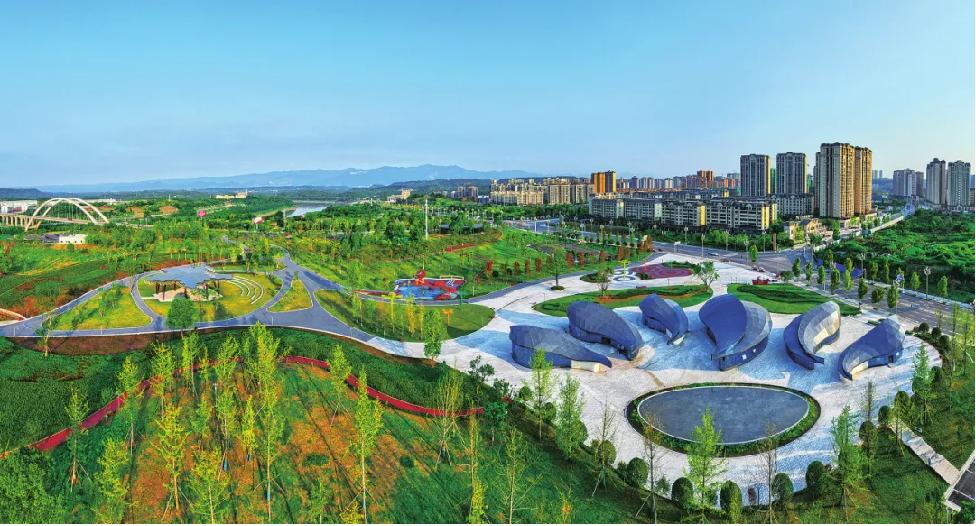
海绵城市建设项目

Search documents
如何告别“城市看海”? 六盘水立法破局
Xin Lang Cai Jing· 2026-01-24 22:39
Group 1 - The core viewpoint of the article is the implementation of the "Liupanshui City Sponge City Construction Management Regulations" starting January 1, marking a transition to legal governance in water management practices [1] - Liupanshui experiences annual rainfall of 1150 to 1450 millimeters but faces challenges due to its karst topography, leading to issues of flooding during rainy seasons and water shortages in dry seasons [1] - The new regulations aim to convert sponge city construction concepts into enforceable laws, clearly defining the responsibilities of various departments such as housing, natural resources, water management, and urban management [1] Group 2 - By 2025, Liupanshui plans to construct and renovate 73.37 kilometers of rainwater drainage networks, effectively controlling previously problematic flooding points [2] - Several projects, including Liupanshui No. 12 Middle School and Water District No. 2 Primary School, have been completed, while ongoing projects include urban flood control at the train station square and drainage network construction in the surrounding areas [2] - The city aims to fully integrate sponge city concepts into urban renewal and the renovation of old neighborhoods, focusing on the construction of permeable pavements and sunken green spaces for comprehensive management [2]
四川省系统化全域推进海绵城市建设
Yang Shi Wang· 2025-11-08 12:55
Core Viewpoint - Sichuan Province has achieved historic success in sponge city construction over the past decade, creating a nationally significant model through systematic and comprehensive promotion, enhancing urban water security, improving water environment, and optimizing water resource utilization, providing replicable practices for similar regions [1] Overall Achievements and Scale - As of December 2024, over 40% of urban areas in Sichuan meet sponge city standards, with a total of 1,019 sponge city projects implemented and an investment of 17.78 billion yuan [2] - Suining City is one of the first pilot cities for sponge city construction, with several other cities like Luzhou, Guangyuan, Guang'an, and Mianyang recognized as national demonstration cities [2] - Sichuan has secured 4.4 billion yuan in national sponge demonstration special funds and coordinated 1.055 billion yuan in provincial special funds [2] Innovative Technical Paths and Models - Sichuan has developed various sponge city construction technical paths suited to its diverse geographical and climatic conditions [3] - Suining combines flood control with pilot construction, achieving a "contiguous effect" in sponge construction, recognized as an excellent case nationally, receiving an additional subsidy of 120 million yuan [3] - Luzhou has implemented a systematic governance approach tailored to its hilly terrain, creating a tiered rainwater retention and purification system, recognized for three consecutive years with an A-level rating [3] - Guangyuan has established a "1561" sponge city construction strategy, integrating six major projects, recognized as a model case in the "Ten-Year Achievements of Sponge Cities in China" [3] Institutional Innovation and Replicable Experience - Sichuan has developed a regulatory framework with documents like the "Sichuan Province Sponge City Construction Management Measures" and local regulations in cities like Deyang and Luzhou [4] - Luzhou's sponge city planning and management mechanisms have been included in the Ministry of Housing and Urban-Rural Development's list of replicable policies, establishing a smart management system [4] - Guangyuan has integrated sponge city construction with the renovation of old neighborhoods, while Guang'an has created a coordinated promotion mechanism for sponge city construction [4] - All 20 provincial-level sponge city demonstration cities have established work promotion mechanisms and local regulations, significantly improving urban landscapes and rainwater management [4]