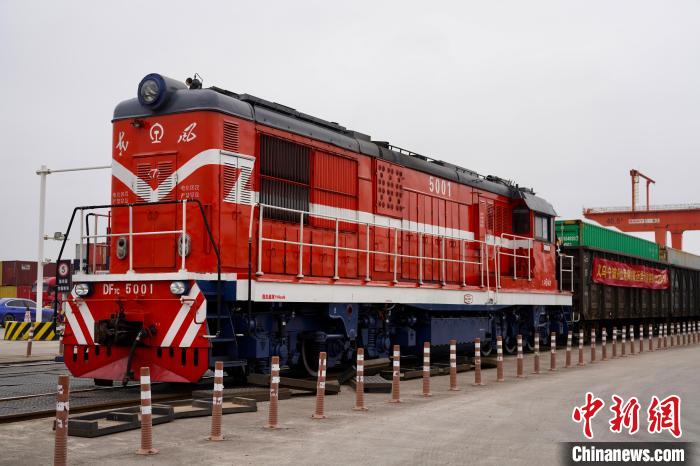
海铁联运业务

Search documents
宁波舟山港海铁联运年业务量首破200万标准箱
Zhong Guo Xin Wen Wang· 2025-12-26 07:02
Core Insights - Ningbo-Zhoushan Port's container sea-rail intermodal transport volume has surpassed 2 million TEUs for the first time, achieving a year-on-year growth of 11.4%, marking a historical high [1][3] Group 1: Business Growth - Since the inception of sea-rail intermodal transport in 2009, Ningbo-Zhoushan Port has developed a network that connects 69 cities across 16 provinces, with 29 operational routes and 40 inland dry ports [3] - The business volume has increased from 1 million TEUs in 2020 to 2 million TEUs in 2023, positioning it among the top ports in China in terms of growth rate and volume [3][5] Group 2: Logistics Innovation - The port has introduced a "Double Fast" logistics model combining "Iron-Sea Fast Line + International Fast Shipping," ensuring seamless "door-to-port" connections and significantly reducing logistics costs [3] - Various new business models have been launched, including rapid intermodal trains from Wuhan and Hefei, enhancing cargo transit times and diversifying sea-rail intermodal services [5] Group 3: Infrastructure Development - The Yiwu (Suxi) International Hub Port, a key node in the Ningbo-Zhoushan Port's sixth terminal, has handled over 80,000 TEUs within six months of operation, with loading and unloading times reduced to approximately 2 hours [5] - The Beilun Railway Station at Ningbo-Zhoushan Port has become the first railway port station in China to surpass 1 million TEUs, providing robust support for the port's record annual volume [5]

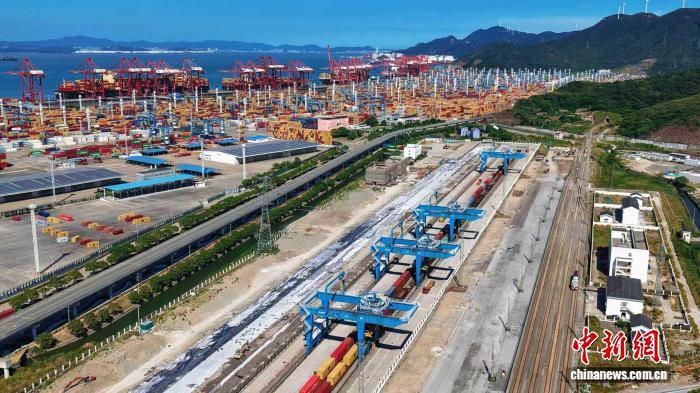
宁波舟山港海铁联运业务量已超去年总量
Zhong Guo Xin Wen Wang· 2025-11-24 11:36
Core Insights - Ningbo-Zhoushan Port's sea-rail intermodal business volume has exceeded last year's total, reaching 1.826 million TEUs, a 9% year-on-year increase as of November 24 [1][3] Group 1: Business Growth and Expansion - The port has actively expanded its inland reach, launching 4 new sea-rail intermodal routes and adding 2 new trains this year, resulting in a total of 111 intermodal routes covering 69 cities across 16 provinces [1][3] - The port has developed customized trains for local industries in Lishui Songyang and Yiwu, enhancing export capabilities and supporting inland regions in accessing international markets [3][4] Group 2: Service Innovation and Efficiency - The introduction of the "Zhejiang e-port" model has improved customs clearance efficiency, attracting more inland cargo to utilize the sea-rail intermodal services [3][4] - The port has implemented a "one bill" reform for sea-rail intermodal transport, collaborating with 16 major shipping companies to cover over 30 intermodal routes [3][4] Group 3: Infrastructure and Operational Efficiency - Continuous optimization of container transport operations at key railway stations like Chuan Mountain and Beilun has contributed to increased operational efficiency [4][5] - The Yiwu (Suxi) International Hub Port, operational since June, has achieved an average daily business volume of 600 TEUs, significantly reducing loading and unloading times to approximately 2 hours, acting as a new growth engine for the port's intermodal business [5]

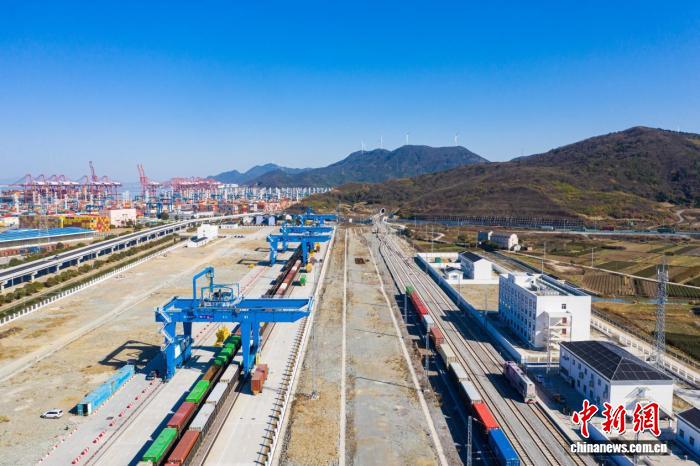
超300家货物代理公司在浙江义乌参与海铁联运业务
Zhong Guo Xin Wen Wang· 2025-04-14 16:16
Group 1 - In the first quarter of this year, the total number of containers shipped via the Yiwu sea-rail intermodal transport route increased by 3.84% year-on-year, amounting to approximately 22,000 containers [1][2] - The "Yiwu-Ningbo Zhoushan Port" sea-rail intermodal route has become the largest in Zhejiang province, with over 300 freight forwarding companies participating in the business [1][2] - The sea-rail intermodal transport mode is more cost-effective compared to road transport, saving 15% to 20% per container, which enhances profit margins for companies and allows them to offer better prices to customers [2] Group 2 - Currently, there are 27 sea-rail intermodal routes connecting various inland provinces to Ningbo Zhoushan Port, which has a total of 306 shipping routes and nearly 300 vessels operating daily, linking it to over 200 countries and regions globally [2] - Yiwu is constructing a "sixth port area" in addition to existing container terminal clusters, which will further reduce transportation costs and significantly improve efficiency once completed [2]