液态羊奶

Search documents
宋亮:关于中国羊奶产业发展重要性和建议
Zhong Guo Jing Ji Wang· 2026-01-08 02:48
Core Insights - The Chinese goat milk industry has developed significantly over the past two decades, with a complete industrial chain established in regions such as Shaanxi, Shandong, Inner Mongolia, Gansu, and Yunnan [1] - The market for goat milk products is primarily composed of infant formula and adult milk powder, with total market size estimated between 20-23 billion, where infant formula accounts for approximately 8 billion and adult milk powder around 10 billion [1] - The adult milk powder segment has seen rapid growth during the pandemic, influenced by the rise of live streaming and private domain marketing, while the infant formula segment has faced a decline due to competition from small molecule protein milk powder [2] Industry Trends - The goat milk industry is facing challenges as the infant formula market has entered a bottleneck phase since 2020, with a notable decline in sales attributed to the rise of cheaper alternatives like small molecule protein milk powder [1][2] - The adult milk powder market has shifted, with approximately 40% of elderly consumers developing stable purchasing habits for milk powder post-pandemic, indicating a significant change in consumer behavior [2] - The goat milk sector is perceived as an educational product, requiring clear profit distribution and stable pricing to maintain promotional efforts [1] Nutritional Insights - Goat milk is recognized for its natural small molecule protein, which enhances protein absorption compared to cow's milk, making it a valuable nutritional source [3] - Proper nutrition for the elderly and infants is crucial, with investments in nutrition yielding significant savings in healthcare costs, highlighting the importance of quality nutrition in reducing medical expenses [4] - The absorption of nutrients is more critical than the quantity consumed, with goat milk offering higher levels of easily absorbable whey protein compared to cow's milk, making it particularly beneficial for vulnerable populations [5] Future Outlook - The Chinese dairy industry is transitioning from basic nutritional products to a focus on functional nutrition, with goat milk positioned as a key ingredient for high-value products [5][6] - Despite current lower milk prices in China compared to Europe and the US, the goat milk industry holds a competitive advantage in the domestic market, suggesting a promising future for its development [5][6]
十一道工序,只为生产一杯 “中国好羊奶”
Qi Lu Wan Bao· 2026-01-01 02:12
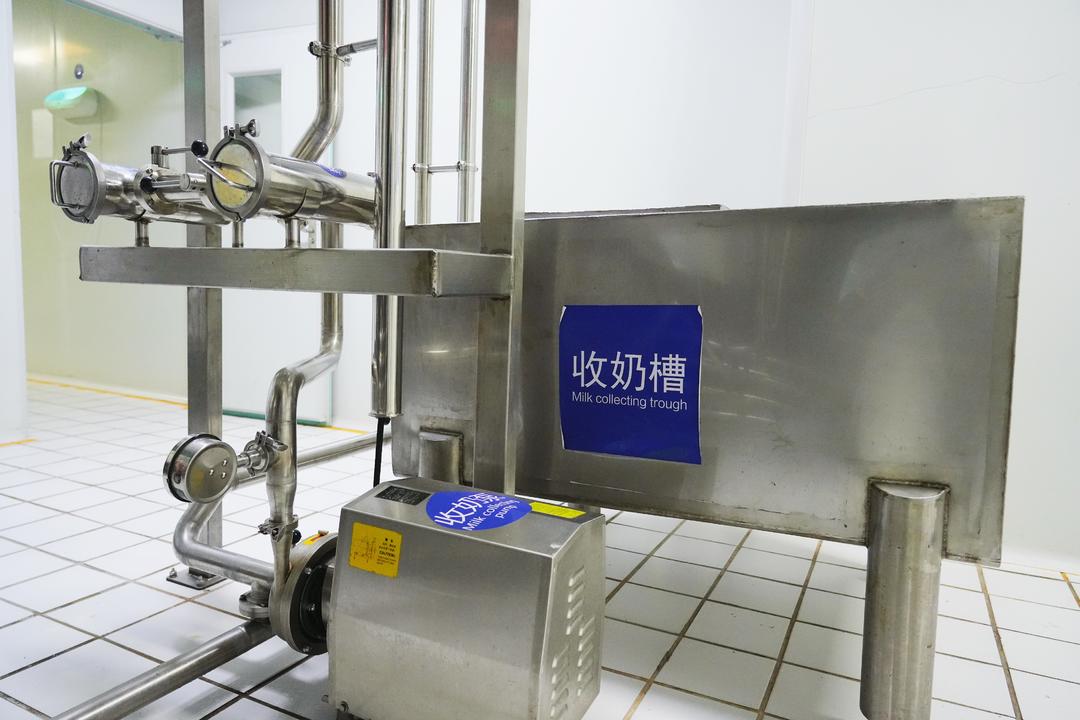
Core Viewpoint - The company, Yangchun March Goat Milk, has established itself as a leader in the liquid goat milk industry, emphasizing food safety and quality throughout its production process, which includes advanced technology and strict quality control measures [1][2]. Group 1: Company Overview - Yangchun March Goat Milk has achieved an annual production of over 10,000 tons of goat milk and sales exceeding 80 million yuan, earning recognition as a "specialized, refined, distinctive, and innovative" small and medium-sized enterprise in Shandong Province [1]. - The company has invested over 100 million yuan in its production facility located in Yiyuan County, which spans over 200 acres and features an intelligent production line [1]. Group 2: Production Process - The company employs automated milking equipment to minimize contamination during the milk collection process, ensuring that fresh goat milk is cooled to 0-4°C within two hours [5]. - Upon arrival at the factory, the goat milk undergoes a comprehensive inspection covering sensory, physicochemical, hygiene, safety, and contamination indicators, with strict rejection criteria for any non-compliant batches [7][8]. - The production process includes several key steps: - **Pasteurization** at 72-75°C for 15-30 seconds to eliminate pathogens while preserving flavor [12]. - **Homogenization** to break down fat globules for a smoother texture [14]. - **Ultra-high temperature sterilization** to achieve commercial sterility without preservatives [16]. - **Aseptic homogenization** to enhance taste and ensure product stability [18]. - **Filling** in a sterile environment to prevent contamination [20]. Group 3: Quality Control - The company has established a comprehensive quality control system that includes certifications such as ISO9001, HACCP, and ISO22000, ensuring that all products meet stringent safety and quality standards [24]. - Regular inspections and random sampling from both the factory and market are conducted to maintain product safety [24]. Group 4: Distribution - After passing quality checks, products are transported using the company's cold chain logistics for pasteurized milk and room temperature logistics for ultra-high temperature sterilized milk, ensuring efficient delivery to retail outlets [26]. - The company has developed a self-owned logistics distribution system that facilitates delivery from the factory to consumers, enhancing accessibility to high-quality goat milk [27].