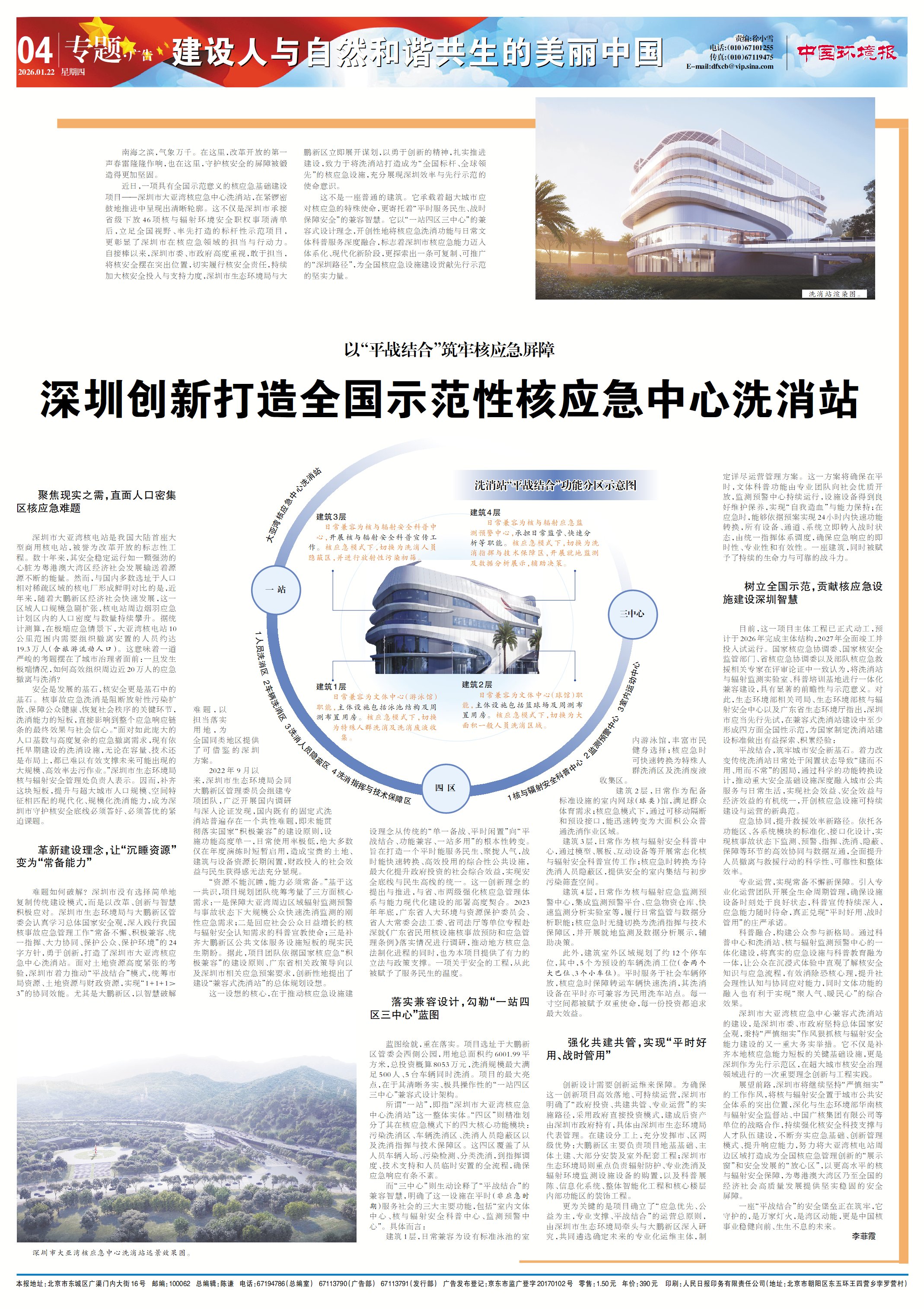
深圳市大亚湾核应急中心洗消站

Search documents
深圳创新打造全国示范性核应急中心洗消站
Zhong Guo Huan Jing Bao· 2026-01-22 01:07
Core Viewpoint - The construction of the Shenzhen Daya Bay Nuclear Emergency Center decontamination station represents a significant advancement in nuclear safety infrastructure, aiming to enhance emergency response capabilities in densely populated areas while integrating public service functions [6][10][21]. Group 1: Project Overview - The Daya Bay Nuclear Emergency Center decontamination station is a national demonstration project that showcases Shenzhen's commitment to nuclear safety and emergency preparedness [6][10]. - The project features a "one station, four zones, three centers" design, which innovatively combines decontamination functions with daily public services, marking a new phase in Shenzhen's nuclear emergency capabilities [8][17]. Group 2: Addressing Urban Challenges - The Daya Bay Nuclear Power Plant, as China's first large-scale commercial nuclear power station, faces unique challenges due to the rapid population growth in the surrounding area, necessitating effective emergency evacuation and decontamination strategies for approximately 193,000 people in extreme scenarios [10][11]. - The existing decontamination facilities are inadequate for the scale and complexity of potential emergencies, highlighting the urgent need for modernized and scalable decontamination capabilities [10][11]. Group 3: Innovative Construction Approach - Shenzhen's approach to the project emphasizes innovation and resource optimization, moving away from traditional construction models to a "dual-use" strategy that maximizes the utility of the facility [11][12]. - The design incorporates three core needs: radiation monitoring, public education on nuclear safety, and addressing local public service gaps, aligning with national emergency management principles [12][13]. Group 4: Functional Design and Implementation - The facility's design includes specific zones for decontamination, vehicle washing, personnel sheltering, and command operations, ensuring a comprehensive response to emergencies [17][18]. - The building will serve multiple functions during normal operations, including sports and educational activities, while being readily convertible for emergency use [18][19]. Group 5: Operational Strategy - The project will be managed through a collaborative model involving government investment, shared management, and professional operation to ensure sustainability and efficiency [19][20]. - The operational principles prioritize emergency readiness and public service, with a focus on maintaining functionality during both normal and emergency conditions [20][24]. Group 6: National Significance and Future Outlook - The Daya Bay decontamination station is positioned to set a national standard for nuclear emergency facilities, contributing valuable insights and practices for future developments [21][24]. - Shenzhen aims to enhance its nuclear safety framework and emergency response capabilities, reinforcing its role as a leader in nuclear safety management and public health protection [25].