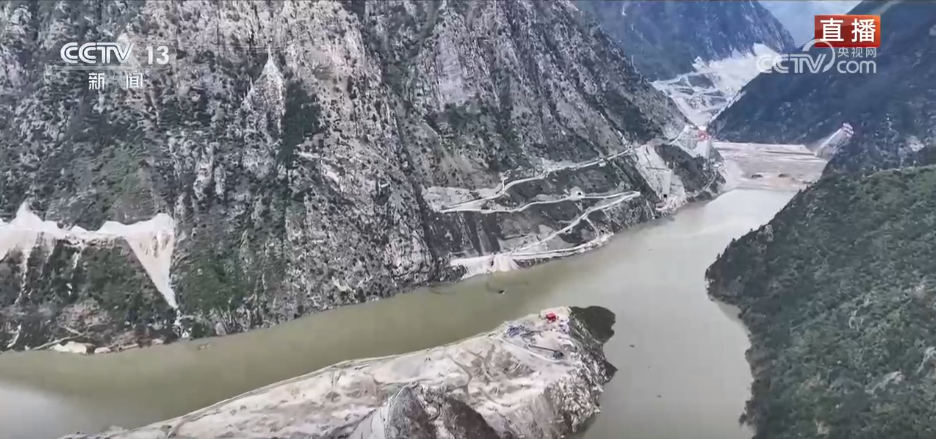
清洁绿电

Search documents
西藏昌都:拓展清洁能源空间
Jing Ji Ri Bao· 2025-10-30 07:56
Core Insights - The article highlights the development of a clean energy base in Changdu, Tibet, focusing on the integration of solar power and livestock farming in a sustainable ecosystem [1][2] - The city has established a long-term clean energy development plan, aiming to enhance the quality and scale of clean energy production [1] - Collaborative efforts with other regions, such as Fujian, Chongqing, and Tianjin, are being made to develop significant clean energy projects [1] Group 1: Clean Energy Development - Changdu has built and is constructing clean energy installations totaling 17.49 million kilowatts, with 2.98 million kilowatts already completed [1] - The city is leveraging its water, wind, and solar energy resources as part of its three main competitive industries [1] - The "1+3" clean energy cooperation model has been established with other provinces to jointly develop a 700,000-kilowatt solar power project [1] Group 2: Infrastructure and Economic Impact - The construction of power transmission projects like Jinshang DC and Zang-Yue DC will position Changdu as a key hub for electricity export [2] - The clean green electricity generated in Changdu is expected to be distributed nationwide, transforming resource advantages into economic and developmental benefits [2] - The development of a robust power export network will enhance the region's internal development momentum [2]
昌都——拓展清洁能源空间
Jing Ji Ri Bao· 2025-10-29 22:13
Core Insights - The article highlights the development of a clean energy base in Changdu, focusing on the integration of solar power and livestock farming in a sustainable ecosystem [1] - Changdu has established a "1+3" clean energy cooperation model with Fujian, Chongqing, and Tianjin, aiming to enhance clean energy development and collaboration [1] - The construction of major power transmission projects will position Changdu as a key hub for clean energy distribution, transforming resource advantages into economic benefits [2] Group 1 - The Changdu region is leveraging its water, wind, and solar energy resources to establish clean energy as a primary industry, with a long-term development plan in place [1] - The region has a total installed clean energy capacity of 17.49 million kilowatts, with 2.98 million kilowatts already operational, significantly enhancing its power supply capabilities [1] - The collaboration with external provinces includes projects like the 700,000-kilowatt solar power project and the 100,000-kilowatt wind power project, showcasing a commitment to large-scale clean energy initiatives [1] Group 2 - The construction of power transmission projects such as Jinshang DC, Zangyue DC, and Zangchuanqu AC will create a robust power export network, enhancing Changdu's role in national energy distribution [2] - The clean green electricity generated in Changdu is expected to be distributed across the country, converting resource advantages into developmental strengths [2]
世界第一高坝首蓄成功!中国基建把奔腾水流写成“绿色能源诗”
Yang Shi Xin Wen Ke Hu Duan· 2025-05-02 07:33
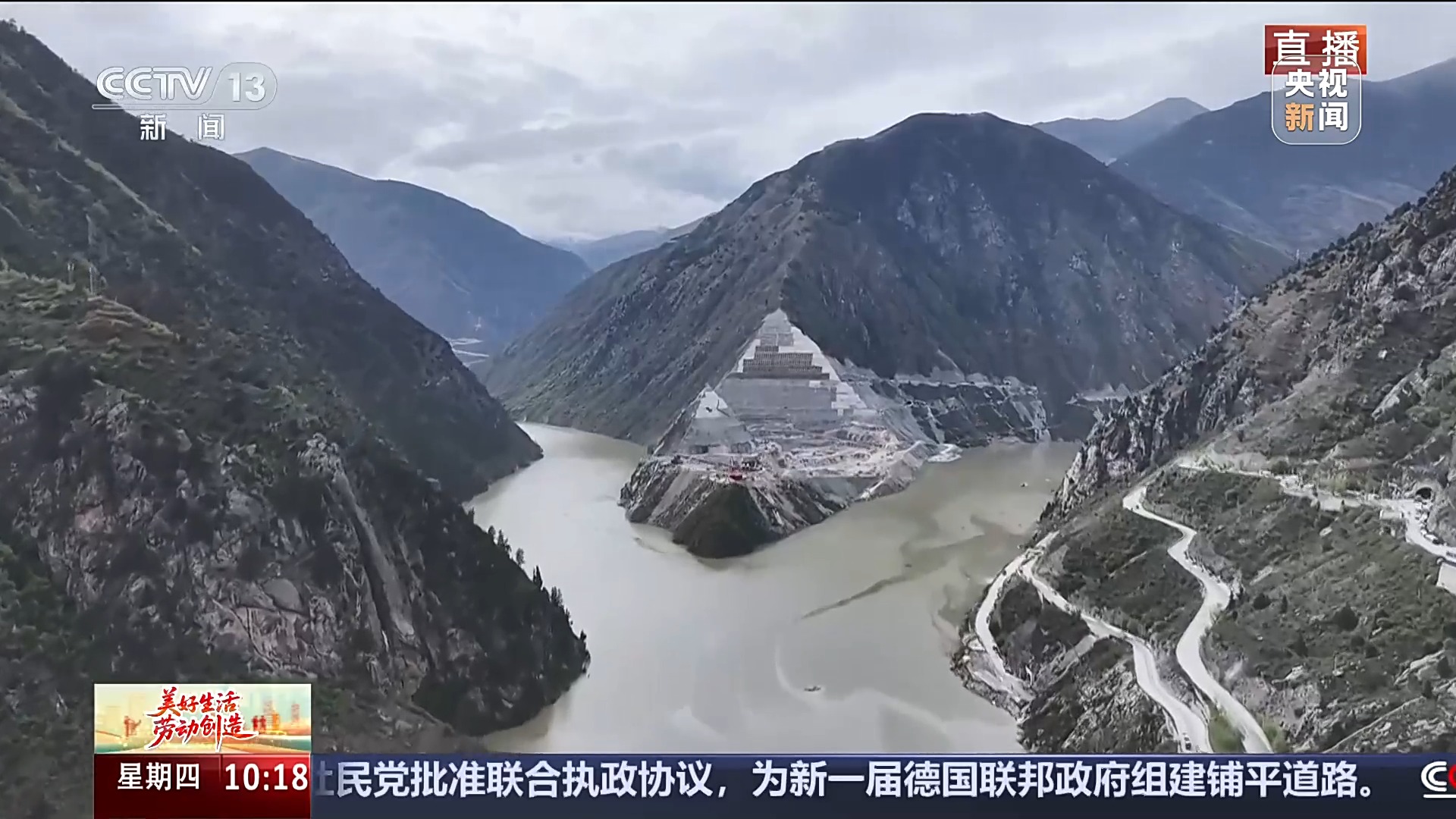
Core Viewpoint - The construction of the Shuangjiangkou Hydropower Station, a key energy project under China's 14th Five-Year Plan, is progressing rapidly, with significant milestones achieved, including the completion of the first water storage, which marks an important step towards its operational launch [1][3][17]. Group 1: Project Overview - The Shuangjiangkou Hydropower Station has an installed capacity of 2 million kilowatts and an average annual power generation of 7.7 billion kilowatt-hours [1][17]. - The dam, designed to be the highest in the world at 315 meters, has a total fill volume exceeding 46 million cubic meters, which could form a wall that wraps around the Earth's equator if constructed as 1-meter square sections [1][10]. Group 2: Construction Progress - The reservoir of the Shuangjiangkou Hydropower Station completed its first water storage, reaching a depth of over 90 meters, with a current water volume of 110 million cubic meters, equivalent to nearly 8 West Lakes [7][9]. - The dam's construction has reached a height of 205 meters, with plans to add another 110 meters [10][11]. - The project aims to achieve the first unit's power generation by the end of this year, contributing an additional 6.6 billion kilowatt-hours to downstream power stations, sufficient to meet the annual electricity needs of over 3 million households [17]. Group 3: Engineering Challenges - The rapid rise in water level during the initial storage phase posed significant challenges to the dam's quality and construction techniques, with an elevation increase of 80 meters in less than 20 days [9][11]. - The dam's structure features a trapezoidal design, with a base thickness of 1,400 meters tapering to 16 meters at the top, enhancing its stability against the immense pressure from upstream water [11][13]. Group 4: Historical Context - The construction of the Shuangjiangkou Hydropower Station began in July 2015, with key milestones including the river diversion in December 2015, the start of dam filling in April 2020, and the completion of underground powerhouse excavation in December 2022 [20].

大国工程激发经济新动能 “世界第一高坝”彰显科技创新的中国力量
Yang Shi Wang· 2025-05-01 04:16
Core Viewpoint - The construction of the Shuangjiangkou Hydropower Station, a key energy project under China's 14th Five-Year Plan, is progressing rapidly, showcasing the country's commitment to enhancing its energy capacity and infrastructure [3][6]. Group 1: Project Overview - The Shuangjiangkou Hydropower Station has an installed capacity of 2 million kilowatts and an average annual power generation of 7.7 billion kilowatt-hours [3]. - The dam, designed to be the highest in the world at 315 meters, has a total fill volume exceeding 46 million cubic meters, which could form a wall that wraps around the Earth's equator if constructed as a one-meter square wall [10][12]. Group 2: Recent Developments - On May 1, 2023, the reservoir of the Shuangjiangkou Hydropower Station completed its first water storage, marking a significant step towards operational readiness [6][8]. - The current water storage level has reached 1.1 million cubic meters, equivalent to nearly 8 West Lakes, with plans to raise the water level by over 150 meters by 2027 [8]. Group 3: Engineering Challenges - The dam's construction has reached a height of 205 meters, with an additional 110 meters planned, presenting substantial engineering challenges due to the rapid rise in water levels [10][12]. - The dam's design features a trapezoidal structure, with a base thickness of 1,400 meters tapering to 16 meters at the top, enhancing its stability against the pressure from upstream water [10]. Group 4: Future Impact - Once operational, the Shuangjiangkou Hydropower Station is expected to generate over 7 billion kilowatt-hours annually, supporting downstream hydropower stations to increase their output by 6.6 billion kilowatt-hours, sufficient to meet the annual electricity needs of 3.26 million households [12].