溴

Search documents
全球芯片供应链,新危机!
半导体芯闻· 2026-03-23 10:24
Core Viewpoint - The ongoing Middle East conflict is causing a helium shortage that significantly impacts the semiconductor supply chain, particularly affecting companies like Samsung Electronics and SK Hynix, leading to a market value loss exceeding $200 billion [1][2]. Group 1: Helium Supply Crisis - Iran's attacks on Qatar's helium production facilities have resulted in a drastic reduction in global helium supply, with Qatar accounting for over 30% of the world's helium supply [1]. - Helium prices have doubled within two weeks, and contract premiums have surged, indicating a rapidly emerging supply shortage [1][2]. - Helium is essential for wafer etching in semiconductor manufacturing, and there are currently no viable alternative manufacturing processes, making the supply constraints particularly critical [2]. Group 2: Impact on Semiconductor Manufacturers - Asian semiconductor manufacturers, especially South Korean companies, are heavily reliant on Qatari helium, with a dependency rate close to 65% [2]. - The market has reacted negatively, with a reported loss of over $200 billion in market capitalization for affected companies, reflecting investor concerns over potential mid-term capacity reductions [2]. - Analysts warn that while current inventories may temporarily mask the shortage, a significant supply disruption could occur in the coming weeks, forcing manufacturers to prioritize high-margin products like AI chips over consumer electronics [2]. Group 3: Broader Supply Chain Implications - The helium crisis is interconnected with previous energy shocks, reshaping market perceptions of supply chain security, highlighting that limitations on chip production are increasingly due to upstream raw material bottlenecks [3]. - Bromine, another critical material for semiconductor manufacturing, is also at risk, with South Korea relying on Israel for approximately 97.5% of its bromine imports, making it vulnerable to geopolitical tensions [4]. - Although bromine has not yet faced significant supply disruptions, its risk level has escalated from "low profile" to "highly sensitive," indicating potential future challenges for storage chip production [4].


The Iran War Could Upend AI. Here's How.
Barrons· 2026-03-13 18:49
Core Insights - The article highlights that the risks associated with an extended war extend beyond oil, affecting critical chip-making ingredients such as helium and bromine, which are sourced from the Middle East [1] - Additionally, the region is becoming increasingly significant for AI funding, indicating a broader impact on technology sectors [1] Industry Implications - The supply chain for semiconductor manufacturing could face disruptions due to geopolitical tensions, particularly concerning helium and bromine, which are essential for chip production [1] - The growing reliance on Middle Eastern funding for AI development suggests that any instability in the region could hinder advancements and investments in artificial intelligence technologies [1]
被多国竞逐,中亚关键矿产家底有多厚?
Huan Qiu Shi Bao· 2026-02-26 06:47
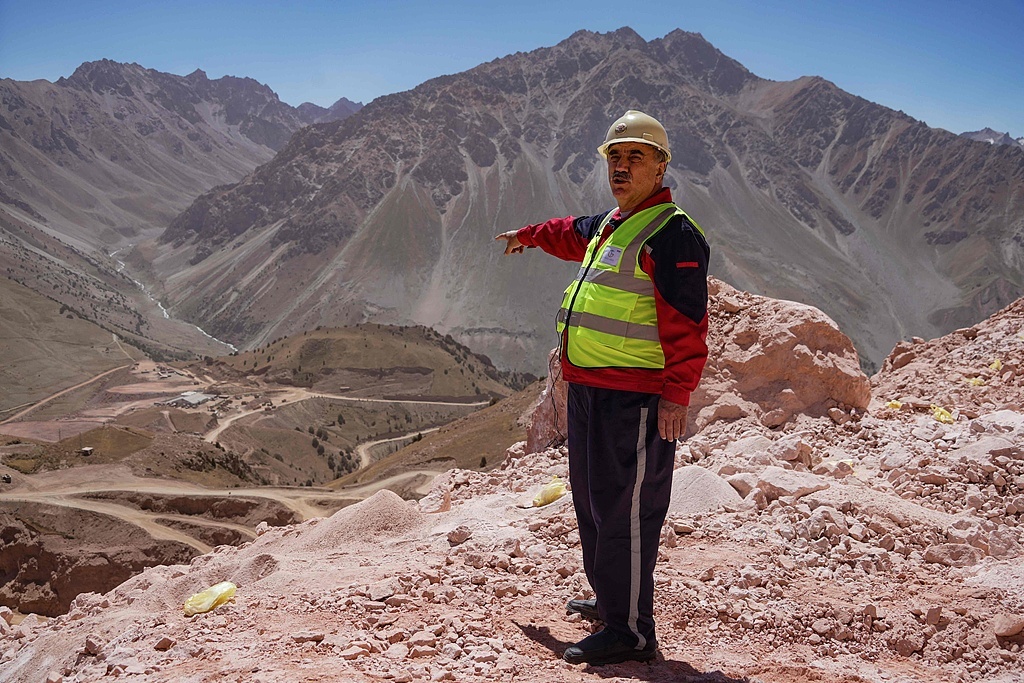
Core Insights - The United States has signed an agreement with Uzbekistan to secure a more stable supply of critical mineral resources, highlighting the strategic importance of these resources in the global energy transition and technological revolution [1] Group 1: Strategic Importance of Critical Minerals - Critical minerals have evolved from mere industrial raw materials to key elements reshaping global industrial and geopolitical landscapes [1] - Central Asia is rich in various critical mineral resources, attracting global attention, with the region being described as "extremely wealthy" by former U.S. President Trump [2][3] Group 2: Mineral Resources in Central Asia - Central Asia has become a significant player in the global strategic resource production, with countries like Kazakhstan, Kyrgyzstan, and Uzbekistan holding substantial reserves of critical minerals [3] - Uzbekistan has identified over 30 types of mineral resources, ranking as the fifth-largest uranium supplier globally and the 11th in copper reserves [4] - Tajikistan's antimony production accounts for 10% of global supply, with the country producing approximately 21,000 tons in 2023 [2] Group 3: Challenges in Mineral Development - The mining sector is a crucial economic pillar for Kazakhstan and Uzbekistan, contributing approximately 17% and 8% to their GDP, respectively [5] - Central Asia faces challenges in mineral development, including outdated geological survey data and limited investment, which hinder resource exploitation [5][7] - The region's reliance on outdated power infrastructure and seasonal electricity shortages poses significant barriers to expanding mining operations [7] Group 4: Future Development Plans - Kazakhstan aims to modernize its mining sector, viewing critical mineral development as a priority, with plans for extensive geological exploration and investment in processing technologies [8][9] - Kyrgyzstan has approved a development plan for critical minerals, targeting an annual export increase to $1 billion by 2030 [9] - Uzbekistan plans to implement a $2.6 billion project for rare metal extraction and processing over the next three years [9]
【环时深度】被多国竞逐,中亚关键矿产家底有多厚?
Huan Qiu Shi Bao· 2026-02-25 22:55
Core Insights - The article discusses the strategic importance of critical mineral resources in Central Asia, highlighting the region's rich deposits and the geopolitical implications of their extraction and trade [1][10]. Group 1: Mineral Resources Overview - Tajikistan's antimony production accounts for 10% of global supply, with an estimated output of 21,000 tons in 2023, representing a quarter of the world's total [4]. - Central Asia is home to significant mineral reserves, with manganese, chromium, lead, zinc, titanium, aluminum, copper, and cobalt having substantial global shares [4]. - Kazakhstan is noted for having the largest chromium reserves globally, estimated at 230 million tons, and is the second-largest producer of chromium [5]. Group 2: Regional Developments - Uzbekistan is rapidly establishing itself as a regional mineral hub, identifying over 30 types of mineral resources, including lithium and molybdenum, and is the fifth-largest uranium supplier globally [6]. - Kazakhstan's geological surveys have revealed a new rare earth metal deposit estimated to exceed 20 million tons, potentially making it the third-largest in the world [5]. - Kyrgyzstan is gaining recognition for its lithium and antimony reserves, which are crucial for battery and electronic device manufacturing [7]. Group 3: Economic Impact and Challenges - The mining sector significantly contributes to the GDP of Kazakhstan (17%) and Uzbekistan (8%), reflecting the region's mining tradition and existing extraction conditions [8]. - Challenges include outdated geological data, limited investment, and a lack of local processing capabilities, which hinder the development of critical mineral resources [9][8]. - The region requires an estimated $20 billion investment by 2030 to upgrade infrastructure and integrate renewable energy for mining operations [9]. Group 4: Future Plans and Concerns - Kazakhstan aims to modernize its mining sector, with plans for extensive geological exploration and the introduction of advanced processing technologies [10]. - Kyrgyzstan's government has set a goal to increase critical mineral exports to $1 billion by 2030 and attract $700 million in foreign direct investment [11]. - Concerns exist regarding the potential for increased dependency on commodity exports and the associated socio-economic inequalities if investments remain focused solely on resource extraction [11].
“一带一路”国际研修班到访天津汉沽盐场
Sou Hu Cai Jing· 2025-09-16 15:55
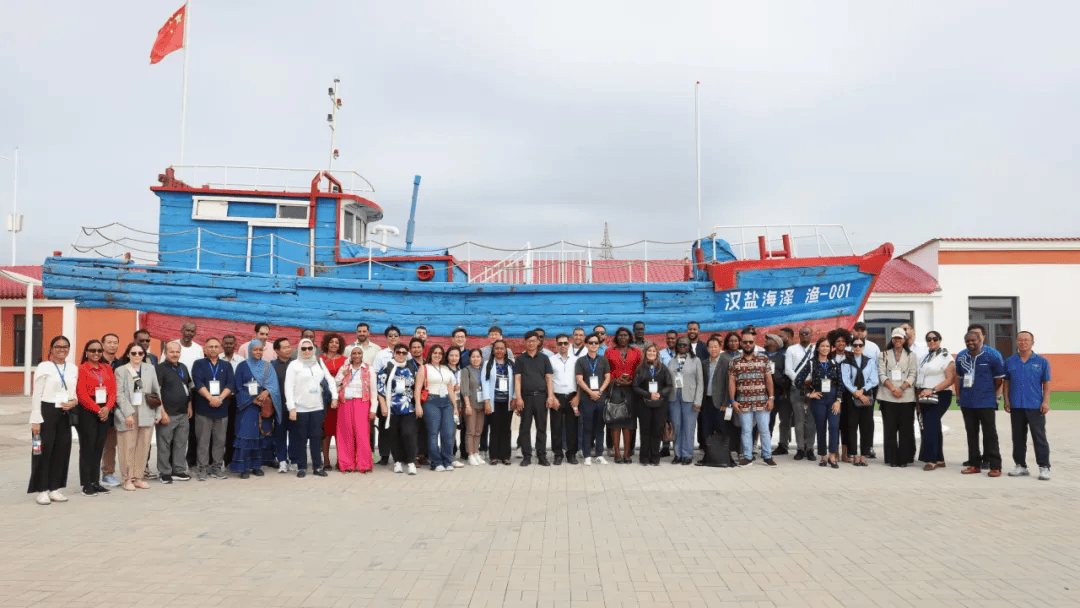
Group 1 - The event was organized by the Ministry of Commerce and the International Cooperation Center of the National Development and Reform Commission, focusing on long-term development planning and green industry development under the Belt and Road Initiative [1][8] - Over 50 officials participated in the visit to the Tianjin Bohai Chemical Group's Han Gu Salt Field, which highlighted the integration of cultural heritage, green industry, ecological aquaculture, and resource recycling [1][6] - The visit included immersive experiences at the Tianjin Changlu Sea Salt Cultural Tourism Zone, showcasing the historical context of sea salt culture and the blend of traditional salt-making techniques with modern tourism [6][8] Group 2 - Participants observed the technological research and production processes of the microalgae health industry at Han Salt Keri Biological Company, recognizing the growth potential of the green biological industry [6][8] - The aquaculture base of Han Salt Modern Aquatic Technology Company was visited, where officials experienced the ecological farming environment and tasted high-quality seafood products, demonstrating the success of the ecological aquaculture model [6][8] - The visit concluded with a focus on the seawater bromine production process at the brine comprehensive utilization plant, emphasizing the Han Gu Salt Field's approach to the tiered development and recycling of marine resources [6][8]