燃烧室

Search documents
飞沃科技:新杉宇航主要提供液体火箭发动机的3D打印零部件
Zheng Quan Ri Bao Wang· 2026-01-23 10:50
Core Viewpoint - Feiwo Technology (301232) is in the growth phase of its business segment that provides 3D printed components for liquid rocket engines, which currently contributes limited revenue to the parent company's overall performance [1] Group 1 - The main products offered by Xinsai Aerospace include critical components such as nozzles, combustion chambers, valves, and pipelines [1] - The company has established partnerships with mainstream private rocket enterprises [1]
飞沃科技(301232.SZ):新杉宇航主要提供液体火箭发动机的3D打印零部件
Ge Long Hui· 2026-01-23 07:34
Core Viewpoint - Feiwo Technology (301232.SZ) is in the growth phase of its business segment that provides 3D printed components for liquid rocket engines, which currently contributes limited performance to the parent company's overall results [1] Group 1: Company Overview - Feiwo Technology's subsidiary, Xinsang Aerospace, specializes in 3D printed parts for liquid rocket engines, including critical components such as nozzles, combustion chambers, valves, and pipelines [1] - The current contribution of this business segment to the overall performance of the parent company is relatively limited, indicating it is still in the growth stage [1] Group 2: Industry Relationships - Xinsang Aerospace has established partnerships with mainstream private rocket companies, which may enhance its market position and growth potential in the aerospace sector [1]
空间站周记更新啦!神二十乘组在太空完成了哪些任务
Yang Shi Xin Wen Ke Hu Duan· 2025-09-21 07:42
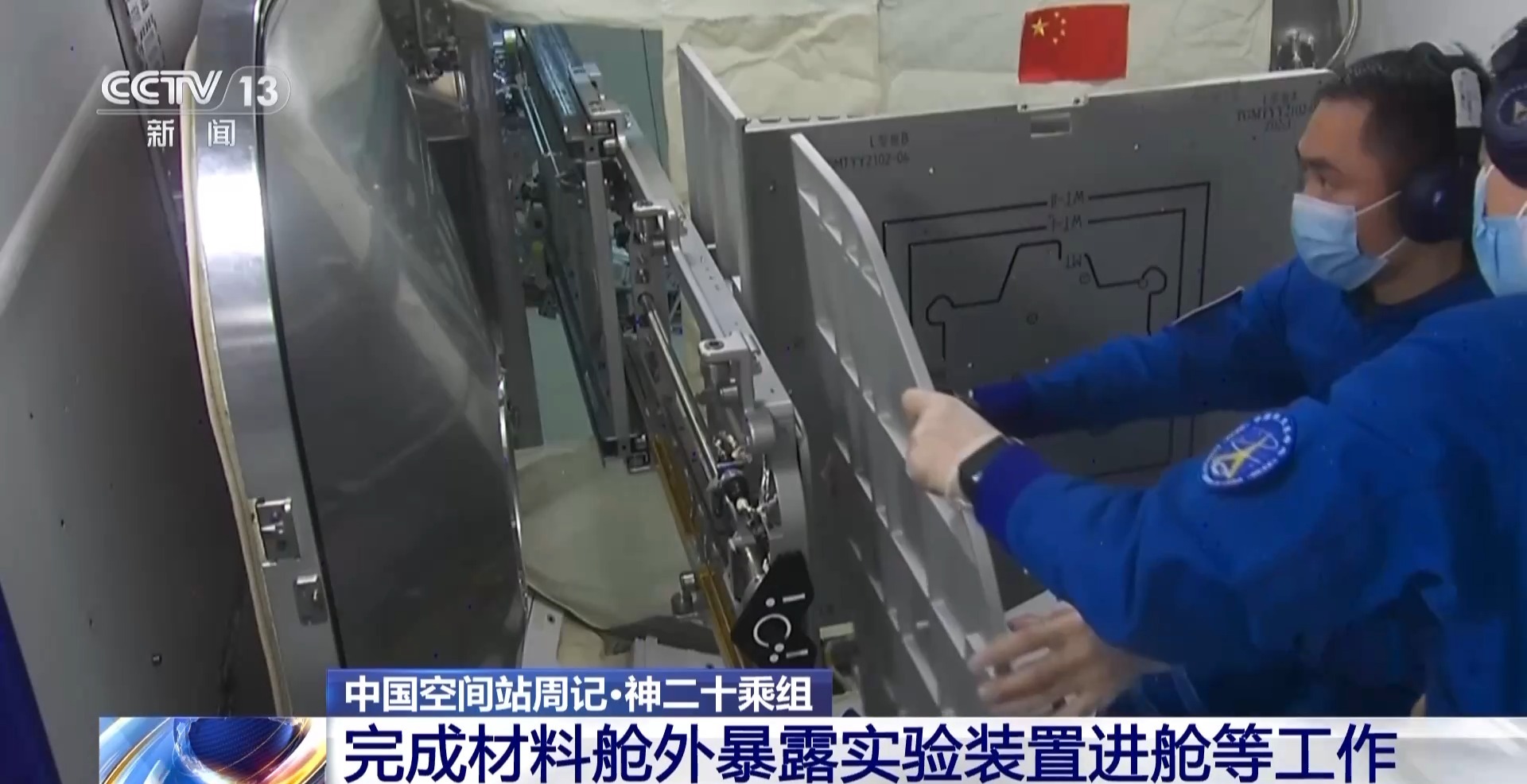
Core Points - The Shenzhou-20 crew, consisting of Chen Dong, Chen Zhongrui, and Wang Jie, has been actively conducting scientific experiments in space, with significant progress reported in various fields [1] Group 1: Material Science - The crew completed the entry of the material exposure experiment device and the recovery and storage of the third batch of experimental samples [2] - The material exposure experiment aims to reveal mechanisms of material structure damage, performance degradation, and functional failure in extreme space environments, promoting the application of advanced materials for flexible solar wings, space lubrication materials, lunar base construction materials, and neutron shielding materials for precision electronic devices [2] Group 2: Aerospace Medicine - In the field of aerospace medicine, the crew utilized a fine motion measurement device to conduct sliding tests, which will aid in studying the changes in fine motor control and adaptive learning mechanisms under microgravity conditions [7] - The crew performed cardiac and vascular ultrasound examinations and used a neuromuscular stimulator for muscle relaxation and atrophy protection to counteract the physiological effects of weightlessness [15] Group 3: Microgravity Physics - Experiments related to microgravity combustion science are being conducted in an enclosed combustion chamber, which supports combustion experiments with various fuels by changing internal experimental inserts [9] Group 4: Station Management - The crew completed microbial monitoring tasks by sampling different media such as gas, surfaces, and water systems to assess microbial species and growth conditions, providing a basis for microbial control within the station [11] - Station management tasks included organizing cargo transfers, inventory checks of medications, and material management [13]