爱农宝App

Search documents
气象指数保险为特色农业撑起“防护盾”
Jin Rong Shi Bao· 2026-01-07 02:44
Core Insights - The introduction of weather index insurance for navel orange farmers in Zigui County, Hubei, has significantly mitigated the risks associated with low temperatures and adverse weather conditions, allowing farmers to cultivate with greater confidence [1][2] - The insurance model has transformed the approach of farmers from being reactive to proactive in managing weather-related risks, thus supporting rural revitalization and the development of specialty agriculture [2] Group 1: Weather Index Insurance - The weather index insurance launched by Ping An Insurance in collaboration with local government agencies provides automatic compensation based on predefined low-temperature thresholds, enhancing the efficiency of claims processing [1][2] - In the 2025 low-temperature disaster, the insurance company completed the claims process within 3 hours for inspections and 5 days for damage assessment, achieving a compensation rate of 157% [2] Group 2: Regional Adaptation and Impact - Ping An Insurance has tailored its risk protection solutions to local agricultural characteristics, such as tea and olive production in Fujian, addressing the unique challenges faced by farmers in mountainous regions [3] - The introduction of the "weather index + geographical indication" insurance model in Fujian has provided over 38.93 million yuan in risk coverage for local agricultural products, significantly reducing frost damage losses [3] Group 3: Broader Agricultural Insurance Innovations - Ping An Insurance has developed specialized insurance products for various agricultural sectors across different regions, including apple and bamboo shoot insurance, thereby strengthening the agricultural safety net [3]

“双精准”革新:科技驱动下的创新实践
Qi Lu Wan Bao· 2025-12-10 11:04
Core Viewpoint - Ping An Property & Casualty Insurance Company of Qingdao has launched a digital map-based agricultural insurance model called "Double Precision," marking a significant step towards high-quality development in agricultural insurance [1][2]. Group 1: Innovation in Agricultural Insurance - The "Double Precision" model addresses traditional agricultural insurance challenges such as inaccurate data, vague loss assessment, and unfair claims by utilizing a high-precision digital map for comprehensive digital mapping of "land, rights, assets, and people" [1]. - The model transitions from "experience-driven" to "data-driven," employing satellite remote sensing, AI recognition, and meteorological big data to create an integrated monitoring system for dynamic tracking of crop growth throughout its lifecycle [1][2]. - The system provides early warnings before disasters and combines online remote loss estimation with offline inspections post-disaster to ensure objective and fair loss assessments, enhancing claims efficiency and protecting the rights of insured farmers [1]. Group 2: Accessibility and Fairness in Services - The "Ainongbao" app allows farmers to self-insure, verify standards, report claims, and check claim statuses, ensuring equal recording and verification of all land information, thus breaking down service barriers that favored larger agricultural operators [2]. - The accurate ecological data generated supports the development of green insurance products, contributing to the advancement of "green finance" and promoting sustainable agricultural transformation [2]. Group 3: Recognition and Future Plans - The innovative practices of Ping An Property & Casualty Insurance in Qingdao have received high praise from authoritative bodies, including the Ministry of Agriculture and Rural Affairs and experts from Central University of Finance and Economics, for their replicable and promotable value [2]. - The company aims to deepen the "insurance + technology + service" model and solidify its leading position in the industry, providing robust support for rural revitalization and contributing to financial services for agriculture [3].

一课田间、一问家国、一束星光,沪皖少年共绘田野答卷
Xin Lang Cai Jing· 2025-07-09 08:38
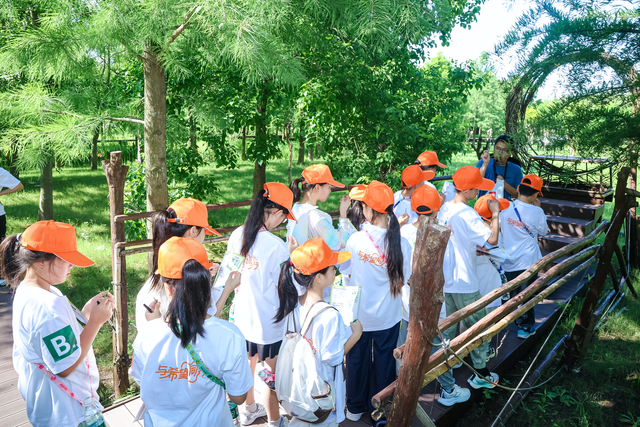
Core Viewpoint - The article highlights the integration of technology and agriculture through educational initiatives aimed at enhancing the scientific literacy of youth, particularly in rural areas, while showcasing the role of insurance in mitigating agricultural risks [5][8][19]. Group 1: Educational Initiatives - The "Youth Science Literacy Enhancement Program" allows students from rural areas to engage in hands-on learning experiences related to agriculture and technology [3][17]. - The program includes practical lessons on identifying plant diseases and understanding the impact of natural disasters on agriculture, emphasizing the importance of insurance in risk management [6][10]. - The initiative aims to bridge the educational resource gap between urban and rural areas, fostering a new generation of informed individuals who can contribute to modern agricultural practices [13][22]. Group 2: Technological Integration in Agriculture - The use of the "Ainongbao App" exemplifies how technology can assist farmers in self-insurance, pest identification, and weather forecasting, transforming traditional farming practices [8][11]. - The integration of AI, IoT, and big data in agricultural insurance is reshaping product offerings and service delivery, enhancing efficiency and quality in the sector [11][12]. - The article discusses specific case studies where technology has been applied to improve agricultural practices, such as smart farming in aquaculture and livestock management [12][21]. Group 3: Corporate Social Responsibility - The company has been actively involved in educational philanthropy for over 30 years, establishing numerous hope primary schools and supporting rural education initiatives [20][21]. - The commitment to enhancing youth education is seen as a long-term strategy to empower individuals and contribute to national technological competitiveness [22][23]. - The article emphasizes the importance of sustainable educational practices that not only provide immediate benefits but also foster long-term growth and development in rural communities [22][23].