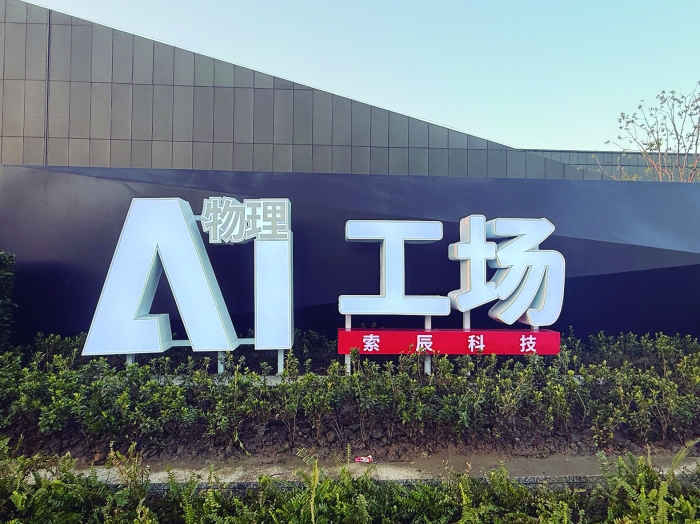
物理AI仿真软件

Search documents
索辰科技:以物理AI引领仿真变革
Shang Hai Zheng Quan Bao· 2025-12-12 19:25
Core Viewpoint - The article discusses the transformative impact of physical AI on the industrial simulation sector, highlighting the advancements made by Suochen Technology in the field of computer-aided engineering (CAE) and its mission to support the long-term development of China's manufacturing industry [2][3]. Group 1: Company Background - Suochen Technology was founded nearly two decades ago by Chen Hao, who identified a gap in the domestic CAE software market and aimed to provide solutions tailored to China's industrial needs [3][4]. - The company has successfully listed on the Sci-Tech Innovation Board and is focused on real-time simulation and optimization capabilities using physical AI [2][4]. Group 2: Technological Evolution - The transition from "experiment-driven" to "simulation-driven" development has significantly reduced product design cycles from years to months or even days [6]. - Traditional CAE software is limited in its ability to handle numerous parameters, often freezing certain variables to simplify calculations, which restricts design optimization [6][7]. Group 3: Advantages of Physical AI - Physical AI represents an advanced version of CAE, integrating physical computation frameworks with AI's data processing capabilities, allowing for real-time optimization across all parameters [6][7]. - The technology enables the creation of comprehensive multi-physical field coupling simulation models, enhancing the accuracy and realism of simulations [7][10]. Group 4: Future Prospects - Physical AI is seen as a potential ultimate form of artificial intelligence, with its capabilities bounded only by human scientific knowledge [9]. - Suochen Technology is actively collaborating with cities like Shaoxing and Hangzhou to develop low-altitude physical AI platforms, aiming to enhance applications in various complex fields [9][10]. - The company has established a 40,000 square meter physical AI laboratory in Jiaxing to accelerate the industrialization of physical AI, focusing on generating high-density synthetic data and validating AI models with real-world data [10].