特斯拉世界模型

Search documents
最近咨询世界模型岗位的同学越来越多了......
自动驾驶之心· 2026-01-22 00:51
Core Viewpoint - The article emphasizes the growing demand for positions in the field of autonomous driving, particularly in the areas of world models, end-to-end systems, and VLA, highlighting the importance of practical experience and advanced knowledge in these domains [2][4]. Course Overview - The course on world models in autonomous driving is being launched in collaboration with industry experts, focusing on various algorithms and applications, including Tesla's world model and the Marble project by Fei-Fei Li's team [2][4]. - The course aims to provide a comprehensive understanding of world models, covering their development history, current applications, and different approaches such as pure simulation, simulation + planning, and generative sensor input [7]. Course Structure - **Chapter 1: Introduction to World Models** This chapter reviews the relationship between world models and end-to-end autonomous driving, discussing the evolution and current applications of world models, as well as various streams within the field [7]. - **Chapter 2: Background Knowledge of World Models** This chapter covers foundational knowledge related to world models, including scene representation, Transformer technology, and BEV perception, which are crucial for understanding subsequent chapters [8][12]. - **Chapter 3: General World Model Exploration** Focuses on popular models such as Marble, Genie 3, and the latest discussions around VLA + world model algorithms, providing insights into their core technologies and design philosophies [9]. - **Chapter 4: Video Generation-Based World Models** This chapter delves into video generation algorithms, starting with notable works like GAIA-1 & GAIA-2 and extending to recent advancements, ensuring a balance between classic and cutting-edge research [10]. - **Chapter 5: OCC-Based World Models** Concentrates on OCC generation methods, discussing three major papers and a practical project, highlighting their applicability in trajectory planning and end-to-end systems [11]. - **Chapter 6: World Model Job Specialization** This chapter shares practical insights from the instructor's experience, addressing industry applications, pain points, and interview preparation for related positions [12]. Learning Outcomes - The course is designed to elevate participants to a level equivalent to one year of experience as a world model algorithm engineer, covering key technologies and enabling practical application in projects [15].

TeraSim World:用开源方式重建「特斯拉式」世界模型
自动驾驶之心· 2025-10-28 00:03
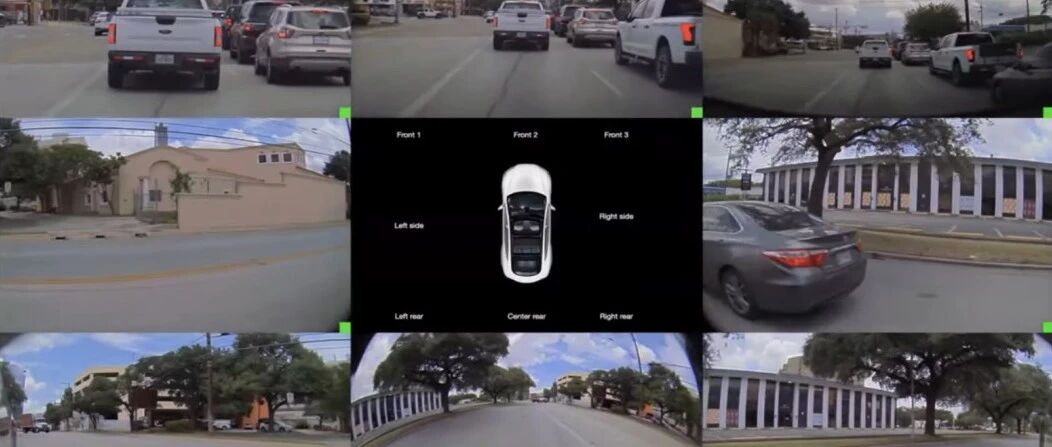
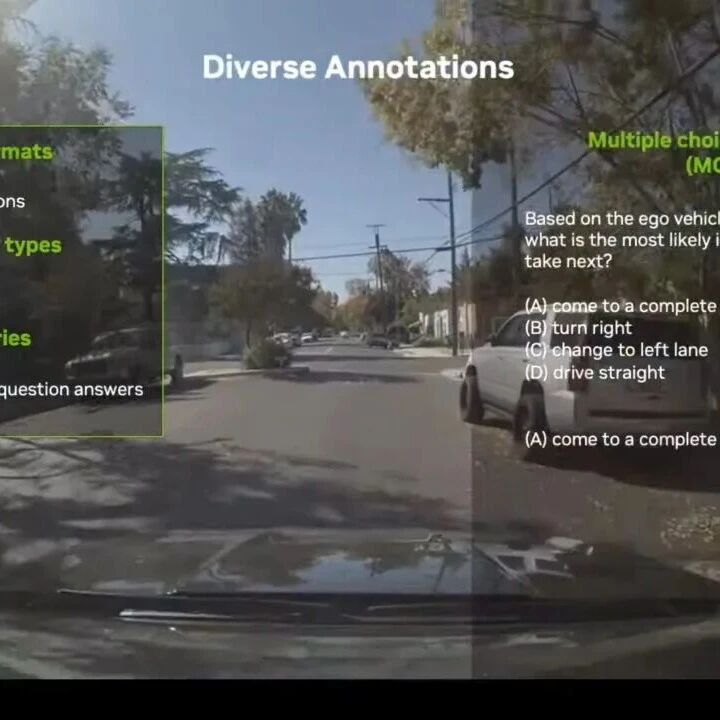
Core Viewpoint - Tesla has showcased its internal World Model, a neural network-driven virtual world generator that synthesizes high-resolution videos from eight camera perspectives based on vehicle states and control inputs, enabling real-time environmental predictions and closed-loop validation [2][6]. Group 1: Tesla's World Model - Tesla's World Model allows for the replay of historical problem scenarios and the injection of new adversarial events in a virtual environment for testing and reinforcement learning [2]. - The model learns a general mapping of "perception-action-world change," making it applicable to other platforms like robotics, thus forming a basis for general physical intelligence [2]. Group 2: TeraSim World Framework - A research team from the University of Michigan, SaferDrive AI, the University of Hong Kong, and Tsinghua University has developed TeraSim World, an open-source framework that achieves similar generation and evaluation capabilities as Tesla's World Model without requiring real maps or sensor backgrounds [5][6]. - TeraSim World is designed to automatically generate city environments and traffic behaviors using AI, creating a fully data-driven, reproducible, and scalable world model platform [5]. Group 3: System Features - TeraSim World features a modular, fully automated data synthesis pipeline for generating realistic and safety-critical data for end-to-end autonomous driving [7]. - The system retrieves real-world road maps and converts them into simulation-ready formats, allowing for the automatic generation of digital maps based on user input [10][11]. - It can simulate realistic traffic conditions by automatically obtaining real-time traffic data, thus reflecting local traffic patterns [13]. Group 4: Agent and Sensor Simulation - The agent simulation component enables virtual vehicles, pedestrians, and cyclists to behave like their real-world counterparts, incorporating human driving characteristics [16]. - TeraSim World introduces safety-critical scenarios based on real-world accident probabilities, ensuring the generated events are both risky and realistic [17]. - The sensor simulation aspect generates realistic camera inputs and can be extended to other sensor types, utilizing NVIDIA's open-source Cosmos models for high-resolution, time-synchronized multi-view video generation [19][22][25]. Group 5: Automated Stress Testing - TeraSim World supports automated full-stack stress testing, generating and validating various risk scenarios to assess the stability and safety boundaries of autonomous driving systems [30]. - The framework can inject dynamic and static risks, such as sudden stops or environmental changes, to evaluate system responses under diverse conditions [30]. Group 6: Conclusion and Future Plans - TeraSim World combines agent and sensor simulation to provide a comprehensive data generation process for training and testing autonomous driving systems without the need for real-world data collection [31]. - The system aims to create a large-scale synthetic driving dataset and expand to multi-modal sensor simulations, establishing an open virtual testing ground for researchers and developers [32].