独木舟

Search documents
威斯康星考古学家绘制湖底16艘独木舟位置图,发现史前“停船区”
财富FORTUNE· 2025-11-28 13:52
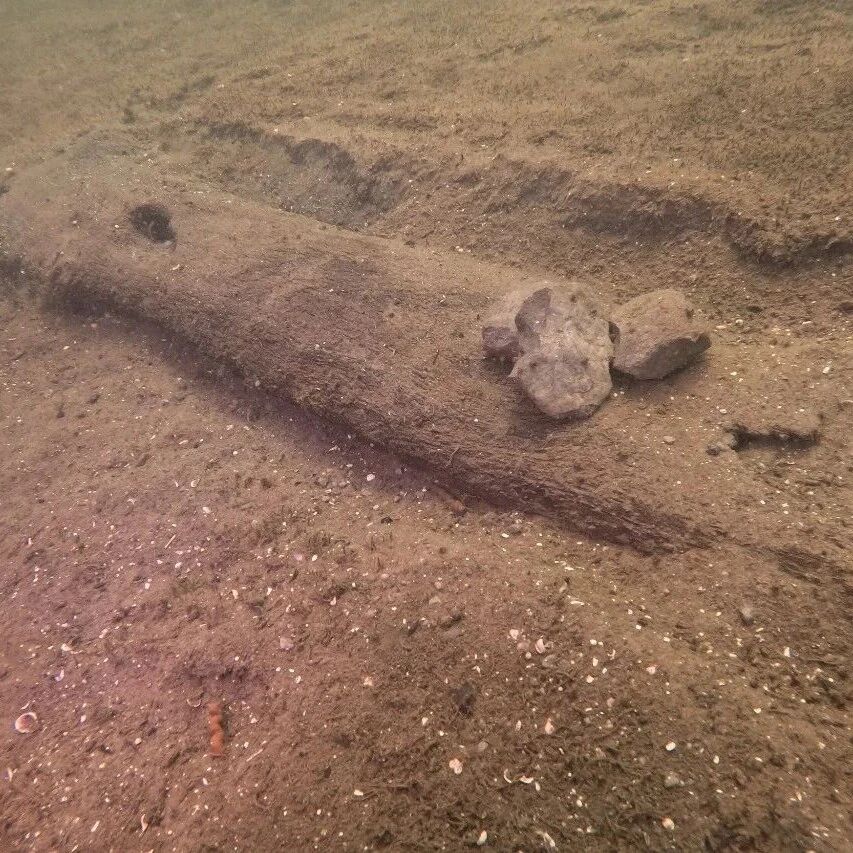
Core Insights - Archaeologists discovered over ten ancient dugout canoes at a prehistoric "dock" site left by Indigenous peoples in Wisconsin, indicating a long-term use of the area for canoe storage and sharing [1][2]. Group 1: Discovery and Significance - The Wisconsin Historical Society announced the mapping of 16 dugout canoes at the bottom of Lake Mendota, which is near a network of Indigenous trails, suggesting that these canoes were available for travelers [1][2]. - The discovery began in 2021 with a 1,200-year-old canoe, followed by a 3,000-year-old canoe and others dating back 4,500 and 2,000 years, indicating the site's historical importance [2][3]. - The oldest canoe among the 16 is dated to 5,200 years ago, making it the third oldest dugout canoe found in Eastern North America [3]. Group 2: Cultural Context - The area has been inhabited by the Ho-Chunk Nation, and the canoes reflect a deep connection between the Indigenous peoples and the land and waters [4]. - The region experienced a drought starting around 7,500 years ago, which may have influenced the use of the lake as a docking point for canoes, as the water depth was only about 4 feet during that time [3][4]. - Cultural officials from the Ho-Chunk Nation emphasized the significance of these canoes in understanding their historical presence and relationship with the land [4]. Group 3: Ongoing Research and Future Prospects - Archaeologists are collaborating with local Indigenous tribes to further explore the site, with hopes of discovering even older canoes, potentially dating back 7,000 years [4]. - The ongoing research highlights the importance of Indigenous narratives and histories in understanding the archaeological findings [5].

“中华第一舟”见证的8000年文化:访跨湖桥遗址
Jing Ji Guan Cha Bao· 2025-09-26 06:33
Core Insights - The article discusses the discovery and significance of the Kua Lake Bridge site, which dates back 8,000 to 7,000 years, marking it as one of the earliest prehistoric cultural sites in Zhejiang Province [1][6]. Discovery Process - The Kua Lake Bridge site was first identified in May 1990 when a student found prehistoric artifacts in the Xianghu area, leading to an official investigation by local authorities [2]. - Initial excavations in late 1990 revealed a cultural accumulation layer approximately 30 meters long, with over 130 artifacts, but the cultural nature and dating were initially uncertain [3][4]. Archaeological Findings - Carbon-14 dating confirmed the site's age as 8,000 to 7,000 years, making it older than the Hemudu site by 1,000 years [4][6]. - Subsequent excavations uncovered a variety of artifacts, including pottery, stone tools, and evidence of early rice cultivation, suggesting a significant advancement in agricultural practices [5][11]. Cultural Significance - The Kua Lake Bridge site is characterized by unique cultural features that distinguish it from other known prehistoric cultures in Zhejiang, leading to the proposal of a new archaeological culture type [10][15]. - The discovery of a wooden boat, considered the earliest in China, highlights the site's importance in understanding ancient transportation and craftsmanship [16]. Expansion of Cultural Understanding - Further excavations revealed additional sites with similar artifacts, confirming the existence of the Kua Lake Bridge culture and expanding its geographical distribution beyond the initial area [12][13]. - The Kua Lake Bridge culture represents a third cultural lineage in Zhejiang's prehistoric archaeology, alongside the Hemudu and Majiabang cultures, indicating a more complex cultural landscape [15]. Technological Innovations - The Kua Lake Bridge culture is noted for several "firsts," including the earliest lacquer bows and advanced pottery techniques, which contribute to the understanding of technological development in ancient China [17].
武汉年轻人众筹造独木舟,准备沿长江划船去上海
Chang Jiang Ri Bao· 2025-07-08 09:08
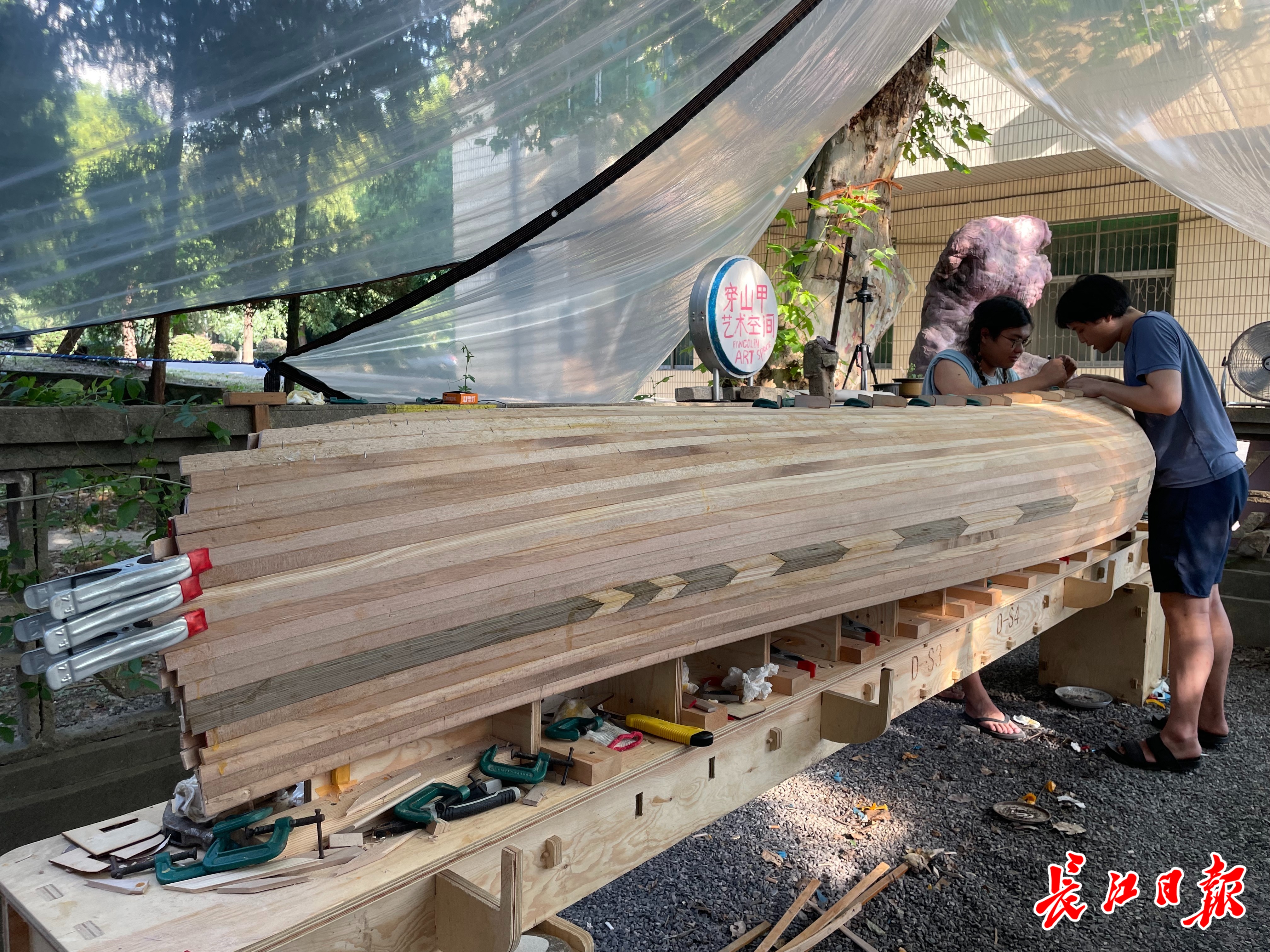
Core Viewpoint - Three young individuals in Wuhan are crowdfunding to build a canoe, aiming to paddle from Wuhan to Shanghai along the Yangtze River, promoting a spirit of exploration and courage [1][4]. Group 1: Project Overview - The canoe measures 4.2 meters in length, 1 meter in width, with a draft of 20-30 centimeters, and can carry a weight of 200 kilograms [1]. - The project started on June 20, with the main body of the canoe completed by early July, and is expected to be finished by mid-July, with plans to set off by the end of August [1][8]. - The crowdfunding goal was set at 20,000 yuan, with 15,000 yuan raised so far through online contributions, merchandise sales, and advertising [4]. Group 2: Technical Aspects - The most challenging part of the canoe construction is the assembly of the hull, requiring precise bending and fitting of each wooden strip, followed by waterproofing and curing processes [4]. - An experienced boat builder from Jingdezhen is providing technical guidance to the team, emphasizing the complexity and craftsmanship involved in the project [4]. Group 3: Regulatory Considerations - According to the revised "Ship Registration Regulations of the People's Republic of China," small boats under 5 meters, such as canoes, do not require mandatory registration but must comply with safety regulations [9].