瑞士莲巧克力

Search documents
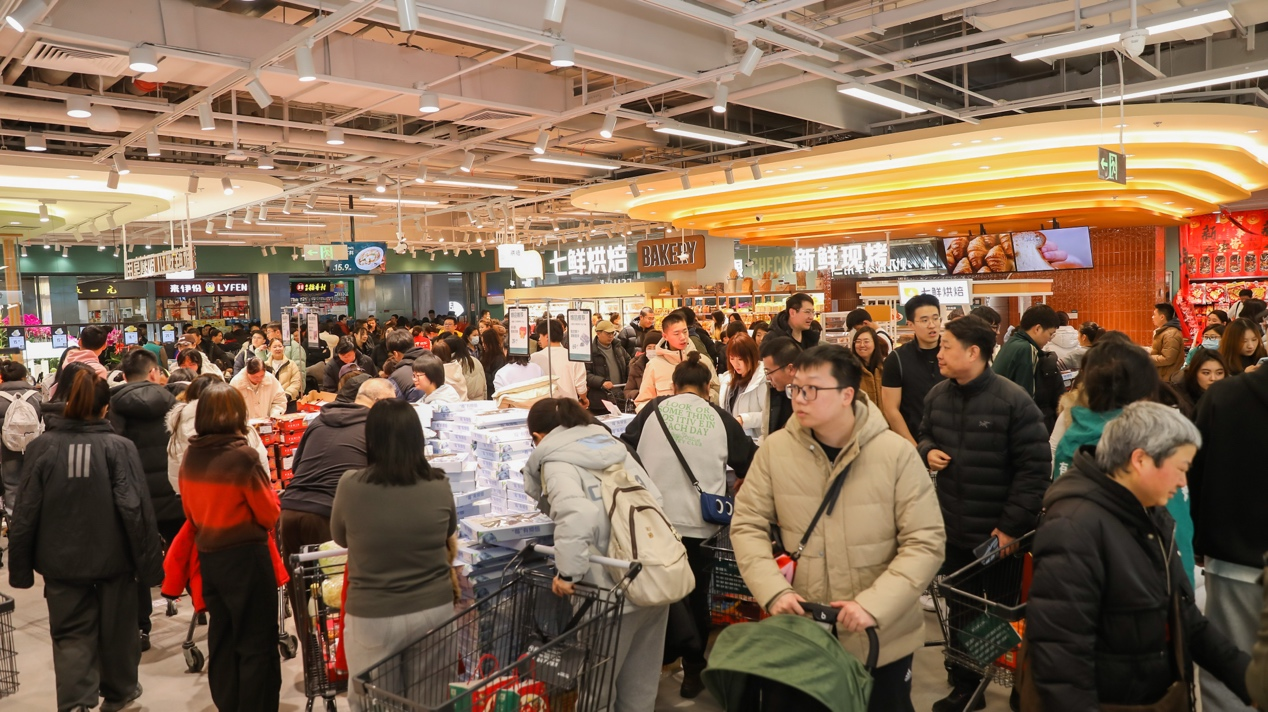
69.8元6盒高山巨无霸蓝莓!京东七鲜北京荟聚店开启“过节模式”
Zhong Jin Zai Xian· 2026-02-06 09:04
Core Insights - JD Fresh Supermarket has opened new stores in Beijing and Shanghai, generating significant consumer interest with nearly 150,000 visitors in the first three days at the Beijing Huiju store [1] - The store offers a variety of affordable products for the upcoming Spring Festival, including fresh produce, traditional New Year goods, and private label gift boxes, catering to the needs of local consumers [1] Product Highlights - The Beijing Huiju store features high-value fresh products, such as large blueberries priced at 69.8 yuan per box, strawberries at 59.9 yuan per kilogram, and Chilean cherries at 149 yuan per box [3] - Premium seafood options include Tasmanian salmon at 88 yuan per pound, large lobsters priced at 39.9 yuan per pound, and Angus shoulder blade rolls at 49.9 yuan per kilogram [5] - The store's gift box offerings include a dual-pack of Jingxianfang No. 6 liquor for 299 yuan, and various wines priced at 59 yuan per bottle, making high-quality beverages more accessible [7] Health and Wellness Products - The supermarket emphasizes health-oriented products, such as organic camellia oil gift boxes priced at 159 yuan, and a selection of nuts including almonds, cashews, and pistachios [9] Valentine's Day Promotions - In anticipation of Valentine's Day, the store has prepared a range of romantic gifts, including popular chocolate brands and creative gift items, enhancing the shopping experience for couples [11] Online and Offline Integration - The Beijing Huiju store offers convenient online delivery services through the JD app or the Seven Fresh mini-program, allowing customers to enjoy a seamless shopping experience with delivery in as fast as 30 minutes [13]


进博会“灯塔”熠熠 为企业搭建起链接全球的广阔平台
Zheng Quan Ri Bao Wang· 2025-11-09 13:17
Core Insights - The China International Import Expo (CIIE) serves as a significant platform for global trade and cooperation, facilitating cross-border collaboration and resource sharing among enterprises [1][6] Group 1: Technology Sharing - CIIE fosters an environment conducive to technology sharing, exemplified by the strategic partnership between Kewei Medical and Tencent Cloud, focusing on advancements in hearing aid algorithms [2] - The collaboration aims to enhance product performance significantly, leveraging AI voice recognition and acoustic modeling to improve user experience [2] Group 2: Brand Collaboration - CIIE acts as a crucial springboard for companies to expand into global markets, as demonstrated by Yunquna's strategic partnership with Port Klang Free Trade Zone to facilitate logistics for Chinese manufacturers [4] - The partnership aims to provide better access and services for Chinese manufacturing enterprises, particularly in the light industry sector, enhancing bilateral cooperation in logistics [4] Group 3: Industry Cooperation - Abbott signed a memorandum with the National Health Commission to promote reproductive health services, highlighting the expo's role in fostering health initiatives [3] - Karcher and Daqing Baoshihua Property Management signed a strategic agreement to integrate cleaning technology with service operations, showcasing the synergy between global technology and local service capabilities [3] Group 4: Market Expansion - The expo enables foreign brands to enhance their market presence in China, as seen with the Swiss chocolate brand Lindt conducting interactive sessions to engage Chinese consumers [5] - Companies are increasingly seeking deep collaborations with domestic brands to boost their market influence and share knowledge in product innovation and supply chain management [5]

探秘满洲里中俄互贸免税区:一场边城与异域风情的奇妙碰撞
Sou Hu Cai Jing· 2025-05-01 08:27
Group 1 - The core concept of the news highlights Manzhouli as a unique cross-border trade hub between China and Russia, featuring a duty-free zone that offers a blend of shopping and cultural experiences [1][3]. - The duty-free zone has evolved from a small barter market established in 1992 to a comprehensive trade area, significantly upgraded in 2015 with an investment of 500 million yuan, transforming it into a "super complex" for shopping, tourism, and logistics [1][3]. - The duty-free zone is the only cross-border area in China operated entirely by a single company, enhancing the efficiency of its services [1]. Group 2 - The duty-free zone allows each person a daily exemption limit of 8,000 yuan, catering to shopping enthusiasts with competitive prices on high-end cosmetics and unique Russian brands [3][5]. - The shopping experience is enriched by a variety of Russian and Mongolian specialty products, including caviar and vodka, alongside unique souvenirs like chocolate dolls that resemble traditional Russian nesting dolls [5][7]. - The zone also features cultural experiences, such as Russian cuisine and artisan crafts, providing visitors with a deeper understanding of the local culture [5][7]. Group 3 - The operational philosophy of the duty-free zone emphasizes product traceability and authenticity, utilizing a customs system to prevent counterfeit goods [7]. - Local farmers are involved in the economy by selling traditional products, showcasing a model that combines cultural heritage with modern market access [7]. - The zone hosts cultural performances that blend elements from China, Russia, and Mongolia, enhancing the visitor experience and promoting cultural exchange [11].