
生态米

Search documents
“镇有好市”年货大集配套线路推荐(5条)
Xin Lang Cai Jing· 2026-02-10 22:10
Group 1 - The article presents various travel routes for the Spring Festival, combining scenic views with local cultural experiences and specialty products [1][2][6] - The recommended routes include a mix of nature, history, and culinary experiences, allowing visitors to enjoy both visual and taste satisfaction [1][2][6] - Specific local products such as baked gift boxes, fruit wines, and traditional snacks are highlighted as part of the travel experience [3][4][5] Group 2 - The "New Year Gift Selection Tour" emphasizes the integration of scenic beauty and cultural immersion, offering a one-stop shopping experience for festive gifts [1] - The "Farm Produce Picking Tour" focuses on hands-on experiences in agriculture, allowing visitors to engage with nature and local farming practices [2][4] - The "Culinary Journey" showcases traditional winter foods, enhancing the festive atmosphere through local flavors and dishes [6][7]
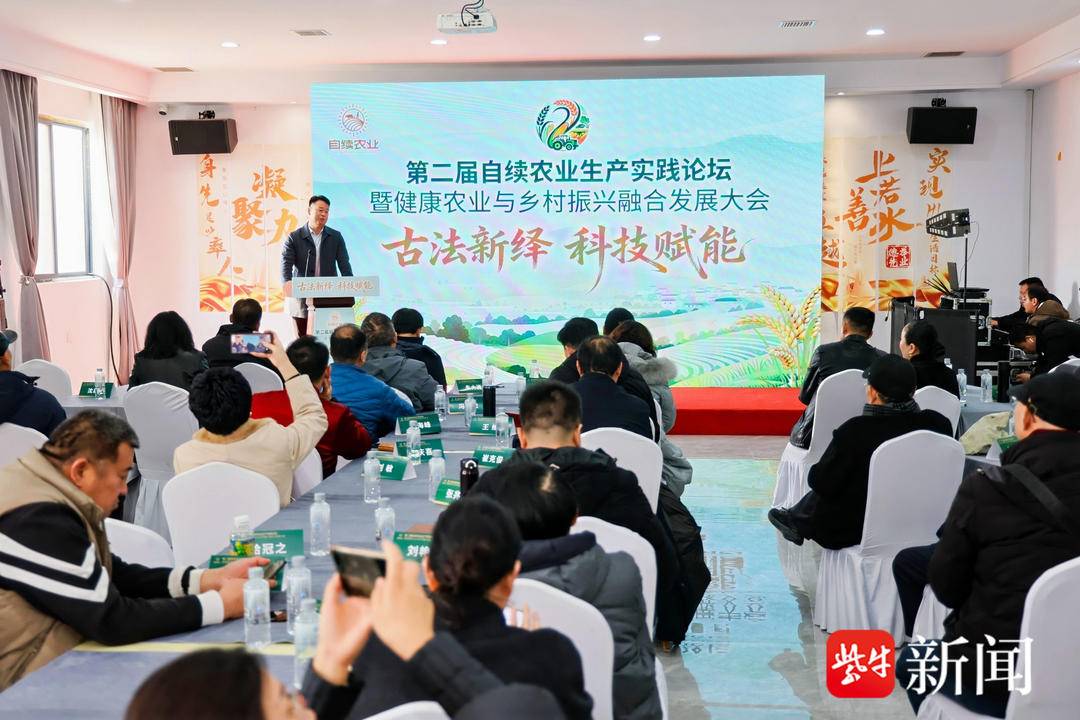
第二届自续农业生产实践论坛在徐州举办
Yang Zi Wan Bao Wang· 2026-01-03 12:24
Group 1 - The second Self-Sustaining Agriculture Practice Forum and the Integration Development Conference of Healthy Agriculture and Rural Revitalization was held in Xuzhou Economic and Technological Development Zone, focusing on the theme "Ancient Methods, New Interpretations, Empowered by Technology" with over 70 domestic experts and representatives from agricultural enterprises in attendance [1] - Self-sustaining agriculture is derived from the ancient saying "following the timing of nature and measuring the advantages of the land," representing a contemporary interpretation of the wisdom of harmonious farming, aiming to address issues such as excessive use of fertilizers and pesticides, and soil quality degradation [3] - Key presentations included Dr. Xu Huilian discussing "Natural Farming Culture and Technology," and insights from Zhu Dazhou on policies related to self-sustaining agriculture's integration into national food security strategies [3] Group 2 - A strategic cooperation agreement was signed between Jiangsu Tianrun Gufeng Biotechnology Co., Ltd. and Jiangsu Yike Food Group Co., Ltd. to convert poultry manure resources into liquid fertilizer, promoting the large-scale development of self-sustaining agriculture [3] - The Xuzhou Economic Development Zone has developed projects such as orchards and rural tourism since 2019, attracting over 100,000 visitors annually through activities like flower viewing and harvest festivals, establishing a new identity for the region and contributing to rural revitalization [4]

奔向共同富裕的美好明天 ——加快农业农村现代化,扎实推进乡村全面振兴
Ren Min Ri Bao· 2025-12-08 00:33
Core Viewpoint - Agricultural modernization is essential for China's overall modernization, as emphasized by President Xi Jinping, linking national strength to agricultural strength [1]. Group 1: Agricultural Modernization Goals - The "14th Five-Year Plan" has strengthened the agricultural sector, ensuring food security for over 1.4 billion people and preventing large-scale poverty [1]. - The "15th Five-Year Plan" aims to accelerate agricultural modernization and promote comprehensive rural revitalization, highlighting the importance of addressing agricultural issues as a priority for the entire party [1][2]. Group 2: Enhancing Agricultural Production Capacity - The focus is on improving agricultural production capacity and quality, which is crucial for ensuring food supply and supporting domestic economic circulation [3]. - The goal is to achieve breakthroughs in grain production capacity during the "15th Five-Year Plan," with over 1 billion acres of high-standard farmland established and a 63.2% contribution rate from agricultural technology advancements [4]. Group 3: Addressing Agricultural Shortcomings - Key challenges include unstable industrial foundations, inadequate agricultural infrastructure, and insufficient resilience against natural disasters [5]. - Strategies include implementing the "store grain in the land and technology" approach and enhancing soil quality and farming practices [5]. Group 4: Quality and Efficiency in Agriculture - Innovative practices such as duck-rice co-cultivation and advanced planting techniques are being adopted to enhance product quality and market competitiveness [6]. - The "15th Five-Year Plan" emphasizes the integration of technology, green practices, and quality agriculture to build a modern agricultural industry [7]. Group 5: Rural Living Standards - Agricultural modernization directly impacts the well-being of millions of farmers, with plans to create quality living spaces in rural areas [8]. - The focus is on tailored approaches to rural development, ensuring that local characteristics and cultural heritage are preserved [10]. Group 6: Infrastructure and Environmental Improvements - Various regions are implementing plans to enhance rural infrastructure, including wastewater management and waste disposal systems [11]. - Collaborative development mechanisms among neighboring villages are being established to optimize resource allocation and improve living conditions [13]. Group 7: Strengthening Agricultural Policies - The "15th Five-Year Plan" aims to enhance the effectiveness of agricultural support policies, addressing farmers' needs and ensuring sustainable agricultural development [15][16]. - Financial support for agriculture has increased, with over 10% of land transfer income allocated to rural development and significant agricultural loans being provided [17]. Group 8: Precision in Policy Implementation - Targeted measures are being developed to prevent poverty and support low-income populations, ensuring that assistance reaches those in need [18]. - The transition from poverty alleviation to rural revitalization is a key focus, with an emphasis on maintaining stability and improving living standards for rural residents [18].
奔向共同富裕的美好明天
Ren Min Ri Bao· 2025-12-07 22:02
Core Viewpoint - Agricultural modernization is essential for China's overall modernization, emphasizing that a strong nation must first have a strong agricultural sector [1]. Group 1: Agricultural Modernization Goals - The "14th Five-Year Plan" has solidified the agricultural sector as a stabilizing force for the economy, ensuring food security for over 1.4 billion people and preventing large-scale poverty [1]. - The "15th Five-Year Plan" aims to accelerate agricultural modernization and promote comprehensive rural revitalization, highlighting the importance of addressing agricultural issues as a top priority for the Party [1][2]. Group 2: Enhancing Agricultural Production Capacity - The focus is on improving agricultural production capacity and quality, which is crucial for ensuring food supply security [3]. - The establishment of over 1 billion acres of high-standard farmland and a 63.2% contribution rate from agricultural technology advancements are key achievements that bolster production capacity [4]. Group 3: Addressing Agricultural Shortcomings - There are existing bottlenecks such as unstable industrial foundations and inadequate infrastructure that need to be addressed to enhance agricultural production [5]. - Strategies like "storing grain in the land and technology" will be implemented to strengthen agricultural technology and protect soil quality [5]. Group 4: Quality and Efficiency in Agriculture - Innovative practices such as duck-rice co-cultivation and the use of plastic film in rice planting are being adopted to enhance ecological farming and market competitiveness [6]. - The "15th Five-Year Plan" emphasizes the need for a diversified food supply system that includes high-quality agricultural products [7]. Group 5: Rural Living Standards and Infrastructure - Agricultural modernization directly impacts the quality of life for millions of farmers, with plans to create better living spaces in rural areas [8]. - Local governments are focusing on improving rural infrastructure, such as water supply and waste management, to enhance living conditions [11]. Group 6: Financial and Policy Support for Agriculture - The proportion of land transfer income allocated to agriculture has exceeded 10%, with significant financial support for agricultural and rural development [17]. - Policies are being refined to ensure that financial assistance and subsidies effectively support farmers and rural communities [18].