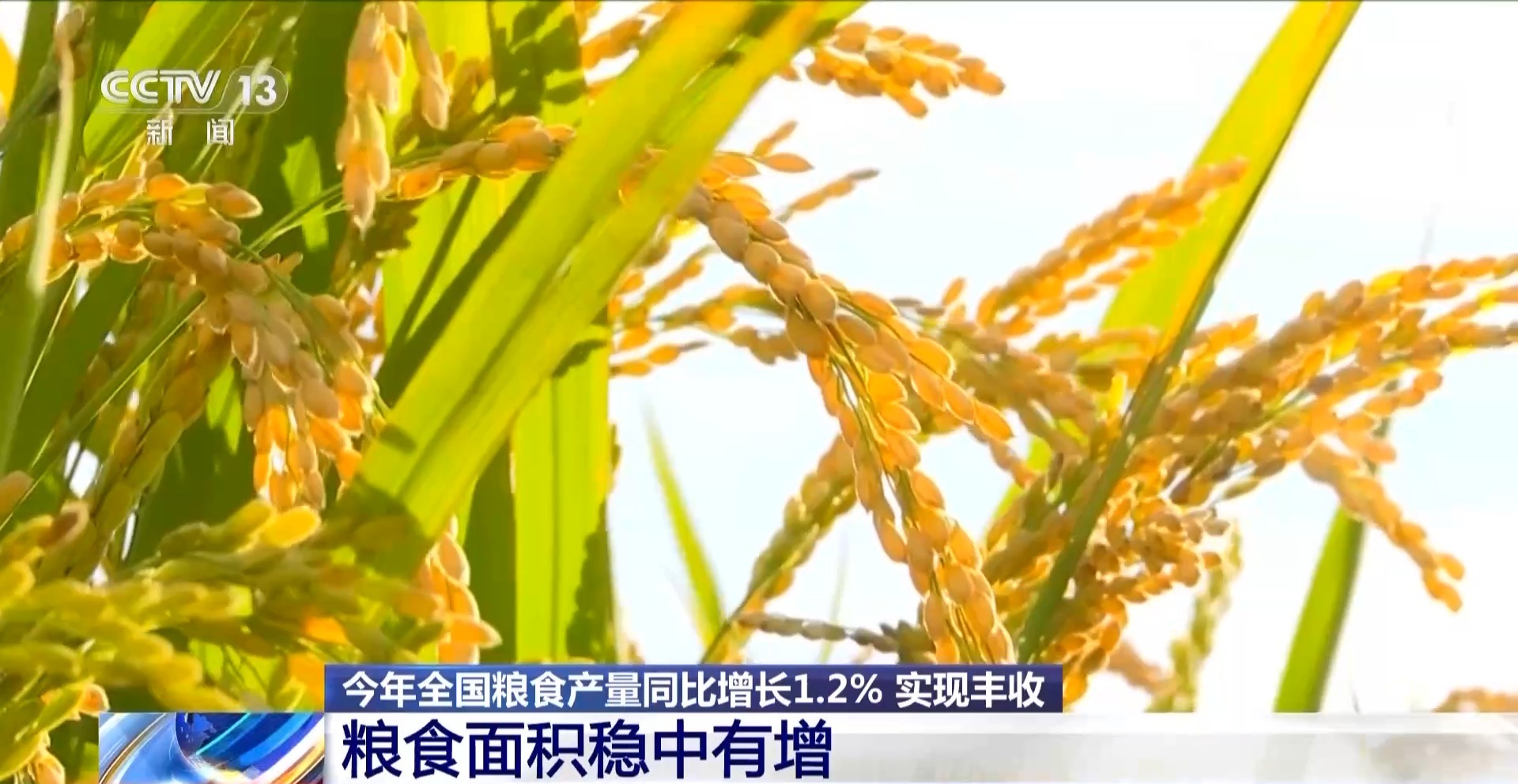
强农惠农富农政策

Search documents
提高强农惠农富农政策效能 激发乡村振兴动力活力
Yang Shi Wang· 2026-02-04 12:14
Core Points - The central document outlines major tasks and key work in the "three rural issues" sector for the year, categorized into "four key tasks" and "two major support guarantees" [1][3] Group 1: Four Key Tasks - Enhance agricultural comprehensive production capacity and quality efficiency [1] - Implement normalized precise assistance [1] - Actively promote stable income growth for farmers [1] - Advance the construction of livable and workable beautiful villages based on local conditions [1] Group 2: Two Major Support Guarantees - Strengthen institutional mechanism innovation [3] - Enhance the Party's comprehensive leadership over "three rural issues" [3]

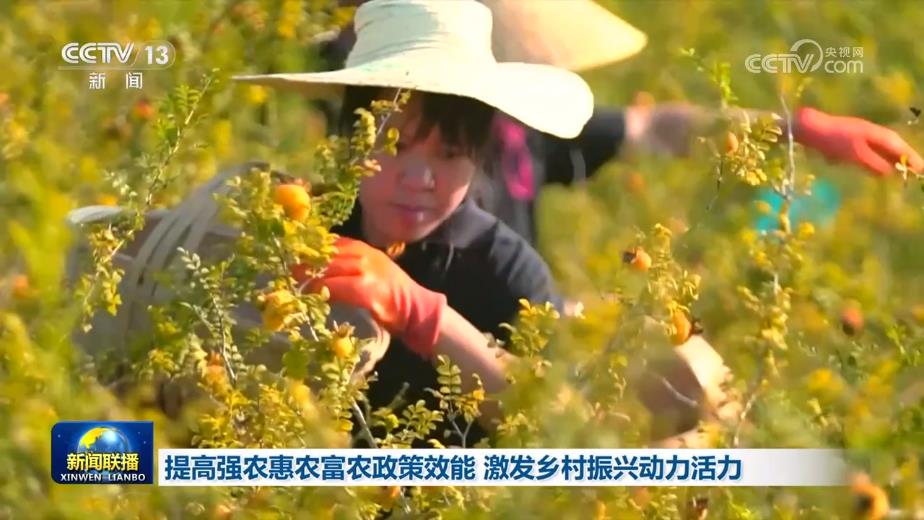
张掖临泽:宣讲“冒热气” 聚起“实干力”
Xin Lang Cai Jing· 2026-01-21 04:05
Group 1 - The core viewpoint of the articles emphasizes the innovative and grassroots approach taken by Linze County in disseminating the spirit of the 20th Central Committee of the Communist Party, aiming to engage the community and enhance understanding of policies [1][2] - Linze County has implemented interactive and relatable methods for policy explanation, such as "courtyard lectures" and "shelter classrooms," to connect with residents and farmers directly [1][2] - The community engagement efforts have resulted in increased confidence among residents and farmers regarding government policies, with specific examples of individuals expanding their businesses based on the information provided [2] Group 2 - The articles highlight the use of various platforms, including online and offline methods, to create a comprehensive system for policy dissemination, ensuring that the messages reach a wide audience [2] - The focus on practical applications of policies, such as the support for the beef cattle industry, illustrates the county's commitment to improving agricultural productivity and rural revitalization [2] - The overall initiative aims to transform the innovative theories of the Party into a strong grassroots force that guides practice and promotes development within the community [2]
政策滴灌产业兴旺
Xin Lang Cai Jing· 2026-01-19 22:17
Group 1 - The core idea of the articles reflects the transformation of agriculture in Wanrong County over the past five years, emphasizing the shift from scattered small-scale farming to a more organized and technology-driven agricultural industry [1][2] - The agricultural development has focused on five major sectors: grain, fruit, mushrooms, traditional Chinese medicine, and livestock, achieving significant improvements in productivity and efficiency [1][2] - The implementation of high-standard farmland has led to a stable annual grain production target of 400 million jin, with a focus on increasing yield and profitability rather than merely maintaining acreage [1] Group 2 - The county has adopted a circular agriculture model, turning agricultural waste into valuable resources, such as using apple branches to produce mushroom cultivation sticks, resulting in a scale of 40 million sticks and the establishment of 15 standardized production centers [2] - The establishment of a standardized base for traditional Chinese medicine has expanded from scattered cultivation to a 100,000-acre standardized base, enhancing local processing and increasing farmers' income [2] - The livestock sector has seen rapid growth with the establishment of standardized breeding bases, successfully entering the Hong Kong and Macau markets, thereby extending the industrial chain and increasing added value [2] Group 3 - Looking ahead, the company aims to modernize agriculture by leveraging digital technologies such as IoT, big data, and e-commerce, transitioning from traditional farming to smart farming [2] - The agricultural industry is expected to expand beyond single-function farming to include processing, circulation, tourism, culture, and health, creating new business models and growth drivers [2] - The commitment to rural revitalization is emphasized, with confidence in a brighter future for Wanrong agriculture supported by strong agricultural policies [2]
强农惠农富农政策效能怎样进一步提高(政策问答·回应关切)
Ren Min Ri Bao· 2026-01-18 22:05
Core Viewpoint - The article emphasizes the importance of enhancing agricultural and rural policies to ensure food security and improve the living standards of rural residents, highlighting the need for targeted support and investment in rural infrastructure and services [1][2]. Group 1: Policy Effectiveness - The "14th Five-Year Plan" period has seen a rapid increase in rural residents' income, with growth rates consistently surpassing those of urban residents, leading to a reduction in the urban-rural income ratio from 2.56:1 in 2020 to 2.34:1 by 2024 [1]. - The government has established a comprehensive agricultural support system covering all stages of production and various types of operators, aimed at poverty alleviation and rural revitalization [1]. Group 2: Investment and Support Mechanisms - The Ministry of Agriculture and Rural Affairs has indicated that the importance of securing China's food supply is increasingly critical, with ongoing efforts to address infrastructure and public service gaps in underdeveloped areas [2]. - Fiscal spending on agricultural and forestry affairs reached 11.3 trillion yuan, with over 10% of national land transfer revenue allocated to agriculture and rural development [3]. - Future efforts will focus on enhancing financial support and ensuring diverse investment sources to meet the needs of rural populations [3]. Group 3: Precision of Policies - A "three-in-one" support policy system comprising pricing, subsidies, and insurance has been continuously improved, with nine stable central financial subsidy policies set to be implemented by early 2025 [4]. - The aim is to ensure profitability for farmers and motivate grain production in major grain-producing areas, with a focus on maintaining reasonable prices for essential agricultural products [4].
全国人大代表李叶红:提高强农惠农富农政策效能
Ren Min Ri Bao· 2026-01-15 09:58
Core Viewpoint - The article emphasizes the importance of enhancing the effectiveness of policies aimed at strengthening agriculture, benefiting farmers, and enriching rural areas, which are crucial for the quality of China's modernization [1] Policy Precision - There is a need to increase the precision of agricultural policies by listening to the real demands of rural production and helping agricultural entities address practical difficulties such as labor and market connections [1] - Agricultural subsidy policies should be more targeted, rewarding those who produce more grain to motivate farmers to engage in agricultural activities [1] - The focus should be on addressing urgent issues faced by farmers and filling gaps in rural construction to avoid resource wastage from ineffective initiatives [1] Policy Coordination - A consistent policy direction is necessary to create a synergistic effect, leading to coordinated policy efforts [1] - The article suggests improving the diversified investment mechanism for rural revitalization, ensuring financial support and social participation [1] - For example, in grain production, it is essential to strengthen the support and coordination of pricing, subsidies, and insurance policies to maintain reasonable prices for important agricultural products, ensuring profitability for farmers [1] Enhancing Internal Motivation - Policies should not only address immediate challenges but also focus on long-term development [1] - Continuous skills training, support for returning workers, and the development of profitable industries are recommended to enhance farmers' resilience to market risks and broaden income channels [1] - This approach aims to strengthen the internal motivation and resilience of agricultural and rural development [1]
中央农村工作会议关键提法之二:提高强农惠农富农政策效能
Xin Hua Wang· 2026-01-03 02:06
Core Viewpoint - The recent Central Rural Work Conference analyzed the current situation and challenges facing the "three rural issues" and outlined the work plan for 2026 in this area [1]. Group 1: Policy Support and Implementation - To achieve agricultural and rural modernization, it is essential to enhance the effectiveness of strong agricultural support policies. This includes implementing responsibilities for rural revitalization at all levels of government and improving institutional arrangements for organization, resource allocation, and evaluation [5]. - A diversified investment mechanism for rural revitalization should be established, prioritizing agriculture and rural areas in the general public budget. Innovative financing mechanisms are needed to ensure increased investment in rural revitalization [5]. - Policies supporting farmers' enthusiasm for farming and grain production must be strengthened, including price, subsidy, and insurance policies to ensure that farmers can profit from grain production [5]. Group 2: Economic and Resource Management - There is a need to enhance the compensation for major grain-producing areas and implement inter-provincial horizontal compensation to ensure that these areas benefit from grain production [5]. - Strengthening grain purchase, sales, and storage management is crucial to enhance emergency supply capabilities and maintain the integrity of the "big country granary" [5]. - Support for the development of new rural collective economies is necessary, including reforms in rural collective property rights and management of collective funds and resources [5]. Group 3: Talent and Resource Allocation - A mechanism for prioritizing resource allocation must be established, ensuring that basic public services cover all permanent residents and protecting the rights of farmers who migrate to urban areas [5]. - Encouraging the flow of production factors such as capital, technology, and talent into rural areas is essential for rural development [5]. - Efforts should be made to develop and strengthen the rural talent pool, incentivizing various talents to serve and start businesses in rural areas [5].
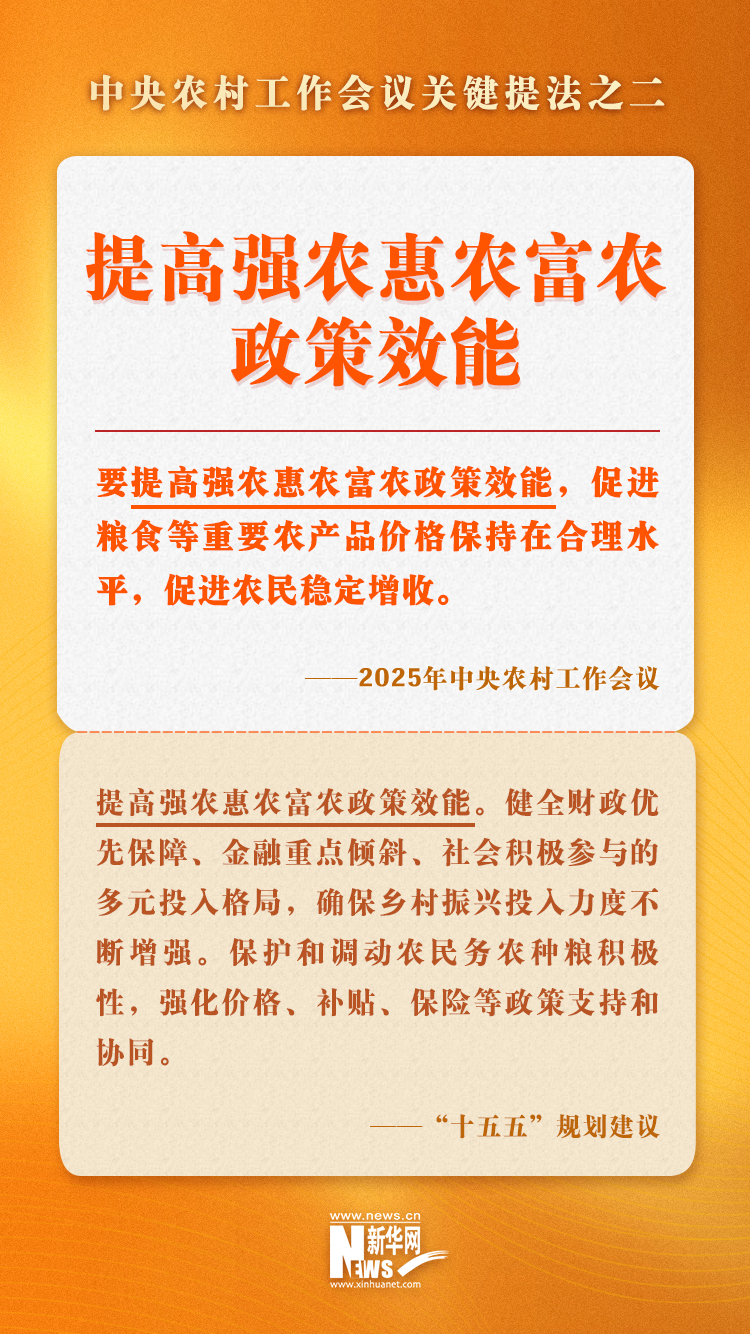
“十五五”开局之年,“三农”工作这样干!
Xin Hua She· 2025-12-30 12:58
Core Viewpoint - The central theme of the news is the importance of advancing agricultural and rural modernization in China as a key component of the country's overall modernization strategy, particularly in the context of the "15th Five-Year Plan" starting in 2026 [3][8]. Group 1: Agricultural Production and Food Security - The government emphasizes the need to stabilize grain and oil production and implement a new round of actions to enhance grain production capacity by 100 billion jin [8]. - There is a focus on improving the quality and efficiency of the "vegetable basket" industry to enhance the diversity of food supply [9]. - Strengthening water conservancy infrastructure and enhancing agricultural disaster prevention and mitigation capabilities are also highlighted [9]. Group 2: Rural Development and Poverty Alleviation - The meeting stresses the importance of consolidating and expanding the achievements of poverty alleviation, integrating regular assistance into the rural revitalization strategy [5][9]. - A mechanism to prevent large-scale return to poverty is to be established, along with a policy framework for ongoing support to underdeveloped areas [9][10]. - The government aims to promote stable income growth for farmers and improve the income guarantee mechanism for grain producers [9][10]. Group 3: Rural Infrastructure and Governance - There is a call for improving rural living conditions and creating high-quality living spaces in rural areas [10]. - The meeting emphasizes the need for effective rural governance and the importance of enhancing the role of party leadership in agricultural and rural work [11]. - Continuous efforts to reform rural areas and extend land contracts for another 30 years are also part of the agenda [10][11].

仇焕广:提高强农惠农富农政策效能
Jing Ji Ri Bao· 2025-12-15 00:07
Core Viewpoint - The 20th Central Committee of the Communist Party emphasizes the need to enhance the effectiveness of policies aimed at benefiting agriculture and farmers, which is crucial for accelerating agricultural modernization and promoting comprehensive rural revitalization [1][2]. Group 1: Policy Effectiveness - The effectiveness of the strong agricultural support policies is essential for addressing new challenges and ensuring food security for over 1.4 billion people in China, requiring internal resource optimization and efficiency improvements [2]. - Enhancing policy effectiveness is a strategic choice for rural revitalization, addressing development challenges, and responding to farmers' needs for stable income and improved living conditions [2][3]. Group 2: Key Focus Areas - Focus on stabilizing the production and supply of important agricultural products by improving the precision and targeting of agricultural subsidies, ensuring that grain farmers benefit directly [3]. - Establish a regular mechanism to prevent poverty and ensure support for low-income populations, enhancing internal development capabilities and maintaining a baseline to prevent large-scale poverty [3]. - Promote industrial prosperity by directing resources towards cultivating local industries, supporting deep processing of agricultural products, rural e-commerce, and rural tourism, while ensuring farmers share in the value-added benefits [3]. Group 3: Public Services and Resource Allocation - Improve basic public service guarantees in rural areas by enhancing both hard infrastructure (water, electricity, roads, communication) and soft services (education, healthcare, elderly care, culture) to reduce urban-rural disparities [4]. - Release rural vitality by addressing key resource bottlenecks in land, capital, and talent, promoting efficient use of land, and implementing policies to attract new farmers back to rural areas [4]. - The enhancement of policy effectiveness is a systematic project that requires scientific policy formulation, inter-departmental collaboration, and a robust evaluation mechanism to ensure continuous improvement [4].
提高强农惠农富农政策效能
Jing Ji Ri Bao· 2025-12-14 22:31
Core Viewpoint - The 20th Central Committee's Fourth Plenary Session emphasizes enhancing the effectiveness of policies that support agriculture, rural areas, and farmers, reflecting the Party's commitment to rural revitalization and agricultural modernization [1][2]. Group 1: Policy Effectiveness - The need to improve the effectiveness of agricultural policies is crucial for addressing new challenges and ensuring food security for over 1.4 billion people in China [2]. - Enhancing policy effectiveness is essential for driving rural revitalization and addressing development challenges, as agricultural modernization is a significant shortcoming in China's overall modernization efforts [2]. - The current agricultural policy framework has shown significant results, stabilizing food security and reducing income disparities between urban and rural residents [1][2]. Group 2: Key Focus Areas - Focus on stabilizing the production and supply of essential agricultural products by improving the precision and targeting of agricultural subsidies, particularly for grain farmers [3]. - Establish a regular mechanism to prevent poverty and ensure support for low-income populations, enhancing the internal development capacity of impoverished areas [3]. - Promote industrial prosperity by investing in county-level industries, supporting new business models like agricultural product processing and rural e-commerce, and ensuring farmers benefit from industry value-added [3]. Group 3: Public Services and Resource Allocation - Improve basic public services in rural areas by enhancing both hard infrastructure (water, electricity, roads) and soft services (education, healthcare, culture) to reduce urban-rural disparities [4]. - Release rural vitality by addressing key resource bottlenecks in land, capital, and talent, and implementing policies to attract new farmers back to rural areas [4]. - The enhancement of policy effectiveness requires a systematic approach, including improving policy formulation, inter-departmental collaboration, and establishing performance evaluation mechanisms [4].
视频丨粮食产量再创新高!解锁大国粮仓的丰收“密码”
Yang Shi Xin Wen Ke Hu Duan· 2025-12-12 14:54
Core Viewpoint - The latest grain production data from the National Bureau of Statistics indicates that China's total grain output is projected to reach 14,298 billion jin in 2025, marking a 1.2% increase from the previous year, supported by increased planting area and improved yield per unit area [1] Group 1: Grain Production Growth - The national grain planting area has increased for six consecutive years, with a notable increase of 3.3 million mu in high-yield crops like corn, laying a solid foundation for this year's grain harvest [3] - The unit yield has significantly improved, with a focus on enhancing grain and oil crop yields through large-scale actions, increasing the number of counties involved to 702, and promoting the integration of quality land, seeds, machinery, and methods [5] Group 2: Technological and Policy Support - The integration of water and fertilizer management in grain crops is expected to reach over 88 million mu by 2025, with specific initiatives in various regions to enhance yield potential, contributing over 90% to the increase in grain production [7] - The government has implemented strong agricultural policies, including minimum purchase prices for rice and wheat, and subsidies for corn and soybeans, stabilizing farmers' income expectations and ensuring accountability for grain production targets [1] Group 3: Resilience Against Adverse Conditions - China's grain production resilience has been demonstrated this year despite severe weather challenges, with measures taken to address droughts and floods, including the allocation of over 6 billion yuan for disaster relief and crop protection [9] - The main increases in grain production are expected in the autumn harvest, particularly in the Northeast and Northwest regions, with corn being the primary crop contributing to this growth [9]