生态葡萄酒

Search documents
威龙股份控股权“告急”,归母净利转亏
Xin Lang Cai Jing· 2025-11-05 03:57
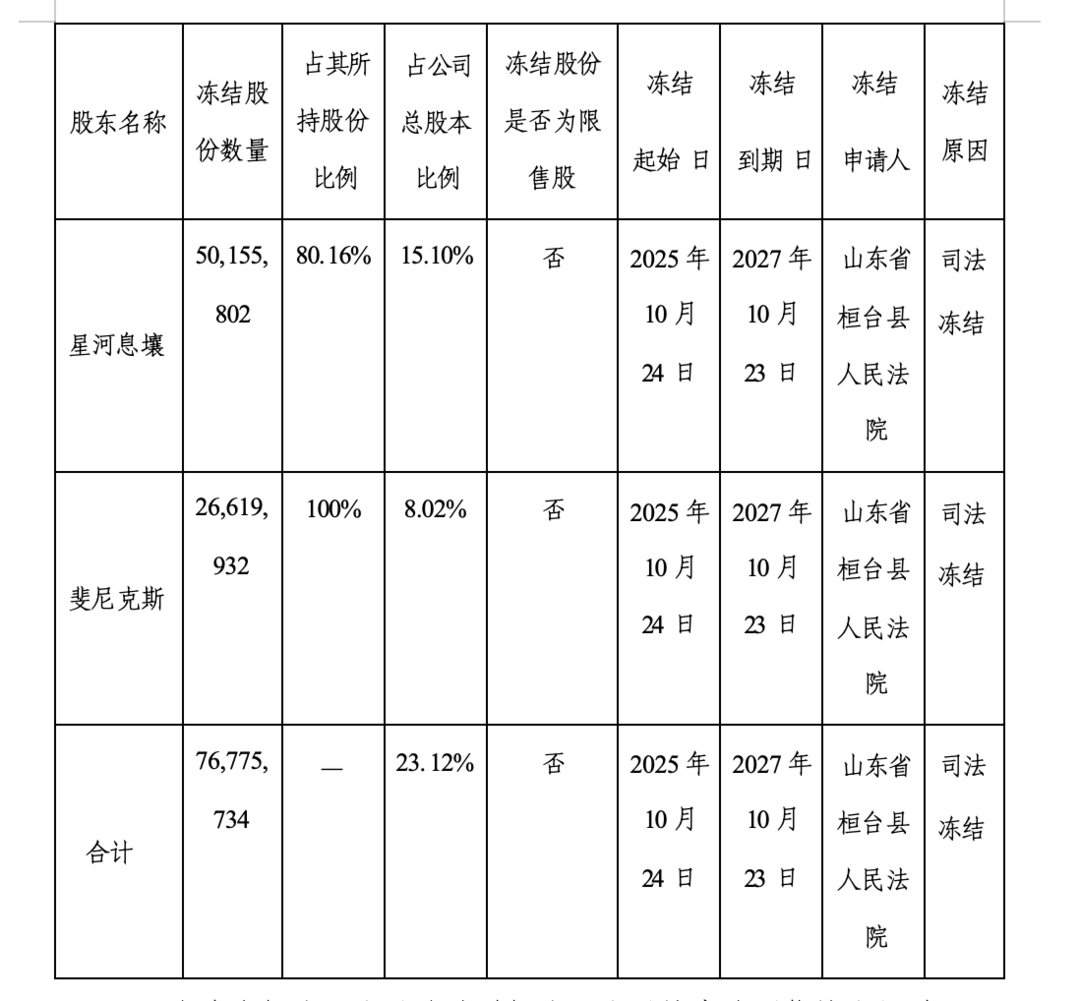
Core Viewpoint - The leading organic wine producer, Weilang Co., Ltd. (603779.SH), is facing challenges as it reported a decline in wine product sales and a shift from profit to loss in net income for the first three quarters of the year, alongside the judicial freezing of shares held by major shareholders [1][5]. Financial Performance - For the first three quarters, Weilang Co. achieved total revenue of 251 million yuan, a year-on-year decrease of 17.43% [6]. - The company's operating costs were 123 million yuan, down 15.57% year-on-year, while total expenses were 129 million yuan, a decline of 12.26% [6]. - The net profit attributable to shareholders was a loss of 11.55 million yuan, indicating a shift from profit to loss [6]. - Sales revenue from low, medium, and high-end wine products were 147.30 million yuan, 62.51 million yuan, and 19.82 million yuan, respectively, with year-on-year declines of 23.23%, 15.56%, and 18.94% [6]. - Overall sales revenue dropped by 20.92% year-on-year, with a 22.04% decline in revenue from distributor channels [6]. Shareholder Issues - The court has frozen 50,155,802 shares held by Xinghe Xirang (15.10% of total shares) and 26,619,932 shares held by Phoenix (8.02% of total shares) due to legal proceedings against Yan Pengfei, the actual controller of Weilang Co. [2][3][4]. - The total frozen shares account for 23.12% of the company's total shares [3][4]. - Weilang Co. stated that the frozen shares would not significantly impact its operations or governance, but potential changes in control could occur if the shares are judicially disposed of [5]. Business Overview - Weilang Co. is one of the major wine producers in China, focusing on the cultivation of wine grapes and the production and sale of various types of wine, including organic wine, which has received organic certification from multiple international bodies [8]. - The company is currently facing performance fluctuations and governance risks, which are seen as significant obstacles to its growth [8].