有机葡萄酒

Search documents
新时代中国消费者:食品、健康与可持续发展
Sou Hu Cai Jing· 2025-12-26 06:46
Core Insights - Chinese consumers are elevating "eating" to a value-driven choice, with price sensitivity and value sensitivity diverging for the first time. A survey indicates that 63% of mainland consumers are willing to pay a premium for sustainable food, the highest globally [2]. Group 1: Consumer Behavior Trends - 63% of mainland consumers are willing to pay a premium for sustainable food, which is the highest percentage globally [2][13]. - 43% of consumers prioritize sustainable packaging, exceeding the global average by 6 percentage points [2][13]. - 45% of households with annual incomes below $10,000 are using 54% of coupons and 48% of cross-store comparison budgets to invest in organic products [2]. Group 2: Market Dynamics - The retail market is experiencing a dual narrative, balancing economic headwinds and industry prosperity, with an estimated valuation of approximately 4.9 trillion RMB by 2024 [8]. - Discount stores and instant retail are pushing absolute prices to their limits, leading to a disappearance of price elasticity [8][26]. - The rise of discount retailers like HotMaxx and ALDI in mainland China is driving the revival of offline retail, emphasizing the importance of competitive pricing and transparency [26]. Group 3: Health and Sustainability Focus - Chinese consumers are increasingly focused on health and sustainability, with a notable willingness to invest in high-quality, health-oriented products [10][12]. - The trend of "Guochao 2.0" reflects a preference for celebrating domestic brands and reducing the climate impact of food purchases [13][14]. - The integration of health consciousness and environmental awareness is reshaping consumer preferences, with a clear shift towards value-driven consumption [10][12]. Group 4: Retail Strategies - Retailers must adopt a multi-faceted strategy to navigate the complex environment, focusing on clear value propositions, seamless digital and physical experiences, and catering to health trends [14][27]. - Successful strategies involve embracing aggressive and transparent value propositions, investing in private label strategies, and mastering omnichannel sourcing [27]. - The "instant retail" battlefield is crucial, with consumers comparing delivery options within 30 minutes, highlighting the need for retailers to adapt quickly [27].


【深度】中国葡萄酒市场深度研究(下):消费主权觉醒与市场重构
Sou Hu Cai Jing· 2025-12-18 09:03
Core Insights - The Chinese wine market is experiencing a fundamental shift in consumer psychology, moving from "pleasing others" to "pleasing oneself," indicating a deep restructuring of consumption logic towards value matching rather than brand premium chasing [1][21] - The market is entering a "three rationality era," where consumer behavior, purchasing decisions, and category preferences are becoming more rational, with a notable increase in the demand for products that offer better quality-to-price ratios [1][21] Consumer Behavior Changes - The sales proportion of wines priced between 100-300 RMB has increased from 35% in 2020 to 52% by 2025, while the share of high-end wines priced over 1000 RMB has decreased by nearly 30% [1][21] - The younger generation, particularly Gen Z, is shifting focus towards personalized experiences and emotional resonance, moving away from traditional "face consumption" to "self-pleasing consumption" [1][21] Health and Quality Trends - Health consciousness is becoming a new driving force in consumption, with 76% of consumers prioritizing "zero pesticide residues" when selecting organic wines, significantly higher than traditional factors like taste (58%) and brand (49%) [2] - The average selling price of domestic wines has risen from over 30 RMB per liter (2015-2019) to 46 RMB per liter in 2022, reflecting a quality-driven value return [4] Market Structure Adjustments - The competition landscape between imported and domestic wines is undergoing significant changes, with domestic wine market share dropping from 54.89% in 2020 to 46.91% in the first half of 2023, while imported wines have increased to 53.09% [3] - In 2024, domestic wine production is expected to exceed imports, with a total production of 300,000 kiloliters, marking a 3% year-on-year growth [3] Diversification of Consumer Demand - The low-alcohol wine market has seen explosive growth, reaching 28.5 billion RMB in 2023, with internet brands contributing about 18% of sales [5] - The organic wine market is also growing rapidly, with a 62% repurchase rate among high-income consumers aged 25-45 in first-tier and new first-tier cities [2] Channel Innovations and Digital Transformation - New retail channels have increased their contribution from 19% in 2021 to 42% in 2024, with platforms like Hema showing a 53% repurchase rate for wine, significantly higher than traditional supermarkets [6] - Live-streaming e-commerce has emerged as a new growth point, exemplified by significant sales figures from live broadcasts [6] Quality and Brand Development - Product innovation and brand building are crucial strategies for the Chinese wine industry, with a focus on high cost-performance products becoming mainstream [14] - The market for high-end products is expected to grow significantly, with the share of products priced above 300 RMB projected to rise from 22% in 2024 to 35% by 2030 [16] Local Development and Policy Support - The integration of wine with cultural tourism is becoming a key path for local development, with successful projects like the Tulanduo Town attracting over 100,000 visitors annually [17] - Policy support, such as the Ningxia government's development plan for the wine industry, aims to enhance the sector's growth and sustainability [19]

威龙股份控股权“告急”,归母净利转亏
Xin Lang Cai Jing· 2025-11-05 03:57
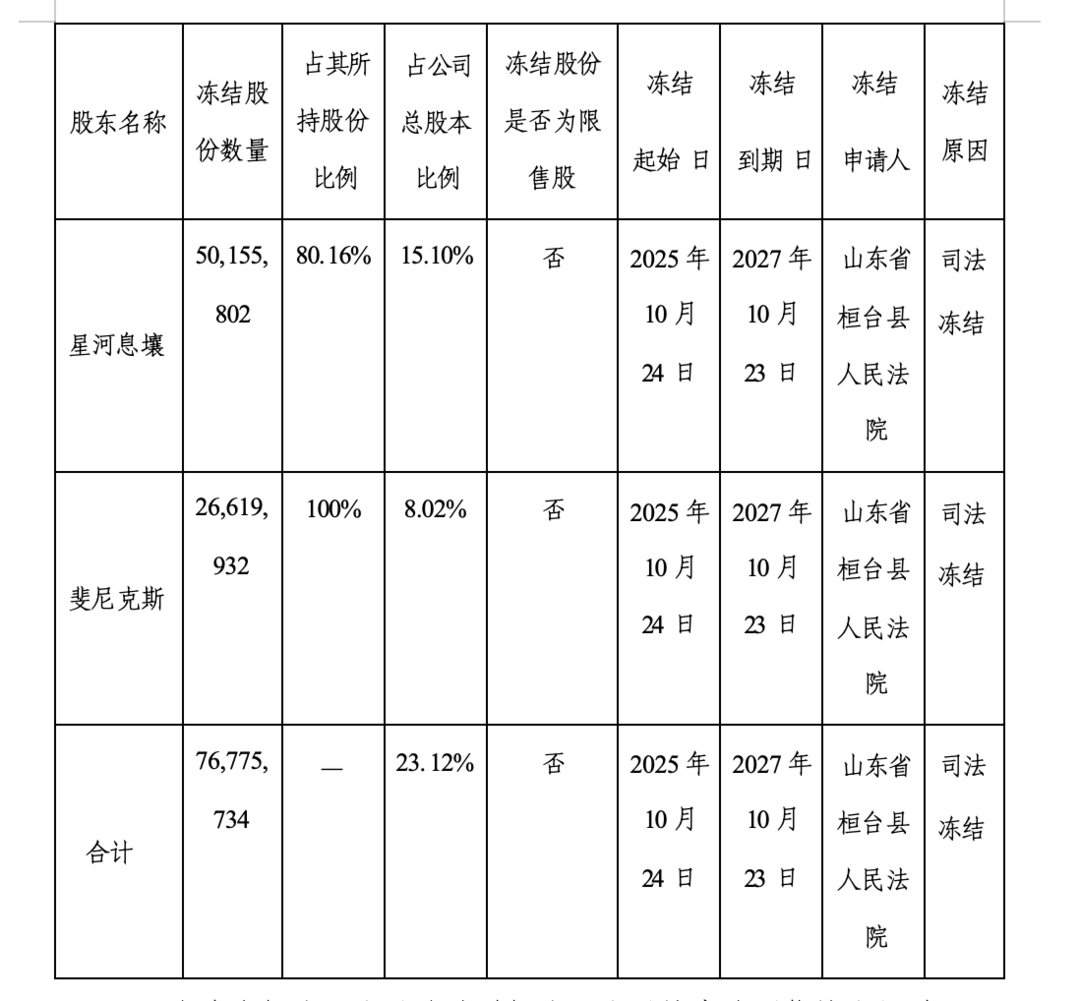
Core Viewpoint - The leading organic wine producer, Weilang Co., Ltd. (603779.SH), is facing challenges as it reported a decline in wine product sales and a shift from profit to loss in net income for the first three quarters of the year, alongside the judicial freezing of shares held by major shareholders [1][5]. Financial Performance - For the first three quarters, Weilang Co. achieved total revenue of 251 million yuan, a year-on-year decrease of 17.43% [6]. - The company's operating costs were 123 million yuan, down 15.57% year-on-year, while total expenses were 129 million yuan, a decline of 12.26% [6]. - The net profit attributable to shareholders was a loss of 11.55 million yuan, indicating a shift from profit to loss [6]. - Sales revenue from low, medium, and high-end wine products were 147.30 million yuan, 62.51 million yuan, and 19.82 million yuan, respectively, with year-on-year declines of 23.23%, 15.56%, and 18.94% [6]. - Overall sales revenue dropped by 20.92% year-on-year, with a 22.04% decline in revenue from distributor channels [6]. Shareholder Issues - The court has frozen 50,155,802 shares held by Xinghe Xirang (15.10% of total shares) and 26,619,932 shares held by Phoenix (8.02% of total shares) due to legal proceedings against Yan Pengfei, the actual controller of Weilang Co. [2][3][4]. - The total frozen shares account for 23.12% of the company's total shares [3][4]. - Weilang Co. stated that the frozen shares would not significantly impact its operations or governance, but potential changes in control could occur if the shares are judicially disposed of [5]. Business Overview - Weilang Co. is one of the major wine producers in China, focusing on the cultivation of wine grapes and the production and sale of various types of wine, including organic wine, which has received organic certification from multiple international bodies [8]. - The company is currently facing performance fluctuations and governance risks, which are seen as significant obstacles to its growth [8].