
生殖

Search documents
喀麦隆健康公平诊断,2025年11月(英)
Shi Jie Yin Hang· 2026-03-09 06:40
Investment Rating - The report does not explicitly provide an investment rating for the health sector in Cameroon, but it emphasizes the need for targeted policy interventions to improve health equity and access, particularly for vulnerable populations. Core Insights - Cameroon has made significant progress towards Universal Health Coverage (UHC), with the UHC Service Coverage Index doubling from 22 in 2000 to 44 in 2021, yet it still lags behind the averages for low- and middle-income countries (58) and the global average (68) [5][6] - The report highlights the importance of addressing health inequities, as disparities in access, service coverage, and financial protection persist across socioeconomic and geographic lines [6][7] - The findings from the Country Equity Diagnostic (CED) aim to guide policymakers and stakeholders towards reforms that ensure no individual is left behind in health improvements [7] Summary by Sections Background - Cameroon has made notable advancements in UHC, but significant opportunities for improvement remain, particularly in addressing disparities in health access and financial protection [5] Methods - The CED utilizes data from various household surveys to analyze health-related inequalities, focusing on health status, efficiency, access, and financial risk protection [11] Results - Key findings indicate that health improvements have been largely pro-poor, with significant progress in health status and service coverage driven by economically disadvantaged populations [12] - However, the poorest populations still lag in service coverage, particularly in immunization, and face high rates of foregone care due to financial and geographic barriers [12] - Geographic disparities are evident, especially in the North and Far North regions, which show worse health outcomes and service coverage [12] System Performance Goals - Health status and financial risk protection are critical performance goals, with the report emphasizing the need for policies that reduce out-of-pocket spending and improve access to quality care [14] Health Status - Infant and under-five mortality rates have declined, with improvements more pronounced among poorer populations, although inequalities in child mortality remain significant [15] - Childhood nutrition has seen modest improvements, but stunting and wasting rates remain high, particularly among low socioeconomic groups [19] Financial Risk Protection - Over half of the population reports out-of-pocket health spending, with the wealthiest quintiles spending more overall, while financial hardship is concentrated among poorer households [24][28] - The top 5% of spenders account for 50% of total health expenditure, highlighting the concentration of health spending among a small portion of the population [28] Intermediate Performance Objectives - Service coverage for reproductive, maternal, newborn, child, and adolescent health services has generally improved, but disparities persist, particularly in access to antenatal care and immunization [36] - Access barriers are significantly higher among the poorest households, with longer travel times to health facilities compared to wealthier households [39] Conclusions and Policy Implications - The CED provides evidence to target policies addressing health inequities, emphasizing the need for interventions that consider socioeconomic and geographic disparities [43] - Proposed policy design considerations include financing strategies, payment adjustments, and community outreach programs to improve service coverage among vulnerable populations [44][45]
丽珠集团上半年净利12.81亿元,同比增长9.4%
Bei Jing Shang Bao· 2025-08-20 13:41
Core Insights - Lijun Group reported a slight decline in revenue for the first half of 2025, with total revenue at 6.272 billion yuan, a year-on-year decrease of 0.17% [2] - The net profit attributable to shareholders increased by 9.4% year-on-year, reaching 1.281 billion yuan [2] Revenue Breakdown - The company's various business segments showed collaborative growth, contributing to a stable overall performance [2] - Key product segments such as digestion, mental neurology, reproduction, and traditional Chinese medicine experienced year-on-year revenue growth [2] - The raw materials and intermediates segment saw a slight revenue decline due to price fluctuations in cephalosporin raw materials in the domestic market [2] - The diagnostics reagents and equipment segment faced a minor revenue drop influenced by cyclical changes in respiratory products, following a high base in the first half of 2024 [2]


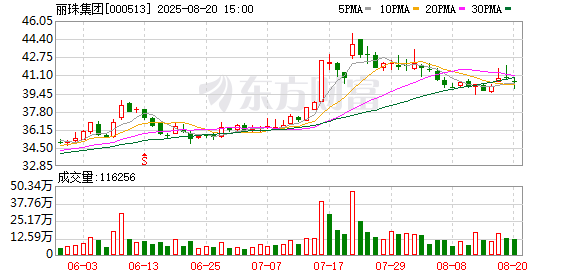
丽珠集团(000513.SZ)发布上半年业绩,归母净利润12.81亿元,同比增长9.40%
Zheng Quan Zhi Xing· 2025-08-20 10:23
Core Viewpoint - Lijun Group (000513.SZ) reported a net profit attributable to shareholders of 1.281 billion yuan for the first half of 2025, reflecting a year-on-year increase of 9.40% despite a slight decline in revenue [1] Financial Performance - The company achieved operating revenue of 6.272 billion yuan, a decrease of 0.17% year-on-year [1] - The net profit attributable to shareholders, excluding non-recurring gains and losses, was 1.258 billion yuan, up 8.91% year-on-year [1] - Basic earnings per share stood at 1.43 yuan [1] Business Segment Analysis - The company's various business segments showed collaborative growth, contributing to a stable operational performance [1] - Key segments such as digestive, psychiatric, reproductive, and traditional Chinese medicine products experienced year-on-year revenue growth [1] - The raw materials and intermediates segment saw a slight revenue decline due to price fluctuations in cephalosporin raw materials in the domestic market [1] - The diagnostics reagents and equipment segment faced a minor revenue drop due to cyclical changes in respiratory products, following a high base in the first half of 2024 [1] Profitability Factors - Growth in the formulation segment and increased exports of high-margin specialty raw materials contributed to profit growth [1] - Continuous improvements in operational efficiency and cost reduction efforts led to significant increases in total profit and net profit attributable to shareholders [1]